

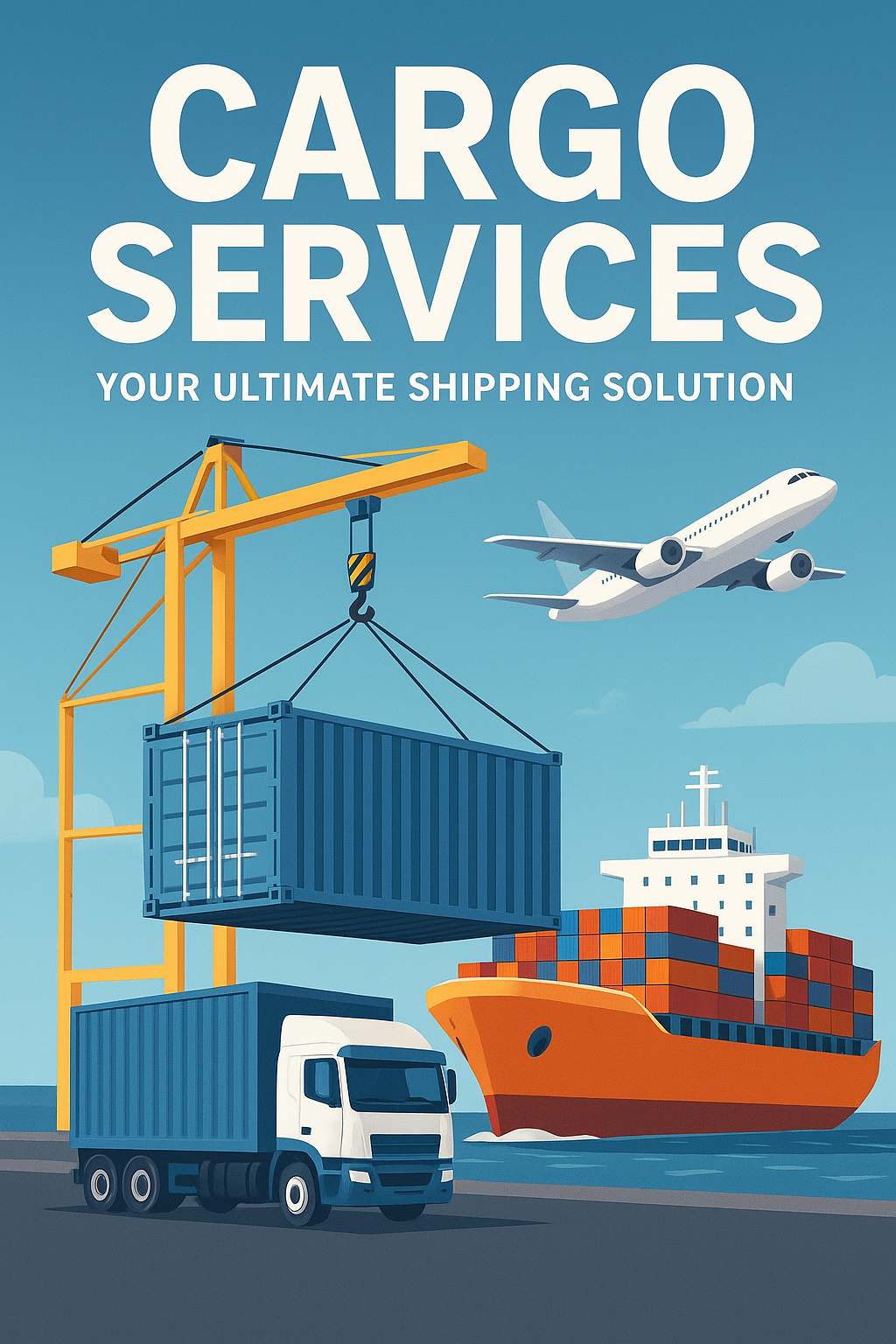
Shipping Solution locally or internationally can be challenging without the right support. Cargo Services: Your Ultimate Shipping Solution is designed to make shipping simple, fast, and reliable. Whether you are sending personal parcels, business shipments, or heavy cargo, professional cargo services ensure your goods reach their destination safely and on time.
With the right cargo company, you can enjoy door-to-door delivery, real-time tracking, competitive rates, and hassle-free shipping, whether it’s across Pakistan or around the world. This guide will help you understand how to choose the best cargo services and make your shipping experience smooth and stress-free.
Cargo Services: Your Ultimate Shipping Solution
In today’s interconnected global economy, efficient movement of goods is paramount for businesses. Cargo services play a critical role, forming the backbone of international trade and domestic supply chains. These services encompass transporting goods from one point to another. They utilize various modes like air, sea, road, and rail. Furthermore, a complex network of logistics, documentation, and coordination ensures timely, secure delivery. Understanding professional cargo services is therefore vital. It helps any enterprise optimize operations and expand reach.
What Are Cargo Services?
Cargo services refer to specialized operations. They involve shipping goods, often in bulk or large quantities, domestically or internationally. Typically, these services go beyond simple transportation. They include a comprehensive suite of solutions, managing the entire logistics process. For instance, this might involve warehousing, customs clearance, freight forwarding, and even last-mile delivery. Consequently, businesses rely on these providers to handle shipping complexities. This allows them to focus on their core competencies.
The Importance of Reliable Cargo Services
Reliable cargo services are indispensable for several reasons. First and foremost, they ensure raw materials reach manufacturing plants on time. This prevents costly production delays. Moreover, finished products must be delivered efficiently to consumers. This meets market demand and maintains customer satisfaction. In addition, these services facilitate global trade. They enable businesses to source materials and sell products across borders. Without robust logistics infrastructure, the global supply chain would falter. Therefore, selecting a trustworthy provider is not merely a preference; it is a business imperative.
Types of Cargo Services
The world of logistics offers diverse options for moving goods. Each is suited to different requirements regarding speed, cost, and capacity. Professional cargo services providers typically offer a range of solutions.
Air Freight Services
Air freight is undoubtedly the fastest method for shipping goods over long distances. It is ideal for time-sensitive, high-value, or perishable items. While generally more expensive than other modes, air cargo offers unparalleled speed and often greater security. Furthermore, it allows businesses to meet tight deadlines. It also helps them respond quickly to market demands. However, limitations exist on size and weight. Customs procedures can also be rigorous. Nevertheless, for urgent shipments, air cargo remains the preferred choice.
Sea Freight Services
Sea freight, conversely, is the most cost-effective option. It transports large volumes of goods across oceans. It forms the backbone of global trade, carrying everything from raw materials to finished consumer products in massive container ships. Although much slower than air freight, its capacity and lower cost per unit are indispensable. This applies to bulk shipments and non-urgent deliveries. Various container options are available, including Full Container Load (FCL) and Less than Container Load (LCL). This provides flexibility for different shipment sizes. Moreover, advancements in shipping technology continue to enhance its efficiency and environmental footprint.
Land Freight Services (Road and Rail)
Land freight primarily covers domestic and continental transportation. Road freight, utilizing trucks and vans, offers flexibility and door-to-door delivery. It is crucial for connecting ports and airports to final destinations. It acts as a vital link in multimodal chains. Conversely, rail freight excels at moving heavy, bulky goods over long distances inland. It is often more fuel-efficient and environmentally friendly than road transport for certain routes. Both road and rail cargo services are integral to regional supply chains. They provide essential connectivity.
Multimodal Cargo Solutions
Often, the most efficient and cost-effective shipping strategy involves combining different transport modes. Multimodal cargo solutions integrate air, sea, road, and rail freight into a seamless process. For example, goods might travel by sea across an ocean. Then, they could go by rail across a continent. Finally, they might reach their specific destination by truck. This approach leverages the strengths of each transport mode. It optimizes for speed, cost, and environmental impact. Consequently, many modern cargo services providers specialize in crafting these complex, integrated logistics plans.
Key Benefits of Professional Cargo Services
Engaging with professional cargo services offers numerous advantages. These can significantly impact a business’s bottom line and operational efficiency.
Efficiency and Speed
Expert cargo services streamline the entire shipping process. They possess the knowledge and infrastructure to navigate complex logistics. This ensures goods move swiftly through transit points. This efficiency minimizes delays, reduces lead times, and ultimately enhances customer satisfaction. Moreover, experienced providers optimize routes and schedules. This further boosts speed and reliability.
Cost-Effectiveness
While it might seem counterintuitive, professional cargo services can lead to substantial cost savings. They leverage economies of scale and negotiation power with carriers. They also optimize routing. These factors help them secure better rates than individual businesses might. Furthermore, they help avoid costly errors, demurrage charges, and unexpected delays. These issues can quickly inflate shipping expenses. Therefore, outsourcing logistics often proves to be a fiscally responsible decision.
Security and Reliability
The security of goods during transit is a top priority. Reputable cargo services employ robust security measures. These include secure warehousing, real-time tracking, and careful handling protocols. This significantly reduces the risk of theft, damage, or loss. Additionally, their established networks and contingency plans ensure reliability. This holds true even in challenging circumstances. Consequently, businesses gain peace of mind. They know their valuable shipments are in safe hands.
Global Reach and Network
For businesses operating internationally, a cargo services provider’s global network is invaluable. These providers have established relationships with customs officials, port authorities, and local carriers worldwide. This extensive network enables seamless cross-border shipping. It also helps navigate diverse regulatory environments with expertise. Ultimately, it allows businesses to expand their market reach. They do this without needing to establish their own international logistics infrastructure.
Compliance and Documentation Expertise
International shipping involves a maze of regulations, tariffs, and documentation requirements. Professional cargo services possess deep expertise. This covers customs clearance, import/export declarations, and international trade laws. They ensure all necessary paperwork is correctly completed and submitted. This prevents costly delays and penalties. This specialized knowledge is crucial for smooth and compliant cross-border operations.
Choosing the Right Cargo Services Provider
Selecting the appropriate partner for your shipping needs is a critical decision. A careful evaluation process ensures you find a provider aligning with your business objectives.
Assessing Your Needs
Before engaging any provider, clearly define your shipping requirements. Consider the type of goods, volume, frequency, desired transit times, and budget. Do you need air, sea, or land freight? Are multimodal solutions appropriate? Understanding your specific needs will help narrow down potential cargo services providers.
Reputation and Experience
Look for providers with a proven track record. They should have extensive experience in the industry. Check their client testimonials, case studies, and industry certifications. A long-standing reputation often indicates reliability, expertise, and a commitment to customer satisfaction. Furthermore, experience with similar types of cargo or routes can be a significant advantage.
Technology and Tracking Capabilities
Modern logistics relies heavily on technology. A good cargo services provider should offer advanced tracking systems. These allow you to monitor your shipments in real-time. Additionally, look for providers who utilize digital platforms for booking, documentation, and communication. This enhances transparency and efficiency.
Customer Support and Communication
Effective communication is paramount. Choose a provider with responsive customer support. They should also have clear communication channels. You should have a dedicated point of contact. You should also receive regular updates on your shipment’s status. Moreover, their ability to quickly address concerns or unforeseen issues is a strong indicator of service quality.
Insurance and Liability
Understand the insurance options and liability coverage. These are offered by the cargo services provider. While they take measures to secure your goods, unforeseen events can occur. Ensure adequate coverage is in place. This protects your investments against potential loss or damage during transit.
The Future of Cargo Services
The logistics industry is constantly evolving. It is driven by technological advancements and changing global demands. The future of cargo services promises even greater efficiency, transparency, and sustainability.
Digitalization and Automation
Digitalization is transforming cargo services. Automation in warehouses, AI-powered route optimization, and blockchain for secure documentation are becoming standard. These technologies improve accuracy, reduce manual errors, and accelerate processes. Consequently, real-time data analytics will offer unprecedented insights into supply chain performance.
Sustainability in Logistics
There is a growing emphasis on environmentally friendly practices. Future cargo services will increasingly focus on reducing carbon footprints. This includes more fuel-efficient transport, electric vehicles, and optimized route planning. Furthermore, sustainable packaging and greener warehousing solutions will become mainstream. This reflects a global commitment to environmental responsibility.
E-commerce Impact
The boom in e-commerce continues to reshape demand for cargo services. This trend requires faster, more flexible, and often smaller-scale deliveries. It drives innovation in last-mile logistics and fulfillment centers. As a result, providers are adapting. They cater to the unique demands of online retail, including reverse logistics for returns.
Conclusion
In conclusion, cargo services are far more than just transportation; they are integral to the global economy and the success of individual businesses. By offering a diverse array of shipping modes—air, sea, and land—and integrating them through multimodal solutions, these services ensure goods move efficiently, securely, and cost-effectively. Partnering with a professional provider brings numerous benefits, including enhanced efficiency, reduced costs, superior security, and expert compliance. As the industry evolves with digitalization and a focus on sustainability, selecting the right cargo services provider remains a strategic decision for optimizing supply chains and achieving business growth in an increasingly interconnected world.
Frequently Asked Questions (FAQ)
Q1: What is the primary difference between air freight and sea freight cargo services?
A1: The primary difference lies in speed, cost, and capacity. Air freight is significantly faster and more suitable for urgent, high-value, or perishable goods, but it is also more expensive and has capacity limitations. Sea freight, conversely, is much slower but offers a highly cost-effective solution for transporting large volumes of non-urgent goods across long distances.
Q2: How do professional cargo services help with customs clearance?
A2: Professional cargo services providers possess extensive expertise in international trade regulations and customs procedures. They handle all necessary documentation, ensure compliance with import/export laws, calculate duties and taxes, and communicate with customs officials on your behalf. This expertise minimizes delays, avoids penalties, and ensures a smooth clearance process for your shipments.
Q3: Why are multimodal cargo solutions becoming increasingly popular?
A3: Multimodal cargo solutions combine different transport modes (e.g., sea, rail, road) to create an optimized shipping route. They are popular because they leverage the strengths of each mode, offering a balance of speed, cost-effectiveness, and environmental efficiency. This integrated approach often results in a more flexible, reliable, and overall optimized supply chain for diverse types of cargo.
want to read more articles click here.
all credit goes to UDM.