

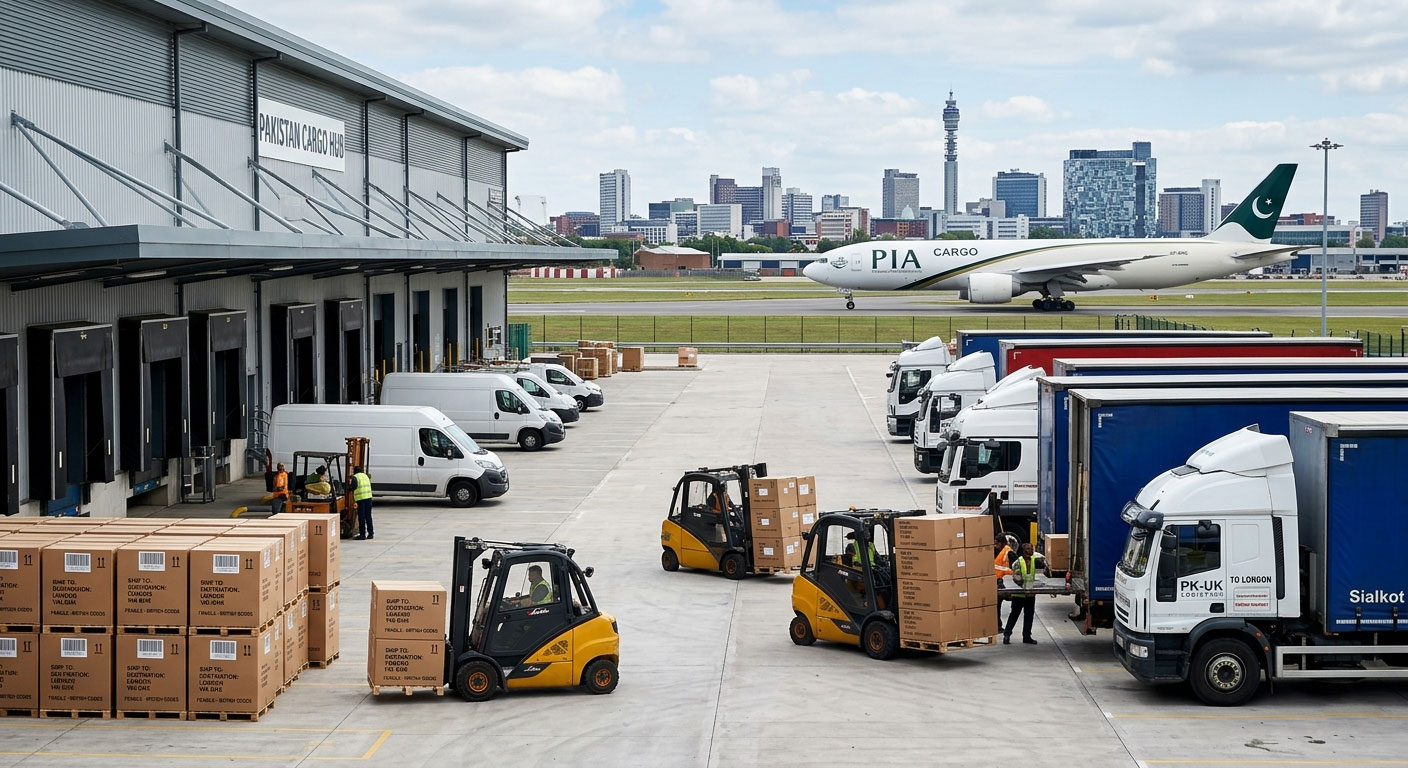
Pakistan–West Midlands International Cargo & Freight Services
Embarking on international shipping can feel like navigating a complex maze, especially when your goods need to travel thousands of miles across continents. If you’re looking to send cargo from Pakistan to the bustling West Midlands region of the UK, you’re not alone. This vibrant trade route is constantly buzzing with businesses and individuals seeking reliable, efficient, and cost-effective ways to move their precious goods. Whether you’re a small business owner expanding your reach, an e-commerce entrepreneur fulfilling international orders, or a family sending personal effects, understanding the intricacies of international freight is key to a stress-free experience. This guide will demystify the process, offering practical insights and expert advice to ensure your Pakistan to West Midlands cargo journey is as smooth as possible.
Bridging Continents: Why Pakistan–West Midlands Cargo Matters
The relationship between Pakistan and the United Kingdom, particularly the West Midlands, is rich and multi-faceted, extending far beyond historical ties. It’s a dynamic partnership fueled by robust trade, significant cultural exchange, and a thriving diaspora. This deep connection translates directly into a booming demand for efficient international cargo and freight services. From the bustling markets of Lahore and Karachi to the industrial hubs of Birmingham and Coventry, goods are constantly on the move, reflecting the diverse needs of both regions.
For businesses, this means tapping into new markets or sourcing unique products. Pakistani textiles, handicrafts, surgical instruments, and sports goods find eager buyers in the UK, while machinery, automotive parts, and high-tech equipment often make their way back to Pakistan. For individuals, it’s about sending cherished personal belongings, gifts, or even excess baggage when relocating or visiting family. The sheer variety of goods shipped underscores the critical role that reliable logistics plays in sustaining this vital economic and cultural bridge. Without seamless freight solutions, the flow of these essential items would grind to a halt, impacting livelihoods and connections. Choosing the right logistics partner isn’t just about moving boxes; it’s about ensuring trust, reliability, and peace of mind, knowing your goods will arrive safely and on time.
Your Cargo Journey: Air Freight vs. Sea Freight from Pakistan to the West Midlands
When it comes to shipping your goods from Pakistan to the West Midlands, one of the first and most crucial decisions you’ll face is choosing between air freight and sea freight. Each mode of transport offers distinct advantages and disadvantages, making the “best” choice highly dependent on your specific needs.
Air Freight Advantages
Air freight is often the go-to option when speed is paramount. If you’re dealing with urgent, high-value, or time-sensitive shipments, air cargo is unbeatable. Imagine you’re an e-commerce business needing to restock popular items quickly to meet customer demand, or you’re sending perishable goods, samples for an upcoming exhibition, or critical spare parts for machinery. In these scenarios, air freight offers significantly faster transit times, typically measured in days rather rather than weeks. This rapid delivery can be a game-changer for maintaining supply chains, responding to market fluctuations, or simply ensuring that delicate items spend less time in transit. While generally more expensive per kilogram, the benefits of speed, enhanced security, and often reduced warehousing costs at the destination can outweigh the higher initial price for certain types of cargo.
Sea Freight Advantages
For larger volumes, heavier goods, or less time-sensitive cargo, sea freight emerges as the most cost-effective solution. This is particularly true if you’re shipping bulk commodities, machinery, vehicles, or a substantial amount of personal effects. Sea freight offers incredible capacity, allowing for the transport of full container loads (FCL), where your goods occupy an entire container, or less than container loads (LCL), where your shipment shares space with other cargo. LCL is an excellent option for businesses or individuals who don’t have enough goods to fill a whole container but still want to benefit from the economical nature of ocean shipping. While transit times are considerably longer – often ranging from 3 to 6 weeks, depending on the route and service – the cost savings for heavy or bulky items can be substantial, making it the preferred choice for budget-conscious shippers.
Key Factors to Consider When Making Your Choice
Making the right choice involves a careful evaluation of several factors:
- Urgency: How quickly do your goods need to arrive? If a delay of a few weeks is acceptable, sea freight is viable. If you need it next week, air freight is your answer.
- Budget: What are you willing and able to spend? Sea freight offers lower costs per unit, but air freight can save money in other areas (e.g., lower inventory holding costs).
- Size and Weight: Large, heavy shipments are almost always more economical via sea freight. Smaller, lighter packages might not see as drastic a price difference between air and sea.
- Type of Goods: Perishables, high-value electronics, or fashion items with short shelf lives often benefit from air freight. Durable goods, raw materials, or non-urgent consumer products are well-suited for sea.
Exploring Hybrid Solutions and Multimodal Transport Options
Sometimes, the best solution isn’t one or the other, but a clever combination. Multimodal transport involves using a mix of air, sea, and land (road/rail) freight to optimize both cost and speed. For instance, your cargo might travel by sea from Karachi to a European port, then be airlifted to the UK, or even transported by road directly to the West Midlands. An experienced freight forwarder can design these hybrid solutions, offering a tailored approach that balances your specific requirements for speed, cost, and efficiency, ensuring your Pakistan to West Midlands cargo arrives optimally.
Navigating the Red Tape: Customs, Documentation, and Regulations for Pakistan to West Midlands Cargo
International shipping isn’t just about moving physical goods; it’s also about moving a mountain of paperwork. Navigating customs, understanding import duties, and ensuring all documentation is in order can be the most daunting aspect of sending Pakistan to West Midlands cargo. Mistakes here can lead to significant delays, unexpected costs, and even seizure of goods.
Essential Documentation Checklist
Prepare to gather a comprehensive set of documents. While your freight forwarder will guide you, it’s good to be aware of the key players:
- Commercial Invoice: This is the most critical document, detailing the goods being sold, their value, buyer and seller information, and terms of sale. Customs uses this to assess duties and taxes. Accuracy is paramount – any discrepancy can cause issues.
- Packing List: Describes the contents of each package, including dimensions, weight, and quantity. It helps customs verify the contents against the invoice and aids in tracking.
- Bill of Lading (for sea freight) / Airway Bill (for air freight): This is the contract between the shipper and the carrier, serving as a receipt for the goods and a document of title. It contains details about the shipment, origin, destination, and terms of carriage.
- Certificate of Origin: Confirms where the goods were manufactured. This can be crucial for preferential tariff agreements, if applicable.
- Other Certificates: Health certificates for food items, phytosanitary certificates for plants, CE marking for certain electronics, or material safety data sheets (MSDS) for chemicals.
Understanding UK Import Duties, Taxes (including VAT), and Tariffs
When your goods arrive in the UK, they will be subject to import duties and taxes.
- Customs Duty: This is a tax levied on goods imported into the UK. The rate depends on the commodity code (Harmonized System or HS code) of your goods and their country of origin. The UK Global Tariff (UKGT) applies to goods from countries outside the EU.
- Import VAT (Value Added Tax): This is typically 20% of the combined value of the goods, shipping costs, and any customs duty. Businesses registered for VAT in the UK can often reclaim this, but it’s an upfront cost.
- Tariffs: These are the specific rates of duty. Some goods may be subject to anti-dumping duties or other protective measures.
It’s vital to correctly classify your goods with the appropriate HS codes to ensure accurate duty and tax assessment. Misclassification is a common pitfall that can lead to fines or delays.
A Clear Overview of Key Customs Clearance Procedures
Customs clearance involves a series of steps in both the exporting country (Pakistan) and the importing country (UK).
- Export Clearance (Pakistan): Your freight forwarder will submit export declarations to Pakistani customs, ensuring all local regulations are met before the goods leave the country. This includes verifying documentation and obtaining necessary permits.
- Import Clearance (UK): Once your cargo arrives in the UK, it will be declared to HMRC (His Majesty’s Revenue and Customs). This involves submitting the necessary documentation, paying any applicable duties and taxes, and ensuring compliance with all UK import regulations. Goods may be subject to physical inspection.
To avoid common delays:
- Accuracy is key: Double-check all documentation for errors or omissions.
- Be prepared: Have all necessary licenses and certificates in advance.
- Proper classification: Ensure your goods are correctly classified with HS codes.
- Communicate: Keep your freight forwarder informed of any specific requirements or unusual items.
Prohibited and Restricted Items
Not everything can be shipped freely. Both Pakistan and the UK have lists of prohibited and restricted items.
- Examples include live animals, plants, certain foodstuffs, medicines, cultural artifacts, and some chemicals. Always check specific regulations for your goods. For instance, sending food items often requires health certificates, and some electronics may need specific safety certifications.
How an Experienced Freight Forwarder Simplifies This Complex Process
This is where a seasoned freight forwarder truly earns their value. They act as your expert guide, handling the intricate web of documentation, customs declarations, duty calculations, and regulatory compliance on your behalf. They possess up-to-date knowledge of international trade laws, specific country regulations, and common pitfalls. By leveraging their expertise and network, they ensure your Pakistan to West Midlands cargo clears customs efficiently, minimizing delays and preventing costly errors, offering you invaluable peace of mind.
The Step-by-Step Process: Sending Your Goods from Pakistan to the West Midlands
Understanding the journey your goods will take can help you prepare and feel more in control. Here’s a typical step-by-step breakdown of the process when sending your Pakistan to West Midlands cargo:
Consultation & Quote
Your journey begins with a conversation. Reach out to your chosen logistics provider with details about your shipment: what you’re sending, its dimensions and weight, its value, its origin in Pakistan, and its final destination in the West Midlands.A reputable provider will offer a transparent, no-obligation quote, breaking down costs for freight, customs clearance, duties, and any additional services like insurance or specialized packaging. This initial consultation is crucial for tailoring the service to your specific needs.
Packaging & Collection
Proper packaging is non-negotiable for international transit. Your goods will endure various handling stages and environmental conditions, so robust packaging is essential to prevent damage.Fragile items require extra care and clear labeling. Your logistics partner can advise on packaging standards and even offer professional packing services. Once your goods are ready, they will arrange convenient collection from your specified location in Pakistan, whether it’s your home, office, or warehouse.
Export Clearance (Pakistan)
After collection, your cargo moves to the designated port or airport in Pakistan. Here, your freight forwarder will handle the export customs clearance procedures. This involves submitting all necessary documentation, such as the commercial invoice, packing list, and bill of lading/airway bill, to Pakistani customs authorities.This stage is critical for avoiding delays at the point of departure.
International Transit & Tracking
This is often the longest phase of the journey. During this time, your logistics provider will offer tracking services, allowing you to monitor your cargo’s progress. You’ll receive regular updates on its location and estimated arrival time, providing transparency and reassurance throughout the long voyage. This proactive communication is vital, especially for businesses needing to plan for inventory arrival.
Import Clearance & Delivery (West Midlands)
Upon arrival at a UK port (like Felixstowe, Southampton, or London Gateway for sea freight) or airport (like Heathrow or Birmingham Airport for air freight), your cargo enters the final leg of its journey. Your freight forwarder will manage the import customs clearance process with HMRC. This includes submitting import declarations, paying any applicable customs duties and VAT, and ensuring compliance with all UK import regulations.
FAQ
Conclusion
Whether you’re sending personal parcels, household goods, or commercial freight, Pakistan–West Midlands International Cargo & Freight Services offers a reliable, affordable, and fully tracked solution you can trust. With years of experience serving the Pakistani diaspora across the West Midlands, we handle every shipment with care — from collection at your doorstep in Karachi, Lahore, or Islamabad, to delivery across Birmingham, Wolverhampton, and beyond. Get in touch today for a free quote and let us take the stress out of international shipping.
Want to know more about our Cargo Service? Check out our Blog for tips, updates, and everything you need to ship safely and quickly! Or Contact Us.