

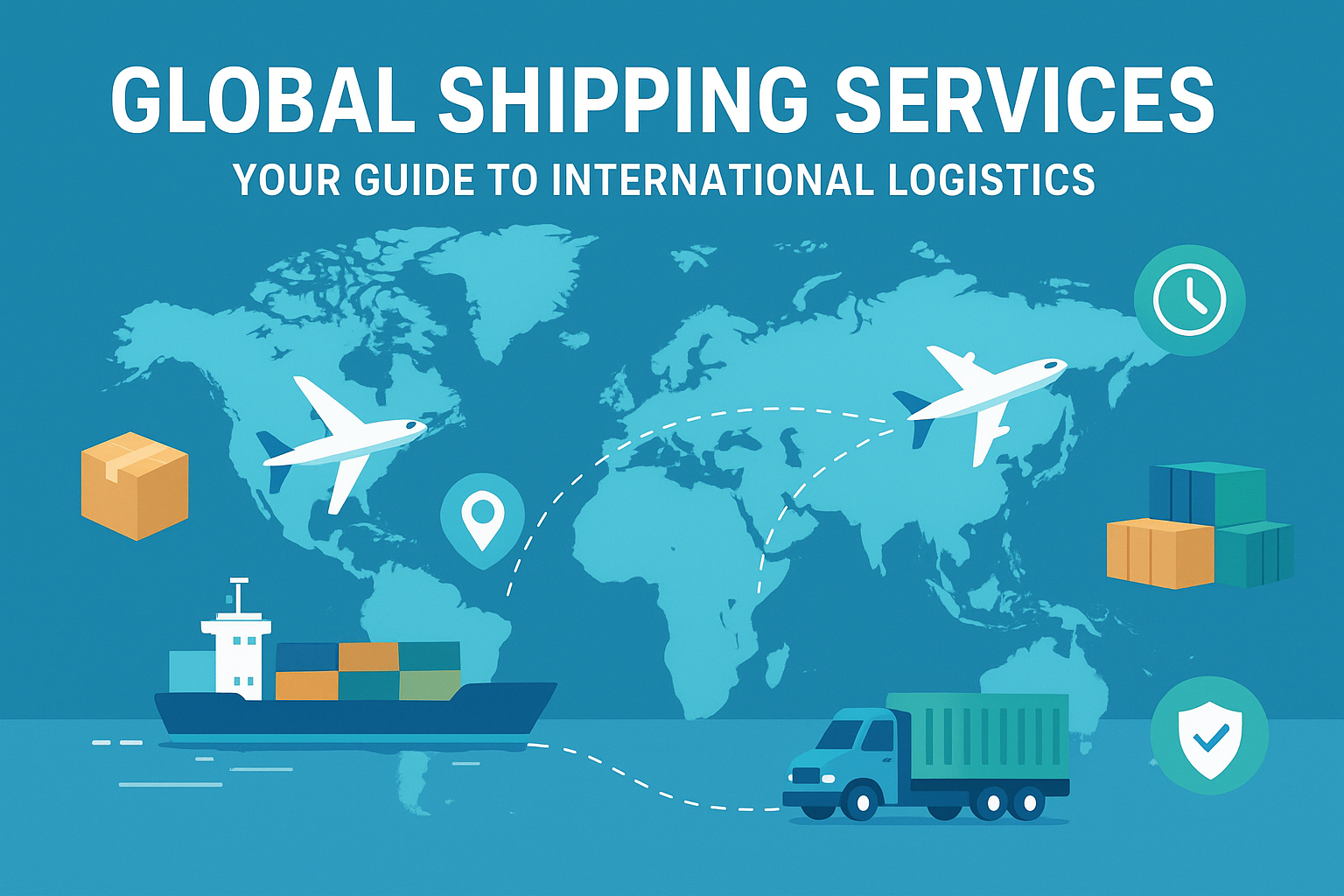
In today’s interconnected world, businesses and individuals alike rely on efficient global shipping to move goods quickly, safely, and cost-effectively across borders. Global Shipping Services: Your Guide to International Logistics is your ultimate resource for understanding the complexities of international freight, cargo handling, and supply chain solutions. From choosing the right shipping method and managing customs requirements to tracking parcels and optimizing delivery times, this guide simplifies the logistics process. Whether you’re a small business looking to ship products overseas or an individual sending parcels internationally, our comprehensive insights help you navigate global shipping with confidence and ease.
Global Shipping Services: Your Guide to International Logistics
In today’s interconnected world, the ability to move goods efficiently across borders is paramount for businesses of all sizes. Therefore, understanding and utilizing effective Global Shipping Services is no longer a luxury but a fundamental necessity. These services form the backbone of international trade, connecting producers with consumers and raw materials with manufacturers, irrespective of geographical distances. Consequently, businesses must navigate a complex web of logistics, regulations, and transportation methods to succeed in the global marketplace.
Understanding Global Shipping Services
What Are Global Shipping Services?
Global Shipping Services encompass the entire spectrum of logistical operations involved in transporting goods internationally. Primarily, this includes coordinating various modes of transport, managing customs procedures, handling documentation, and ensuring the secure and timely delivery of cargo from one country to another. Furthermore, these services are essential for facilitating cross-border commerce, supporting supply chains, and driving economic growth worldwide. They are not merely about moving boxes; instead, they represent a sophisticated system designed to overcome geographical and regulatory barriers.
The Importance of International Logistics
The significance of international logistics cannot be overstated. Firstly, it enables companies to expand their market reach, sourcing materials globally and selling products to a worldwide customer base. Secondly, efficient logistics reduce costs by optimizing inventory management and transportation routes. Moreover, robust Global Shipping Services mitigate risks associated with international trade, such as delays, damage, or compliance issues. Ultimately, they empower businesses to remain competitive and responsive in a rapidly evolving global economy.
Types of Global Shipping Services
Various transportation modes are employed within Global Shipping Services, each offering distinct advantages depending on the cargo, urgency, and budget. Choosing the right mode is a critical decision for any international shipment.
Sea Freight: The Backbone of International Trade
Sea freight is arguably the most common and cost-effective method for shipping large volumes of goods across long distances. Modern container ships can carry thousands of containers, making it ideal for bulk commodities, heavy machinery, and non-time-sensitive cargo. However, transit times are longer compared to air freight. Nevertheless, its affordability makes it indispensable for global supply chains. Full Container Load (FCL) and Less than Container Load (LCL) options provide flexibility for different shipment sizes.
Air Freight: Speed and Efficiency
For urgent shipments, high-value goods, or perishable items, air freight offers unparalleled speed. Although it is significantly more expensive than sea freight, its ability to deliver goods within days, rather than weeks, often justifies the higher cost. Consequently, air cargo plays a crucial role in industries like electronics, pharmaceuticals, and e-commerce, where rapid delivery is a competitive advantage. Furthermore, it provides excellent security and tracking capabilities.
Land Freight (Road & Rail): Regional Connectivity
Land freight, comprising road and rail transport, is vital for domestic and continental shipping. Road transport offers flexibility and door-to-door delivery, often serving as the initial and final leg for sea and air shipments. Rail transport, conversely, is efficient for moving large volumes over long distances, particularly within continents like North America and Europe. Together, these methods ensure seamless connectivity and distribution within regional networks.
Multimodal Transport: Combining Strengths
Multimodal transport integrates two or more modes of transportation under a single contract, offering a balanced approach to cost, speed, and efficiency. For example, goods might be shipped by sea across an ocean, then by rail or road to their final destination. This approach optimizes the supply chain by leveraging the strengths of each transport mode, thereby providing a comprehensive and often more resilient solution for Global Shipping Services.
Key Components of Effective Global Shipping Services
Effective international shipping involves more than just moving goods. It requires a coordinated effort across several specialized functions.
Freight Forwarding
Freight forwarders act as intermediaries between shippers and various transportation services. They manage the logistics of international shipments, including booking cargo space, negotiating rates, preparing documentation, and coordinating with customs brokers. Consequently, their expertise streamlines the shipping process, saving businesses time and money. They are, in essence, the orchestrators of complex global movements.
Customs Clearance and Compliance
Navigating customs regulations is one of the most challenging aspects of international trade. Therefore, professional Global Shipping Services include expert customs brokerage to ensure compliance with import and export laws, tariffs, duties, and trade agreements. Proper documentation and classification are critical to avoid delays, fines, and seizures. This component ensures that goods can legally enter or exit a country.
Warehousing and Distribution
Many global shipping providers offer warehousing and distribution services. These include storage, inventory management, order fulfillment, and last-mile delivery. Strategically located warehouses can reduce transit times and improve supply chain efficiency, especially for businesses with international distribution networks. Moreover, these services help manage inventory fluctuations and seasonal demands.
Cargo Insurance
International shipping inherently carries risks, such as damage, loss, or theft of goods. Therefore, cargo insurance is an essential component, providing financial protection against these unforeseen events. Reputable Global Shipping Services providers often offer or facilitate comprehensive insurance options, giving shippers peace of mind. This protection is vital for safeguarding investments.
Tracking and Visibility
Modern Global Shipping Services leverage advanced technology to provide real-time tracking and visibility of shipments. Shippers can monitor their cargo’s location and status throughout its journey, from origin to destination. This transparency enhances supply chain management, allows for proactive problem-solving, and improves customer satisfaction. Consequently, informed decision-making becomes much easier.
Benefits of Utilizing Professional Global Shipping Services
Engaging professional Global Shipping Services offers numerous advantages for businesses looking to expand internationally.
Cost Efficiency
Specialized providers often have established networks and economies of scale, allowing them to negotiate better rates with carriers. Furthermore, their expertise in optimizing routes and consolidating shipments can significantly reduce overall transportation costs. Consequently, businesses avoid costly mistakes and benefit from efficient resource allocation.
Reduced Risk and Enhanced Security
Professional services minimize the risks associated with international shipping. They implement robust security measures, handle documentation accurately, and ensure compliance with complex regulations. This reduces the likelihood of cargo damage, loss, or customs delays, thereby protecting valuable goods and business reputation. Therefore, peace of mind is a significant benefit.
Supply Chain Optimization
Experts in Global Shipping Services can analyze and optimize your entire supply chain. They identify bottlenecks, suggest more efficient routes, and implement strategies to improve speed and reliability. This leads to a leaner, more responsive, and more resilient supply chain, which is crucial for competitive advantage. Ultimately, operational efficiency is greatly enhanced.
Expertise and Compliance
International trade is laden with complex legal and regulatory frameworks. Professional providers possess the necessary expertise to navigate these intricacies, ensuring that all shipments comply with international and local laws. This prevents costly penalties, delays, and legal issues, allowing businesses to focus on their core competencies. Hence, compliance is managed effectively.
Challenges in Global Shipping and How to Overcome Them
Despite the benefits, international shipping presents several challenges that businesses must address.
Navigating Regulatory Complexities
Each country has its own set of customs duties, taxes, import/export restrictions, and documentation requirements. Staying abreast of these ever-changing regulations is a major challenge. Partnering with experienced freight forwarders and customs brokers, who specialize in Global Shipping Services, is crucial for ensuring compliance and avoiding costly mistakes. Therefore, expert guidance is invaluable.
Managing Delays and Disruptions
Global supply chains are susceptible to various disruptions, including natural disasters, geopolitical events, port congestion, and labor strikes. These can cause significant delays and increase costs. Proactive planning, diversification of routes, and utilizing providers with strong contingency plans are essential strategies to mitigate these risks. Consequently, flexibility becomes a key asset.
Cost Volatility
Shipping costs can fluctuate significantly due to factors like fuel prices, carrier surcharges, exchange rates, and peak season demand. Businesses must budget carefully and work with providers who offer transparent pricing and can help manage these variable costs. Therefore, a clear understanding of pricing structures is vital.
Environmental Concerns
There is increasing pressure to reduce the environmental impact of shipping. Businesses face challenges in adopting sustainable practices while maintaining efficiency and affordability. Collaborating with Global Shipping Services providers who prioritize green logistics, such as using fuel-efficient vessels or optimizing routes to reduce emissions, helps address these concerns. Ultimately, sustainable practices are becoming more important.
Choosing the Right Global Shipping Services Provider
Selecting the appropriate partner for your international logistics needs is a critical decision. Consider these factors:
Assessing Your Needs
Before selecting a provider, clearly define your shipping requirements. Consider the type of goods, volume, frequency, urgency, budget, and destination countries. Understanding your specific needs will help you find a provider whose services align perfectly with your business objectives. Therefore, a thorough self-assessment is the first step.
Evaluating Experience and Network
Look for providers with extensive experience in international shipping, particularly in your target markets and with your type of cargo. A robust global network indicates strong relationships with carriers and customs officials worldwide, which can translate into smoother operations. Consequently, a well-established network offers reliability.
Technology and Communication
Modern Global Shipping Services providers leverage advanced technology for tracking, documentation, and communication. Ensure the provider offers transparent communication channels, real-time tracking, and perhaps even integration with your existing systems. This enhances visibility and control over your shipments. Therefore, technological capabilities are a key differentiator.
Customer Support and Reliability
Reliable customer support is paramount. Choose a provider known for its responsiveness, problem-solving abilities, and commitment to customer satisfaction. A dedicated account manager can be invaluable for navigating complex shipments and addressing any issues promptly. Ultimately, strong support ensures a smoother experience.
The Future of Global Shipping Services
The landscape of international logistics is continually evolving, driven by technological advancements and changing global demands.
Digitalization and Automation
The future of Global Shipping Services will be increasingly digital and automated. Technologies like AI, blockchain, and IoT are set to revolutionize everything from customs clearance to cargo tracking. This will lead to greater efficiency, transparency, and security across the supply chain. Consequently, manual processes will diminish.
Sustainability Initiatives
As environmental awareness grows, sustainable shipping practices will become standard. This includes the adoption of cleaner fuels, electric vehicles, optimized routes to reduce emissions, and circular economy principles. Providers who invest in green logistics will be at the forefront of the industry. Therefore, eco-friendly options will be in high demand.
Resilient Supply Chains
Recent global events have highlighted the need for more resilient and agile supply chains. Future Global Shipping Services will focus on building robust networks that can withstand disruptions, incorporating diversified routes, contingency planning, and real-time risk assessment. Ultimately, adaptability will be key to success.
Conclusion
Global Shipping Services are the indispensable arteries of international commerce, enabling businesses to connect with markets and resources worldwide. From understanding the diverse types of freight to navigating complex customs regulations and leveraging advanced tracking technologies, effective global shipping requires expertise and strategic partnerships. By choosing the right provider, businesses can not only optimize their supply chains and reduce costs but also mitigate risks and ensure compliance, thereby fostering growth and competitive advantage in an ever-globalizing economy. As the industry continues to evolve with digitalization and sustainability at its core, staying informed and adaptable will be crucial for navigating the complexities and harnessing the full potential of international logistics.
Frequently Asked Questions (FAQ)
Q1: What is the primary difference between air freight and sea freight in global shipping services?
A1: The primary difference lies in speed and cost. Air freight is significantly faster, suitable for urgent or high-value goods, but it is also considerably more expensive. Sea freight, conversely, is much more cost-effective for large volumes and heavy goods, but it involves longer transit times, typically weeks instead of days.
Q2: How do global shipping services handle customs clearance?
A2: Professional global shipping services typically include customs brokerage. Freight forwarders or their appointed customs brokers manage all necessary documentation, ensure compliance with import/export regulations, calculate duties and taxes, and communicate with customs authorities on behalf of the shipper to facilitate smooth passage of goods across borders.
Q3: What role does a freight forwarder play in global shipping?
A3: A freight forwarder acts as an intermediary, organizing and managing the entire logistics process for international shipments on behalf of the shipper. This includes booking cargo space, negotiating rates, preparing documentation, handling customs, and coordinating with various carriers and services to ensure efficient and timely delivery from origin to destination.
want to read more articles click here.
all credit goes to UDM.