

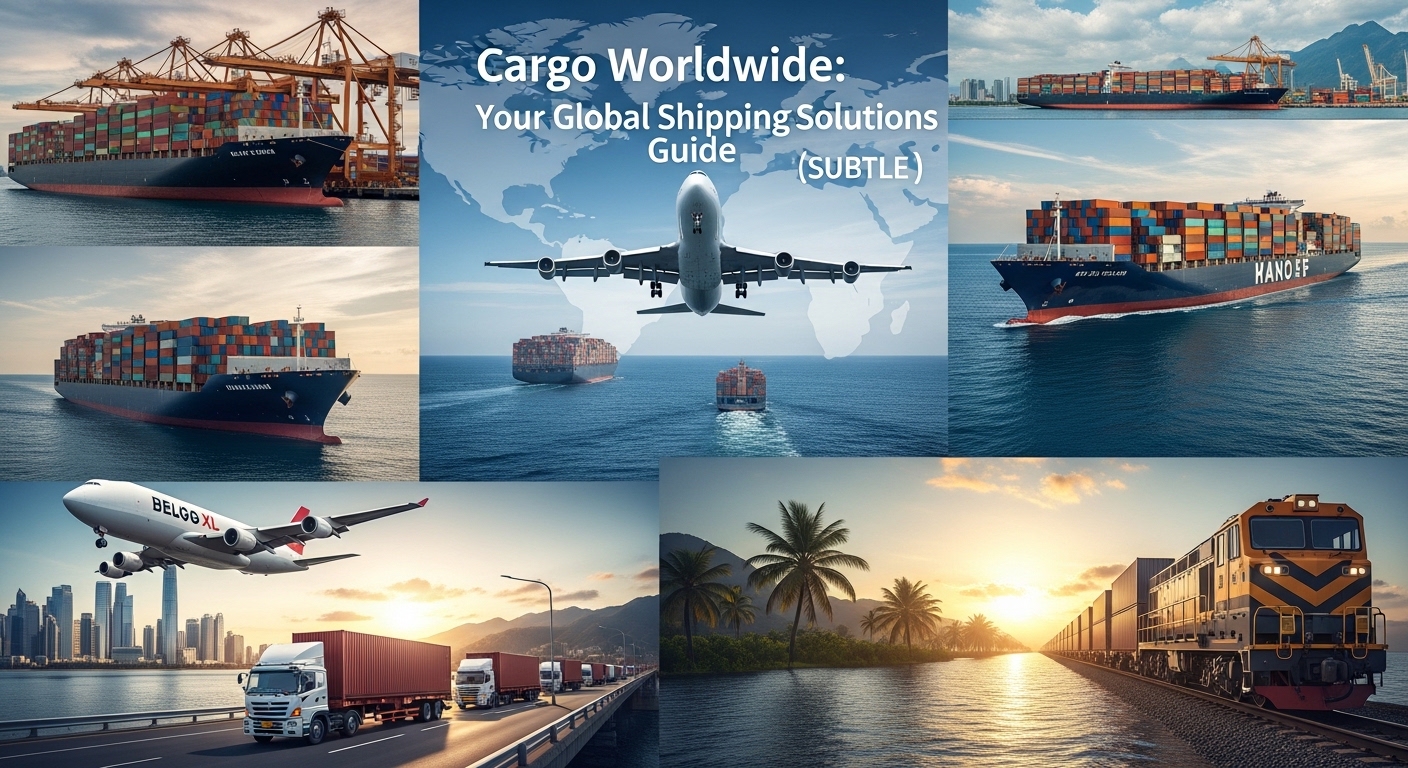
Cargo worldwide services connect businesses and individuals across borders, making global trade and international deliveries possible with speed and reliability. From air and sea freight to road and rail transport, choosing the right cargo solution ensures your goods move safely, efficiently, and on time. In Cargo Worldwide: Your Global Shipping Solutions Guide, we explore essential shipping options, costs, regulations, and tips to help you navigate international logistics with confidence and ease
Cargo Worldwide: Your Global Shipping Solution
In today’s interconnected global economy, the movement of goods across borders is not merely an option, but a fundamental necessity. Businesses of all sizes rely heavily on efficient and reliable logistics to connect with suppliers, manufacturers, and customers worldwide. This is where the concept of cargo worldwide* comes into play, encompassing the intricate processes, technologies, and networks that facilitate the international transport of goods. Understanding the nuances of global shipping is crucial for any enterprise aiming for international reach and sustained growth. Therefore, effective management of your *cargo worldwide operations is paramount.
Understanding Cargo Worldwide: A Global Perspective
The term cargo worldwide refers to the comprehensive system of transporting goods, materials, and products across international borders, utilizing various modes of transportation. Moreover, it involves a complex web of regulations, documentation, and logistical planning to ensure seamless movement from origin to destination.
What is “Cargo Worldwide”?
Essentially, cargo worldwide covers everything from a small package sent via international courier to massive industrial equipment shipped on ocean freighters. It includes commercial goods, personal effects, raw materials, and finished products. The scope is truly global, connecting every continent and major economic hub. Furthermore, the efficiency of this system directly impacts global supply chains, affecting everything from product availability to consumer prices.
The Importance of Global Logistics
Global logistics, the backbone of cargo worldwide, is critical for several reasons. Firstly, it enables international trade, allowing countries to specialize in production and exchange goods efficiently. Secondly, it supports economic growth by opening new markets for businesses and creating employment opportunities within the logistics sector. Thirdly, it ensures that consumers have access to a wider variety of products at competitive prices. Consequently, a well-managed global logistics strategy is a competitive advantage.
Key Modes of Transport for Cargo Worldwide
The choice of transportation mode is a pivotal decision when dealing with cargo worldwide. Various options exist, each with distinct advantages and disadvantages regarding speed, cost, capacity, and environmental impact. Therefore, selecting the right mode depends on the specific requirements of the shipment.
Ocean Freight: The Backbone of Global Trade
Ocean freight is arguably the most common and cost-effective method for shipping large volumes of cargo worldwide. It is ideal for non-urgent, heavy, or bulky goods. Furthermore, it offers significant capacity through containers (FCL – Full Container Load and LCL – Less than Container Load), making it an economical choice for long-distance international shipments. However, transit times are considerably longer compared to air freight.
Air Freight: Speed and Urgency
For time-sensitive or high-value cargo worldwide, air freight is the preferred option. It offers the fastest transit times, significantly reducing delivery schedules and minimizing inventory holding costs. While it is more expensive than ocean freight, its speed and reliability can be invaluable for certain industries, such as pharmaceuticals, electronics, and fashion. Therefore, businesses often choose air freight for urgent deliveries.
Road and Rail Freight: Inland Connections
Road and rail freight play crucial roles in the initial and final legs of international shipments, often referred to as drayage or last-mile delivery. Road transport offers flexibility and door-to-door service, connecting ports and airports to inland destinations. Rail freight, conversely, is efficient for moving large volumes over long distances within continents, often serving as a bridge between ocean ports and major distribution hubs. Together, they form vital links in the chain of cargo worldwide.
Multimodal Solutions: Integrated Efficiency
Often, a single mode of transport is insufficient for complex international shipments. Multimodal transport combines two or more modes (e.g., ocean, rail, and road) under a single contract. This approach optimizes efficiency, cost, and speed by leveraging the strengths of each mode. For instance, cargo worldwide might travel by sea from Asia to Europe, then by rail across the continent, and finally by truck to its ultimate destination. This integrated approach streamlines the entire logistics process.
Challenges and Solutions in Shipping Cargo Worldwide
Shipping cargo worldwide is not without its complexities. Businesses often encounter a range of challenges, from regulatory hurdles to unforeseen delays. Nevertheless, effective strategies and modern solutions can mitigate these issues, ensuring smoother operations.
Navigating Customs and Regulations
Each country has its own unique set of customs duties, taxes, import/export restrictions, and documentation requirements. Non-compliance can lead to significant delays, fines, and even seizure of goods. Therefore, working with experienced customs brokers and freight forwarders is essential to ensure all paperwork is accurate and regulations are met. Moreover, staying updated on international trade agreements and changes in policy is crucial for businesses dealing with cargo worldwide.
Risk Management and Insurance
International shipping exposes goods to various risks, including damage, loss, theft, and delays due to natural disasters or geopolitical events. Consequently, comprehensive risk management is vital. Shippers should consider cargo insurance to protect against financial losses. Furthermore, choosing reputable carriers with strong safety records and robust security measures can significantly reduce potential risks for your cargo worldwide shipments.
Technology and Tracking
Modern technology has revolutionized the way cargo worldwide is managed. Advanced tracking systems provide real-time visibility into the location and status of shipments, allowing businesses to monitor progress and anticipate potential issues. Additionally, digital platforms streamline documentation, automate processes, and improve communication between all parties involved in the supply chain. This technological integration enhances transparency and efficiency.
Sustainability in Global Shipping
As environmental concerns grow, the logistics industry is increasingly focused on sustainable practices. Businesses are seeking greener shipping options, such as using more fuel-efficient vessels, optimizing routes to reduce emissions, and exploring alternative fuels. Investing in sustainable logistics not only benefits the environment but can also enhance a company’s brand image and meet evolving consumer demands. Therefore, considering the environmental impact is a growing trend for cargo worldwide operations.
Choosing the Right Partner for Your Cargo Worldwide Needs
Selecting a reliable logistics partner is one of the most critical decisions for any business engaged in international trade. The right partner can simplify complex processes, reduce costs, and ensure timely delivery of your cargo worldwide.
Expertise and Experience
Look for a logistics provider with extensive experience in international shipping and a deep understanding of global trade regulations. Their expertise should cover the specific regions you operate in and the types of goods you ship. A knowledgeable partner can anticipate potential problems and offer proactive solutions, thus saving time and money. Furthermore, their track record speaks volumes about their capability to handle cargo worldwide effectively.
Network and Reach
A robust global network is indispensable. Your chosen partner should have established connections with carriers, customs brokers, and agents worldwide. This extensive network ensures seamless coordination across different modes of transport and geographical locations, facilitating smooth movement of your cargo worldwide. Consequently, a wider reach often translates to more flexible and reliable service options.
Customer Service and Communication
Effective communication is paramount in international logistics. Choose a partner that offers transparent communication, provides regular updates, and is responsive to your inquiries. A dedicated point of contact or a user-friendly online portal can significantly improve your experience. Ultimately, strong customer service builds trust and ensures you are always informed about your cargo worldwide.
Cost-Effectiveness and Transparency
While cost should not be the sole determining factor, it is undoubtedly important. Seek a partner that offers competitive pricing without compromising on service quality. Furthermore, transparency in pricing, with no hidden fees, is crucial. A good logistics provider will offer clear quotes and help you understand the cost components of shipping your cargo worldwide.
The Future of Cargo Worldwide
The landscape of cargo worldwide is continuously evolving, driven by technological advancements, changing geopolitical dynamics, and shifting consumer expectations. Staying abreast of these trends is vital for businesses to remain competitive and adapt their logistics strategies.
Digitalization and Automation
The future of cargo worldwide will be increasingly digital and automated. Technologies such as Artificial Intelligence (AI), blockchain, and the Internet of Things (IoT) are set to further optimize supply chains, enhance tracking capabilities, and automate documentation processes. This will lead to greater efficiency, reduced errors, and faster transit times. Therefore, embracing these innovations is key.
E-commerce Impact
The exponential growth of e-commerce has significantly reshaped the demands on cargo worldwide. Consumers now expect faster, more flexible, and transparent delivery options for international purchases. This trend is driving innovations in last-mile delivery, express shipping, and returns management, pushing logistics providers to adapt and expand their services to meet these new demands.
Geopolitical Influences
Geopolitical events, trade wars, and global health crises can profoundly impact international shipping routes, regulations, and costs. Businesses must remain agile and have contingency plans in place to navigate these uncertainties. A strong logistics partner can provide valuable insights and flexible solutions to mitigate risks associated with geopolitical shifts affecting cargo worldwide.
Conclusion
Managing cargo worldwide* is an indispensable component of modern global commerce. From understanding the various modes of transport to navigating complex customs regulations and embracing technological advancements, businesses must adopt a strategic approach to their international logistics. By choosing the right partners, leveraging innovative solutions, and staying informed about global trends, companies can ensure their goods move efficiently, securely, and cost-effectively across borders, ultimately fostering growth and competitive advantage in the global marketplace. The ongoing evolution of global trade necessitates continuous adaptation and optimization of *cargo worldwide strategies.
Frequently Asked Questions (FAQ)
Q1: What are the main factors to consider when choosing a shipping method for cargo worldwide?
A1: When choosing a shipping method for cargo worldwide, key factors include the urgency of the shipment, the size and weight of the goods, the budget, the origin and destination, and the nature of the goods (e.g., hazardous, perishable). Ocean freight is cost-effective for large, non-urgent shipments, while air freight is preferred for speed and high-value items.
Q2: How can businesses track their cargo worldwide shipments?
A2: Most reputable logistics providers offer advanced tracking systems that allow businesses to monitor their cargo worldwide in real-time. This is typically done through a unique tracking number provided at the time of shipment. Online portals, mobile apps, and direct communication with account managers are common methods for obtaining status updates.
Q3: What is the role of a freight forwarder in shipping cargo worldwide?
A3: A freight forwarder acts as an intermediary between the shipper and various transportation services. They handle the complex logistics of shipping cargo worldwide, including booking cargo space, negotiating freight charges, preparing documentation, managing customs clearance, and coordinating the entire supply chain. Their expertise helps streamline international shipments and ensures compliance with regulations.
want to read more articles click here.
all credit goes to UDM.