

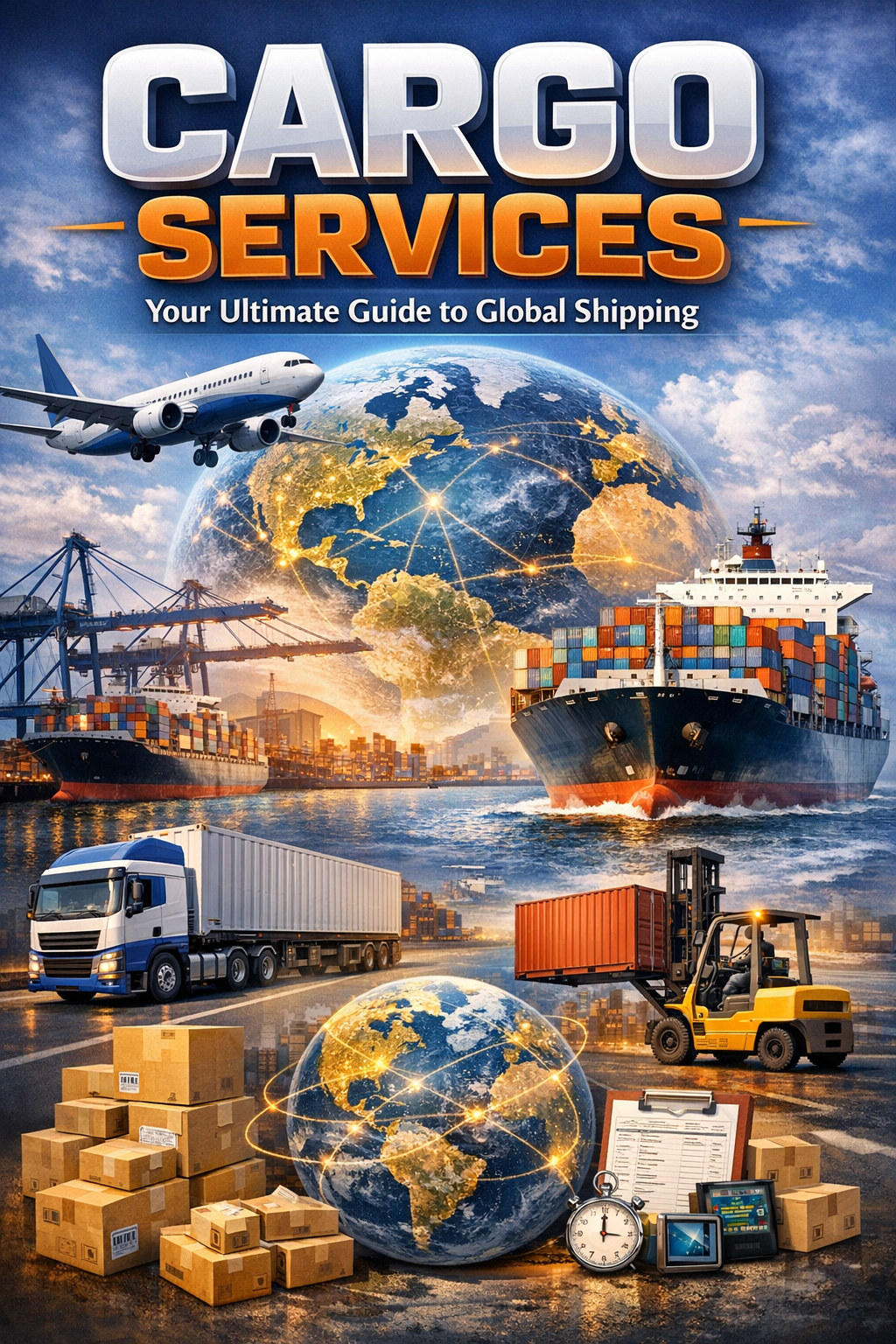
Cargo Services: Your Ultimate Guide to Global Shipping
In today’s interconnected global economy, the efficient movement of goods is paramount for businesses of all sizes. This is where cargo services play a pivotal role. They encompass a broad spectrum of logistical solutions designed to transport goods safely, timely, and cost-effectively across various distances, often internationally. Essentially, these services form the backbone of global commerce, enabling supply chains to function seamlessly. Whether you’re shipping raw materials, finished products, or personal effects, understanding the intricacies of cargo services is crucial for optimizing your operations and ensuring customer satisfaction.
Understanding Cargo Services
What Are Cargo Services?
Cargo services refer to the professional handling and transportation of goods from one point to another. This comprehensive offering typically involves more than just physical transport; it includes a range of associated activities. For instance, it covers packaging, documentation, customs clearance, warehousing, and delivery. Consequently, a robust cargo service provider acts as a crucial partner, managing the complex journey of your freight from origin to destination. They coordinate different modes of transport, thereby streamlining the entire shipping process for their clients.
The Importance of Reliable Cargo Services
Reliable cargo services are indispensable for several reasons. First, they ensure the timely delivery of goods, which is vital for meeting production schedules and customer demands. Delays can lead to significant financial losses and damage to a company’s reputation. Moreover, these services provide security for your shipments, protecting them from damage or loss during transit. Furthermore, expert handling of customs documentation and regulations prevents costly delays and legal issues. Ultimately, choosing the right cargo services partner can lead to substantial operational efficiencies and competitive advantages.
Types of Cargo Services
Various modes of transport are utilized in cargo services, each offering distinct advantages depending on the nature, urgency, and destination of the shipment. Therefore, selecting the appropriate mode is a critical decision.
Air Freight
Air freight involves transporting goods by aircraft. This method is ideal for urgent, high-value, or time-sensitive shipments due to its speed. However, it is generally the most expensive option. Despite the higher cost, air freight offers unparalleled speed and a high level of security. It is commonly used for perishable goods, pharmaceuticals, electronics, and fashion items, where rapid delivery is essential. Flights have strict schedules; consequently, careful planning is necessary.
Sea Freight
Sea freight, or ocean freight, is the most common and cost-effective method for transporting large volumes of goods internationally. Goods are packed into containers and shipped on large vessels. While significantly slower than air freight, it is environmentally more friendly and substantially cheaper for bulk cargo. Sea freight is suitable for non-perishable goods, raw materials, heavy machinery, and oversized items. There are two main types: Full Container Load (FCL) and Less than Container Load (LCL), allowing flexibility for different shipment sizes.
Road Freight
Road freight involves transporting goods by trucks or other vehicles over land. This mode offers excellent flexibility, particularly for domestic and cross-border shipments within continents. It provides door-to-door delivery, which is a significant advantage. Road freight is often used in conjunction with air or sea freight for the ‘first mile’ and ‘last mile’ legs of a journey. Furthermore, it is highly adaptable to various cargo types and can be scheduled with relative ease.
Rail Freight
Rail freight uses trains to transport goods over long distances, particularly within landlocked regions or across large countries. It is a cost-effective and environmentally friendly option for bulk and heavy cargo. While less flexible than road freight in terms of direct door-to-door delivery, it is more efficient for high-volume, long-haul transport. Rail networks are expanding, making it an increasingly viable option for many supply chains.
Multimodal Transport
Multimodal transport combines two or more different modes of transport under a single contract. For example, a shipment might travel by road to a port, then by sea, and finally by rail to its ultimate destination. This approach leverages the strengths of each mode, optimizing cost, speed, and efficiency. Consequently, it provides a seamless and integrated logistics solution, often managed by a single freight forwarder.
Key Components of Effective Cargo Services
Beyond the primary modes of transport, several crucial services contribute to the overall effectiveness and efficiency of cargo operations. These auxiliary services ensure a smooth flow of goods.
Warehousing and Storage
Warehousing facilities are essential for storing goods before, during, and after transit. They offer a secure and controlled environment, protecting cargo from damage, theft, and environmental factors. Modern warehouses often include inventory management systems, order fulfillment capabilities, and cross-docking services. Therefore, they are integral to managing supply chain fluctuations and optimizing distribution.
Customs Clearance
Customs clearance is a critical and often complex aspect of international shipping. It involves preparing and submitting documentation required by customs authorities to allow goods to enter or exit a country. Experienced cargo services providers handle this process efficiently, ensuring compliance with all regulations, duties, and taxes. This expertise prevents delays and avoids potential fines, which can be substantial.
Freight Forwarding
Freight forwarders act as intermediaries between shippers and various transport services. They manage the entire logistics process, from booking cargo space to handling documentation and customs. Essentially, they simplify international shipping for businesses by leveraging their network and expertise. Thus, they are invaluable partners for navigating complex global logistics.
Cargo Insurance
While cargo services providers take precautions, unforeseen events can still occur. Cargo insurance protects against loss, damage, or theft of goods during transit. It provides financial security and peace of mind. Shippers can choose from various insurance policies, tailored to the value and nature of their goods. It is a prudent investment, especially for high-value shipments.
Tracking and Visibility
Modern cargo services increasingly offer advanced tracking and visibility tools. These systems allow shippers to monitor the real-time location and status of their cargo. This transparency enhances supply chain management, enables proactive problem-solving, and improves communication with customers. Consequently, visibility is now a standard expectation for premium services.
Choosing the Right Cargo Services Provider
Selecting the ideal partner for your shipping needs requires careful consideration. A well-chosen provider can significantly enhance your operational efficiency and reduce costs.
Assessing Your Needs
Before engaging any provider, clearly define your shipping requirements. Consider the type of goods, volume, urgency, destination, and budget. For example, if you ship perishable items, speed and specialized handling are paramount. Conversely, for bulk, non-urgent goods, cost-effectiveness through sea freight might be the priority. Therefore, a clear understanding of your specific needs is the first step.
Evaluating Experience and Reputation
Look for providers with a proven track record and extensive experience in handling cargo similar to yours. Check their reputation through client testimonials, case studies, and industry reviews. A reputable provider demonstrates reliability, expertise, and a commitment to customer service. Furthermore, their experience often translates into smoother operations and fewer issues.
Technology and Innovation
Modern logistics relies heavily on technology. Choose a provider that utilizes advanced tracking systems, digital platforms for booking and documentation, and data analytics. These technological capabilities improve efficiency, transparency, and decision-making. In addition, innovative solutions can offer competitive advantages.
Cost-Effectiveness
While cost is a significant factor, it should not be the sole determinant. Obtain detailed quotes and compare pricing structures. Look for transparency in billing, avoiding hidden fees. Remember that the cheapest option might not always provide the best value in terms of reliability and service quality. Therefore, balance cost with the overall value proposition.
Customer Support
Excellent customer support is invaluable. A responsive and knowledgeable support team can address issues quickly, provide updates, and offer expert advice. Assess their communication channels and availability. Good communication fosters trust and ensures a smoother shipping experience, especially when unexpected challenges arise.
The Future of Cargo Services
The logistics industry is continuously evolving, driven by technological advancements, environmental concerns, and shifting global trade dynamics. The future of cargo services promises even greater efficiency and sustainability.
Digitalization and Automation
Digitalization, including AI, blockchain, and IoT, is transforming cargo operations. Automated warehouses, smart contracts, and real-time data analytics are enhancing efficiency, reducing errors, and improving transparency. This digital transformation streamlines processes from booking to delivery, consequently leading to faster and more reliable services.
Sustainability in Logistics
There is a growing emphasis on sustainable logistics practices. Cargo services providers are increasingly adopting greener shipping methods, optimizing routes to reduce fuel consumption, and investing in electric vehicles and alternative fuels. Furthermore, carbon footprint reduction is becoming a key differentiator and a corporate responsibility.
Resilient Supply Chains
The past few years have highlighted the importance of resilient supply chains. Future cargo services will focus on building more robust and adaptable networks capable of withstanding disruptions, whether from natural disasters, geopolitical events, or economic shifts. This involves diversification of routes, strategic inventory management, and enhanced risk assessment.
Frequently Asked Questions (FAQ)
Q1: What is the main difference between FCL and LCL in sea freight?
A1: FCL (Full Container Load) means your goods occupy an entire shipping container, even if they don’t fill it completely. It’s generally more cost-effective for larger shipments and offers faster transit times as the container doesn’t need to be consolidated with other cargo. LCL (Less than Container Load), conversely, means your goods share container space with other shippers’ cargo. This is ideal for smaller shipments, as you only pay for the space your goods occupy, though it might involve longer transit times due to consolidation and deconsolidation processes.
Q2: How do cargo services handle customs clearance for international shipments?
A2: Reputable cargo services providers typically have in-house customs brokers or work closely with third-party experts. They prepare and submit all necessary documentation, calculate duties and taxes, and ensure compliance with the import and export regulations of both the origin and destination countries. This proactive approach minimizes delays and ensures a smooth passage of goods through customs.
Q3: Why is cargo insurance important, even with a reliable cargo service provider?
A3: While cargo service providers strive for safe delivery, unforeseen events such as accidents, natural disasters, theft, or damage can occur during transit. Cargo insurance offers financial protection against these risks, covering the value of your goods. It provides peace of mind and ensures that you are compensated in case of loss or damage, protecting your investment regardless of the carrier’s liability limitations.
Conclusion
In conclusion, cargo services are the lifeblood of global trade, facilitating the movement of goods across continents and ensuring supply chains remain robust. From air and sea freight to road and rail, these services offer diverse solutions tailored to specific needs. Moreover, critical components like warehousing, customs clearance, and freight forwarding further enhance their value. Choosing the right provider involves careful assessment of needs, reputation, technology, cost, and customer support. As the industry evolves, digitalization, sustainability, and resilience will continue to shape the future of cargo services, making them even more efficient and integral to the global economy.
want to read more articles click here.
all credit goes to UDM.