

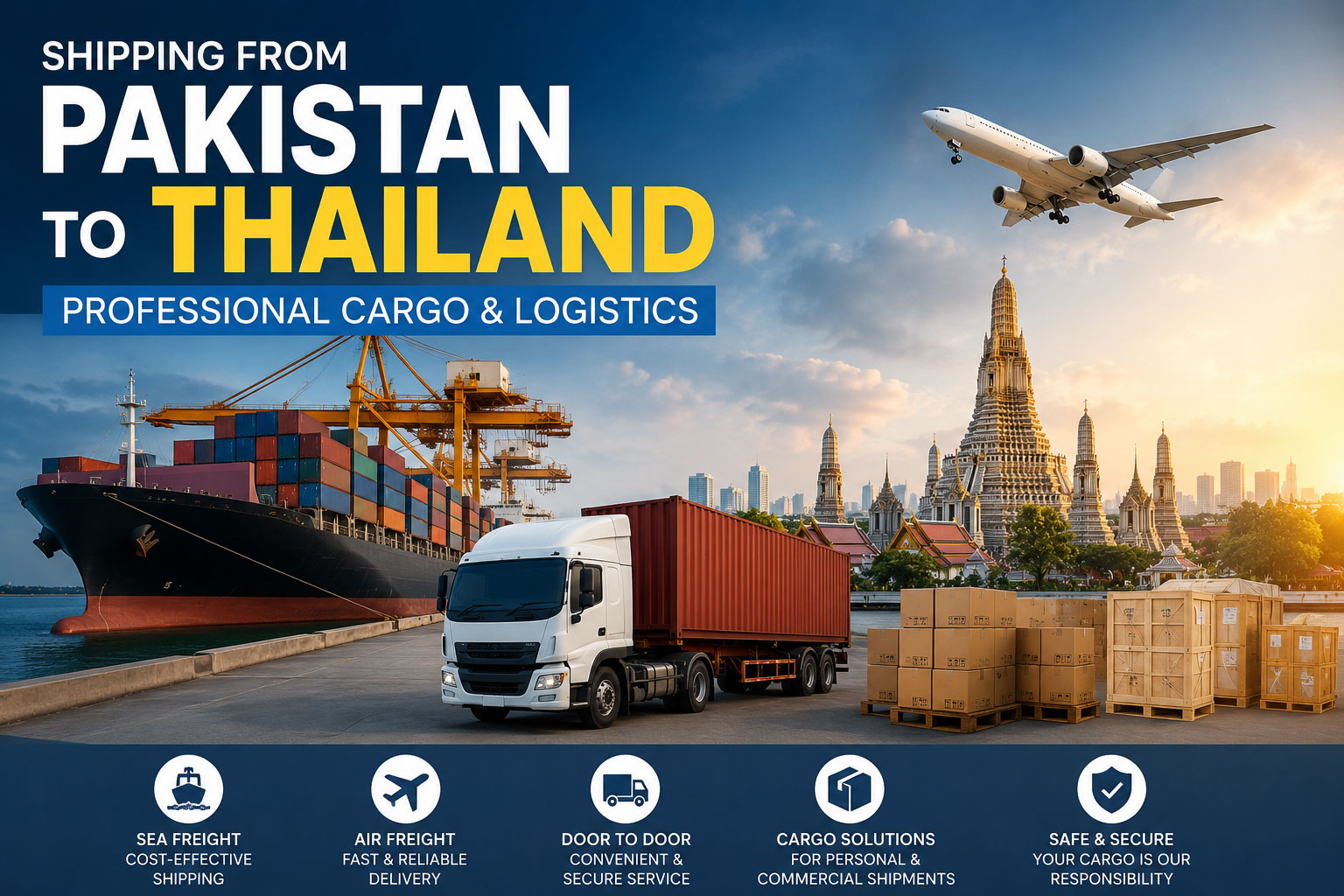
Shipping from Pakistan to Thailand | Professional Cargo & Logistics
Moving goods between Pakistan and Thailand requires the right logistics partner to navigate complex international shipping requirements. This guide is for businesses, importers, exporters, and manufacturers who need reliable cargo services to connect these two major South Asian markets.
You’ll discover the most efficient shipping routes and transportation methods available for your cargo needs. We’ll break down the essential paperwork and documentation you need to avoid costly delays at customs checkpoints. Plus, we’ll explore different cargo types and specialized handling services to ensure your shipments arrive safely and on time.
Understanding Pakistan-Thailand Shipping Routes and Options
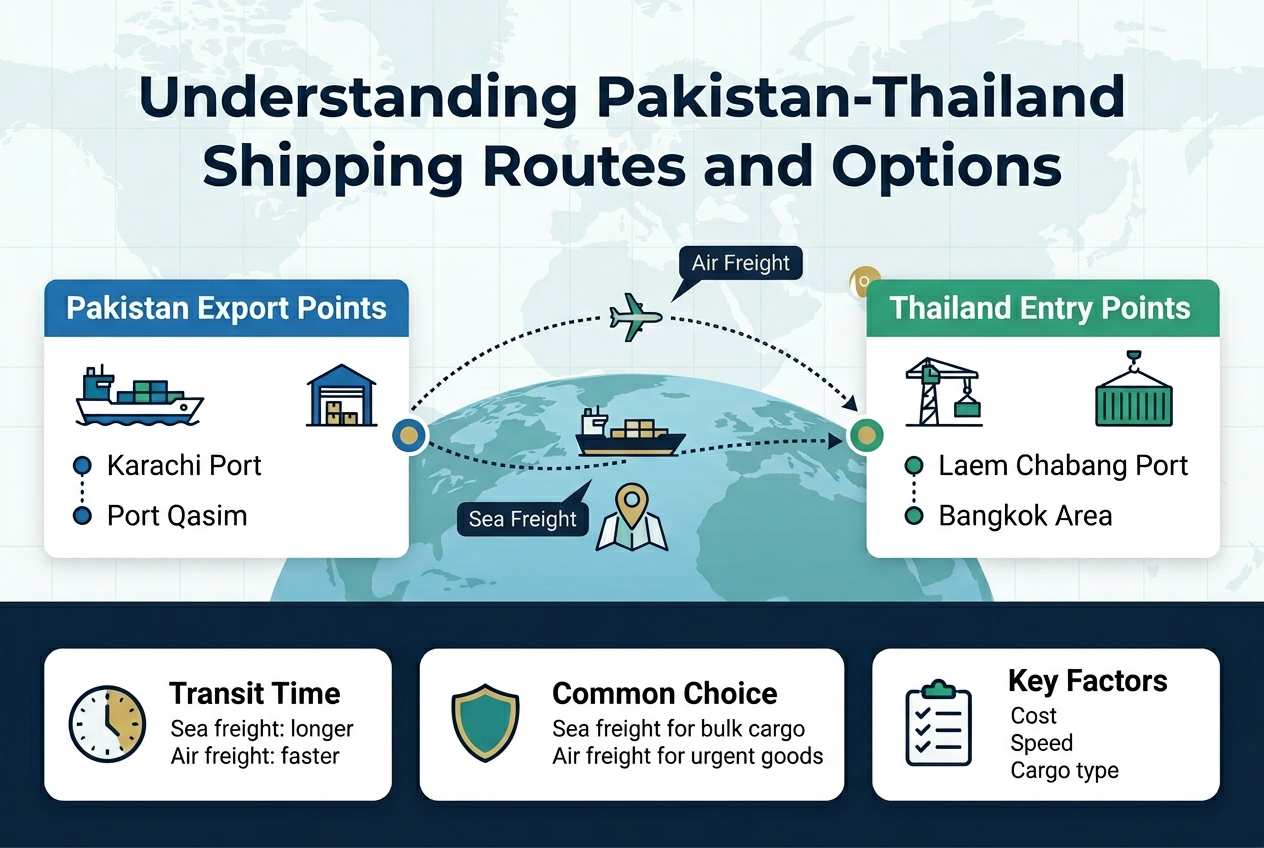
Direct sea freight services between Karachi and Bangkok ports
Sea freight represents the backbone of shipping from Pakistan to Thailand, with Karachi Port serving as the primary gateway for Pakistani exports. Major shipping lines operate regular services connecting Karachi to Laem Chabang Port (Bangkok’s main seaport), offering both Full Container Load (FCL) and Less than Container Load (LCL) options.
The most reliable carriers on this route include Maersk, COSCO, MSC, and ONE, with vessels typically departing twice weekly from Karachi. These services often involve transshipment through major hubs like Singapore, Colombo, or Dubai, which adds 2-3 days to the journey but provides better schedule reliability and competitive rates.
Container options range from 20ft and 40ft standard containers to specialized equipment like high-cube containers, open-top containers for oversized cargo, and refrigerated containers for temperature-sensitive goods. Weekly capacity generally exceeds 500 TEU on this route, ensuring space availability even during peak seasons.
Air cargo connections via major international hubs
Air cargo provides the fastest option for shipping from Pakistan to Thailand, with most shipments routing through Dubai (DXB), Doha (DOH), or Istanbul (IST). Pakistan International Airlines, Emirates, Qatar Airways, and Turkish Airlines offer dedicated cargo space alongside passenger flights.
Karachi’s Jinnah International Airport handles the majority of Pakistan-Thailand air shipments, with connections to Bangkok’s Suvarnabhumi Airport taking 8-12 hours including layovers. Lahore and Islamabad airports provide secondary options, though with fewer frequency choices.
Air cargo rates fluctuate significantly based on fuel costs, seasonal demand, and available capacity. Peak seasons (October-December and March-May) often see rate increases of 15-25% compared to normal periods. Weight breaks typically occur at 45kg, 100kg, 300kg, and 500kg, with better rates for larger shipments.
Multi-modal transport solutions for cost optimization
Smart logistics planning combines different transport modes to balance cost and speed. A popular approach involves trucking goods from inland Pakistani cities to Karachi, followed by sea freight to Bangkok, and final delivery via Thailand’s extensive road network.
Rail transport within Pakistan offers cost savings for bulk shipments moving from northern production centers to Karachi. The newly developed China-Pakistan Economic Corridor (CPEC) rail connections provide additional routing options, though these primarily benefit shipments originating from Punjab and KPK provinces.
For time-sensitive but cost-conscious shippers, sea-air combinations work well. Goods travel by sea to intermediate hubs like Singapore or Colombo, then transfer to air transport for final delivery to Bangkok. This hybrid approach typically costs 40-50% less than pure air freight while delivering goods 10-15 days faster than sea freight alone.
Transit times and seasonal considerations
Standard sea freight from Karachi to Bangkok takes 18-25 days, depending on the specific service and transshipment arrangements. Direct services (rare but available) complete the journey in 12-15 days, while services with multiple stops can extend to 30 days during congested periods.
Air freight deliveries typically complete within 3-5 days door-to-door, including customs clearance time. Express air services can achieve next-day delivery for urgent shipments, though at premium rates.
Seasonal factors significantly impact both transit times and costs. Monsoon season (July-September) can disrupt trucking to Karachi Port, while Chinese New Year (January-February) affects vessel schedules throughout Asia. Thailand’s peak agricultural export season (November-March) increases port congestion in Bangkok, potentially adding 2-4 days to delivery times.
Weather-related delays are more common during the southwest monsoon, when rough seas can delay vessel schedules by 1-2 days. Air cargo faces fewer weather disruptions but may experience capacity constraints during Thailand’s peak tourist seasons when passenger flights carry additional cargo.
Essential Documentation Requirements for Cross-Border Shipping
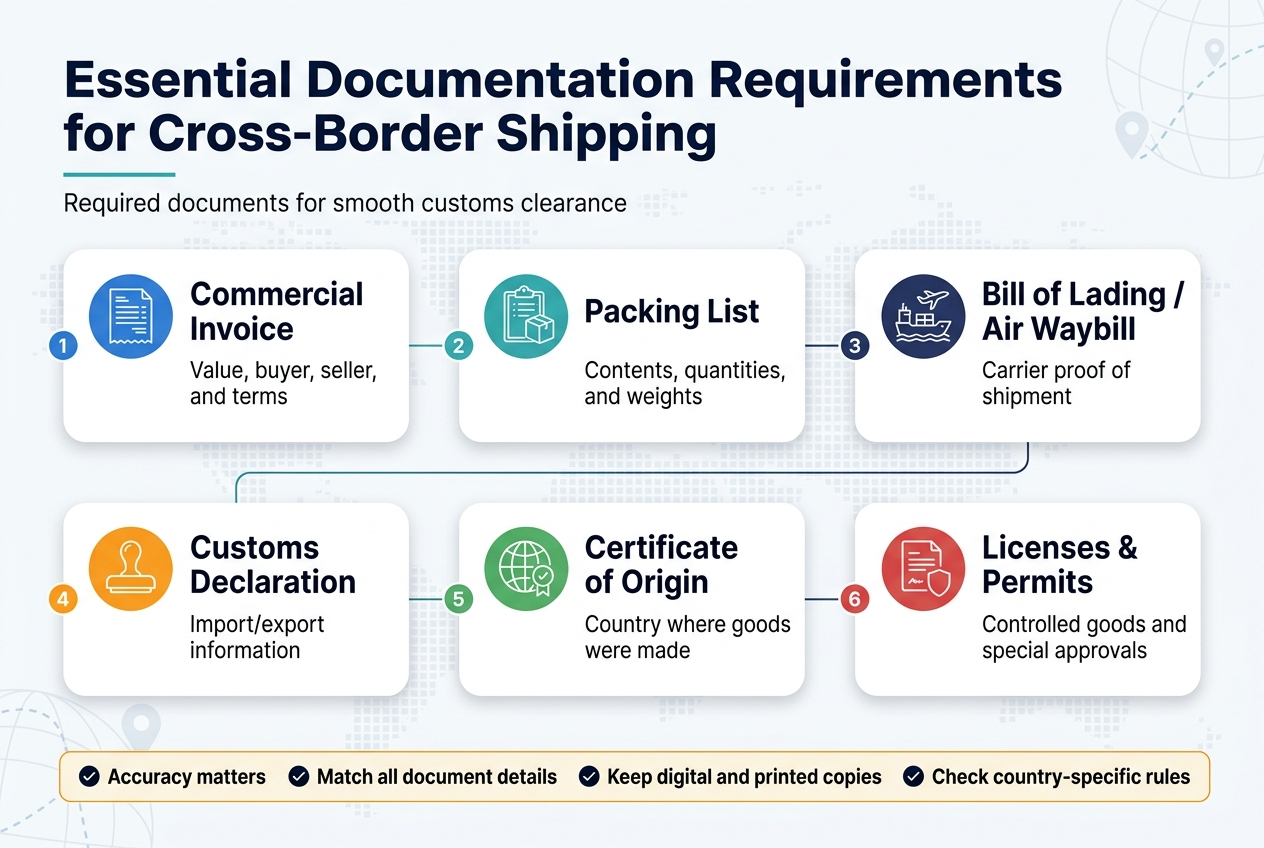
Export Permits and Certificates from Pakistan Customs
Getting your cargo ready for international shipping from Pakistan means dealing with several key export documents. The Export General Manifest (EGM) serves as your primary shipping declaration and must be filed with Pakistan Customs before departure. You’ll also need a valid export license, particularly for restricted goods like textiles, electronics, or agricultural products.
The Certificate of Origin proves your goods originated in Pakistan and often qualifies your shipment for preferential duty rates under trade agreements between Pakistan and Thailand. Your exporter must obtain this from the local Chamber of Commerce or relevant trade authority. For specific product categories, additional certificates may be required – think phytosanitary certificates for agricultural products or quality inspection certificates for manufactured goods.
Don’t forget about the Goods Declaration (GD) form, which details your cargo’s description, value, and classification under the Harmonized System (HS) codes. This document forms the backbone of customs processing and duty calculation.
Import Clearance Documents for Thai Authorities
Thailand’s customs system requires specific paperwork before your shipment can enter the country. The Import Declaration must be filed electronically through Thailand’s National Single Window system, typically handled by your local customs broker or freight forwarder.
Most shipments need an Import License or Import Permit, especially for controlled items like electronics, chemicals, or food products. The Thai Food and Drug Administration (FDA) oversees imports of consumables, while the Ministry of Commerce handles general trade items.
Your consignee in Thailand must provide their Tax Identification Number and business registration documents. For commercial shipments exceeding certain value thresholds, additional financial documentation proving the legitimacy of the transaction becomes necessary.
Commercial Invoices and Packing List Specifications
Your commercial invoice acts as both a billing document and customs declaration. It must include detailed product descriptions using internationally recognized terms, accurate quantities, unit prices, and total values in USD or Thai Baht. Each item should have its correct HS code for proper classification.
The packing list breaks down your shipment’s physical contents, showing how goods are packed, their dimensions, weights, and container or package numbers. This document helps customs officers verify your cargo matches the declared contents during inspection.
Both documents must include complete shipper and consignee details, including full addresses, contact information, and business registration numbers. Any discrepancies between these documents and your actual shipment can cause serious delays at customs checkpoints.
Insurance Documentation and Liability Coverage
Marine cargo insurance protects your goods during the shipping from Pakistan to Thailand journey. Your insurance certificate should cover the full replacement value of your cargo plus additional costs like freight and duties – typically 110% of the invoice value.
Different coverage levels exist, from basic “Free of Particular Average” (FPA) to comprehensive “All Risks” coverage. Most shippers opt for All Risks coverage, which protects against physical loss or damage from external causes during transit, loading, and unloading.
Your insurance policy must clearly state the coverage period, typically “warehouse to warehouse” protection that begins when goods leave your facility in Pakistan and ends when they reach the final destination in Thailand. Keep all insurance documents readily available, as both Pakistani and Thai customs may request them during clearance procedures.
Some high-value shipments may require additional documentation like surveyor reports or special handling certificates to validate proper packaging and loading procedures.
Cargo Types and Specialized Handling Services
Textile and Garment Shipments with Climate Control
Pakistan’s thriving textile industry requires specialized shipping solutions when exporting to Thailand. Temperature and humidity control systems maintain fabric quality during the journey, preventing moisture damage that could ruin entire shipments. Professional cargo services use climate-controlled containers that keep temperatures between 18-22°C with humidity levels below 65%.
Cotton fabrics, silk products, and synthetic materials each demand specific handling protocols. Moisture-sensitive items like wool and cashmere require additional protective wrapping and desiccant packets. Leading logistics providers offer real-time monitoring systems that track environmental conditions throughout transit, sending alerts if readings exceed safe parameters.
Proper packaging involves moisture-barrier films, breathable materials for natural fibers, and anti-static protection for synthetic textiles. Garments need careful folding techniques and specialized hangers to prevent creasing during transport.
Agricultural Products and Perishable Goods Transport
Fresh produce, spices, and processed food items from Pakistan need refrigerated shipping to reach Thailand’s markets in optimal condition. Reefer containers maintain precise temperature zones from -25°C for frozen goods to +15°C for fresh fruits and vegetables.
Popular exports include mangoes, dates, rice, and basmati varieties that require specific storage conditions. Mangoes travel at 12-14°C with 85-90% humidity, while dates need dry conditions around 0-5°C. Rice shipments use fumigation treatments and moisture-controlled environments to prevent pest contamination.
Cold chain management becomes critical for pharmaceuticals and dairy products, requiring unbroken refrigeration from pickup to delivery. Advanced tracking systems monitor temperature fluctuations, door openings, and transit times to ensure product integrity.
Industrial Machinery and Heavy Equipment Logistics
Heavy machinery exports from Pakistan’s manufacturing sector need specialized handling equipment and experienced teams. Oversized cargo like textile machinery, construction equipment, and manufacturing tools require custom loading solutions and route planning.
Project cargo services handle items exceeding standard container dimensions through flat-rack containers, open-top units, and break-bulk shipping methods. Weight distribution calculations prevent container damage while securing systems use chains, blocks, and custom-built frames.
Professional teams conduct pre-shipment surveys to identify potential challenges and develop handling strategies. This includes assessing pickup locations, transport routes, and destination facilities to ensure smooth operations.
Electronics and Fragile Item Protection Protocols
Electronic goods need anti-static packaging, shock absorption systems, and climate control to prevent damage during shipping from Pakistan to Thailand. Sensitive components require ESD-safe materials and humidity control below 60% to prevent corrosion.
Multi-layer packaging systems use foam inserts, bubble wrap, and rigid outer containers to absorb impacts. Fragile items get individual wrapping with corner protection and void-fill materials that prevent movement during transit.
Insurance coverage protects high-value electronics with specialized policies covering manufacturing defects, handling damage, and environmental exposure. Documentation includes detailed condition reports with photos taken before shipping.
Cost Structure and Payment Solutions
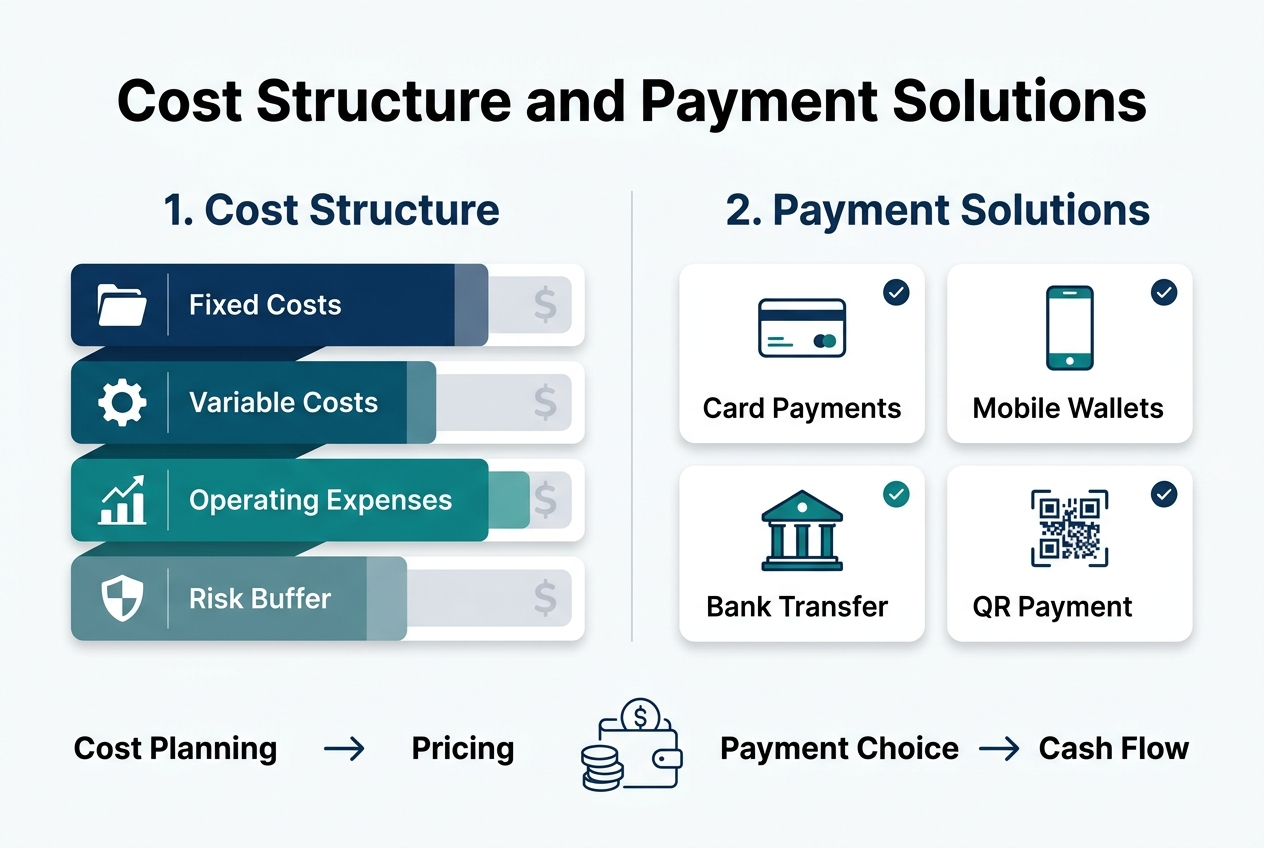
Freight Rate Calculations Based on Weight and Volume
Calculating shipping costs from Pakistan to Thailand depends on two main factors: the actual weight and dimensional weight of your cargo. Carriers use a formula that considers both measurements, charging based on whichever is greater. For dimensional weight, divide the length × width × height (in centimeters) by 5,000 for air freight or 6,000 for sea freight.
Sea freight typically charges per cubic meter (CBM) or per ton, with minimum charges applying even for smaller shipments. Air freight uses a weight-break system where rates decrease as volume increases, offering better value for larger shipments. Most forwarders provide rate calculators, but getting quotes from multiple providers helps identify the most competitive pricing structure.
Additional Charges for Customs Clearance and Handling
Beyond base freight rates, several additional fees apply to shipping from Pakistan to Thailand. Terminal handling charges cover loading and unloading at ports or airports, typically ranging from $50-150 depending on cargo type and size. Documentation fees for bill of lading, certificates, and customs paperwork add another $30-80 to your total cost.
Customs clearance services in Thailand charge between $100-300 based on shipment complexity. Insurance premiums usually cost 0.1-0.5% of cargo value, while security screening fees for certain goods can add $25-75. Storage charges apply if cargo remains at destination facilities beyond free time periods, which vary from 3-7 days for most terminals.
Currency Exchange Considerations and Payment Methods
Currency fluctuations between Pakistani Rupees (PKR), Thai Baht (THB), and US Dollars significantly impact shipping costs. Most international freight is quoted in USD, creating exposure to exchange rate movements. Forward contracts with freight forwarders can lock in rates for up to 90 days, protecting against unfavorable currency swings.
Payment methods include wire transfers, letters of credit, and online payment platforms. Wire transfers offer security but involve bank fees of $15-50 per transaction. Letters of credit provide additional protection for high-value shipments but cost 0.1-1% of shipment value. Digital payment platforms like PayPal or Wise charge lower fees but may have transaction limits.
Budget-Friendly Shipping Options for Small Businesses
Small businesses can reduce shipping costs through consolidation services, where multiple shipments share container space. Less-than-container-load (LCL) sea freight offers significant savings compared to air freight, though transit times extend to 15-25 days versus 3-7 days for air cargo.
Flexible scheduling helps secure better rates during low-demand periods. Shipping during off-peak seasons or using slower transit services can cut costs by 20-40%. Group shipping arrangements with other exporters or joining freight forwarder consolidation programs provide access to volume discounts typically reserved for larger shippers.
Customs Clearance and Regulatory Compliance
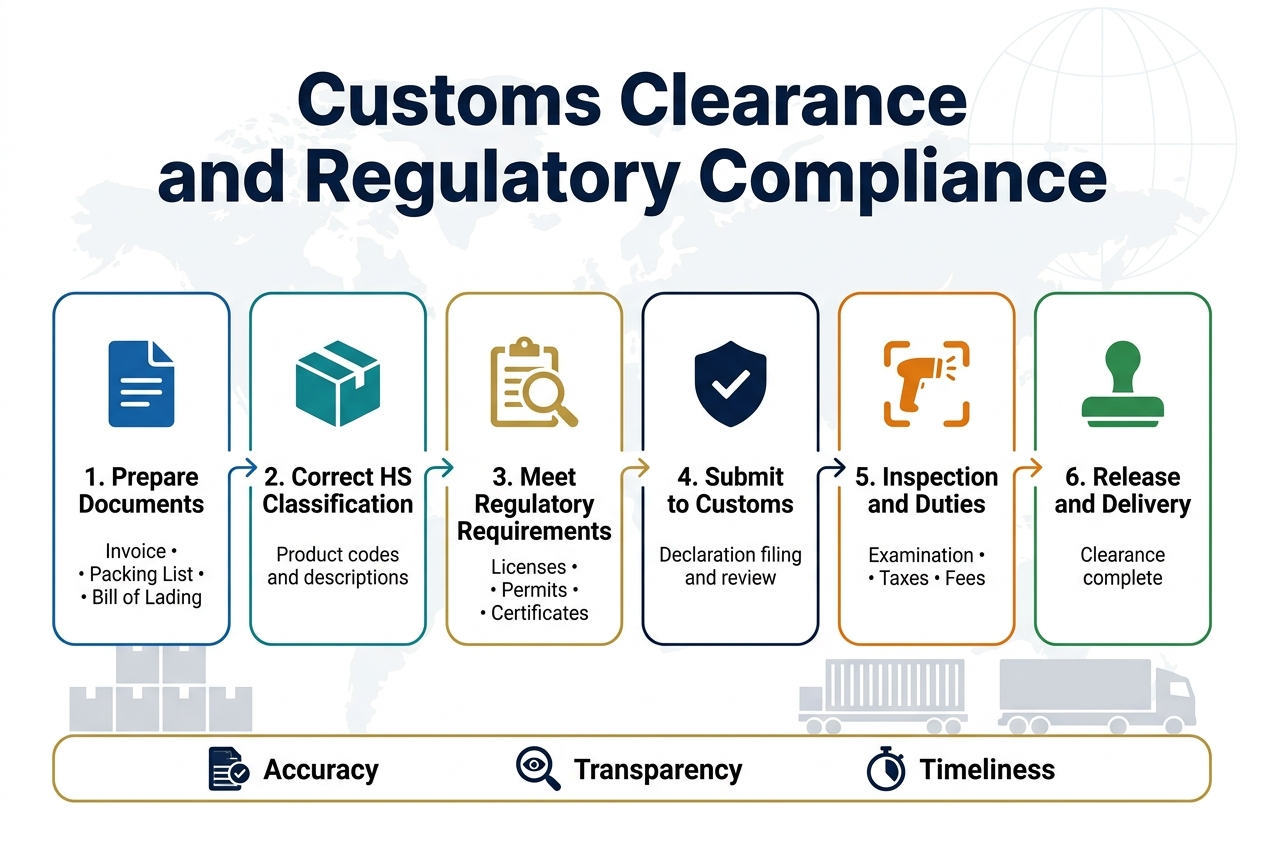
Pakistan Export Procedures and Tax Obligations
When shipping from Pakistan to Thailand, exporters must navigate several key documentation requirements. The Pakistan Customs Department mandates completion of the Goods Declaration (GD) form through the Web-Based One Customs (WeBOC) system. This electronic filing system streamlines the process while maintaining strict compliance standards.
Export tax obligations vary based on commodity classification under the Pakistan Customs Tariff. Most manufactured goods enjoy zero-rated status for sales tax purposes, while raw materials may attract regulatory duties. The State Bank of Pakistan requires Form-E submission for export proceeds realization, ensuring foreign exchange compliance.
Essential documents include commercial invoices, packing lists, certificates of origin, and any product-specific certifications. Textile exports require pre-shipment inspection certificates, while food products need health certificates from relevant authorities. Processing typically takes 24-48 hours for standard shipments, though complex cargo may require additional verification time.
Thailand Import Regulations and Duty Calculations
Thailand’s import framework operates under the Customs Department’s oversight, with duties calculated using the Harmonized System (HS) classification. Standard import duty rates range from 0% to 60%, depending on product category and country of origin. Pakistan benefits from preferential rates under various trade agreements, potentially reducing costs for specific commodities.
| Product Category | Standard Rate | Preferential Rate |
|---|---|---|
| Textiles | 10-30% | 5-15% |
| Electronics | 0-20% | 0-10% |
| Machinery | 1-10% | 0-5% |
| Food Products | 15-40% | 10-30% |
Value Added Tax (VAT) applies at 7% on most imports, calculated on the sum of CIF value plus duties. Specific business tax may apply to luxury items at rates between 10-30%. Import permits are mandatory for certain products including pharmaceuticals, telecommunications equipment, and agricultural items.
Prohibited Items and Restricted Goods Guidelines
Thailand maintains strict controls on various product categories. Completely prohibited items include narcotics, counterfeit goods, obscene materials, and certain chemicals. Wildlife products require CITES permits, while weapons and ammunition need special licensing from the Ministry of Interior.
Restricted items requiring special permits include:
Pharmaceutical products and medical devices
Telecommunications and radio equipment
Food products and dietary supplements
Cosmetics and personal care items
Religious artifacts and cultural items
Agricultural products face quarantine requirements, with certificates from Pakistan’s Plant Protection Department or Animal Quarantine Department necessary. Electronics must comply with Thailand’s electromagnetic compatibility standards, often requiring testing certificates from accredited laboratories.
Expedited Clearance Services for Urgent Shipments
Time-sensitive cargo benefits from Thailand’s Green Lane system, designed for pre-approved importers with strong compliance records. This fast-track process reduces clearance time from days to hours for qualifying shipments. Requirements include advance cargo information submission and payment guarantees.
Express clearance options include:
Priority Processing: 4-6 hour clearance for urgent commercial cargo
24/7 Service: Available at major ports for critical shipments
Pre-clearance Facility: Documentation processing before arrival
Dedicated Channels: Separate queues for expedited cargo
Professional customs brokers specializing in Pakistan-Thailand trade corridors can navigate these expedited services effectively. They maintain relationships with both customs authorities and understand specific requirements for different cargo types. Investment in proper documentation and compliance systems pays dividends through faster clearance times and reduced detention costs.
Tracking and Communication Throughout Transit
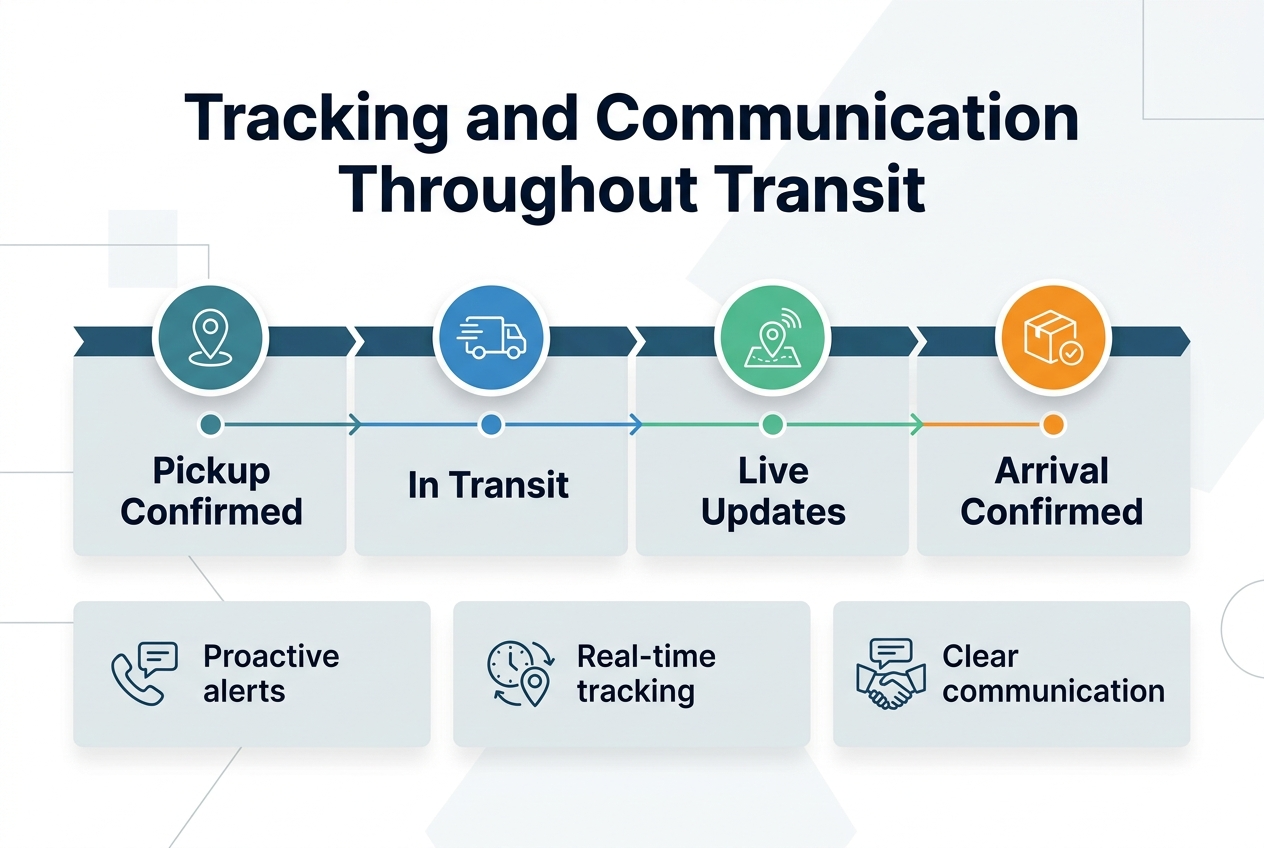
Real-time Shipment Monitoring and Status Updates
Modern shipping from Pakistan to Thailand relies heavily on advanced tracking technologies that give you complete visibility into your cargo’s journey. GPS-enabled containers and digital monitoring systems provide minute-by-minute location data, showing exactly where your shipment sits along the route from Karachi or Lahore to Bangkok or Phuket.
Professional logistics companies offer web-based tracking portals where you can check your shipment status 24/7. These platforms display critical information including departure times, border crossing updates, customs clearance progress, and estimated delivery windows. Many providers send automated SMS and email notifications when your cargo reaches key milestones like port departure, customs inspection completion, or final delivery preparation.
Mobile apps have revolutionized how businesses monitor their Pakistan-Thailand shipments. You can receive push notifications about any status changes, weather delays, or route modifications directly on your smartphone. This real-time access helps you keep your customers informed and adjust your business operations accordingly.
The tracking data typically includes container temperature readings for sensitive goods, security seal status, and handling records at each transfer point. Some premium services even offer photo documentation showing your cargo’s condition at major checkpoints throughout the journey.
Dedicated Customer Support for Pakistan-Thailand Routes
Specialized customer service teams understand the unique challenges of shipping between Pakistan and Thailand. These experts speak multiple languages including English, Urdu, Hindi, and Thai, making communication smooth regardless of your preferred language. They know the specific requirements for both countries’ customs procedures and can guide you through complex documentation needs.
Support representatives maintain regular contact with local agents in both Pakistan and Thailand, giving them direct access to ground-level information about your shipment. When you call with questions about delays or documentation issues, they can immediately check with field teams to provide accurate, up-to-date answers.
Many logistics providers offer dedicated account managers for regular Pakistan-Thailand shippers. These specialists learn your business patterns, preferred shipping methods, and specific requirements over time. They can anticipate potential issues based on seasonal trends, holiday schedules, or known infrastructure challenges along your preferred routes.
Emergency support services operate around the clock, recognizing that shipping concerns don’t follow standard business hours. Whether you’re dealing with urgent customer inquiries at midnight or need immediate assistance with customs documentation, experienced support staff remain available to help resolve critical situations.
Proactive Problem Resolution and Delay Management
Smart logistics companies don’t wait for problems to escalate before taking action. They monitor weather patterns, port congestion levels, and political situations that might affect Pakistan-Thailand shipping routes. When potential delays emerge, you receive advance warnings along with alternative solutions.
Contingency planning plays a crucial role in maintaining delivery schedules. If your original vessel faces mechanical issues or port strikes disrupt normal operations, logistics teams automatically evaluate backup options. They might reroute through different ports, switch to air freight for urgent items, or arrange temporary storage while resolving transportation issues.
Documentation problems often create the biggest headaches in international shipping. Professional teams maintain relationships with customs brokers in both countries and can quickly address paperwork discrepancies before they cause significant delays. They keep digital copies of all required documents and can rapidly submit corrections or additional certifications when needed.
Conclusion
Ready to expand your business reach between these two growing markets? Choose a logistics partner that offers transparent pricing, real-time tracking, and dedicated customer support. With the right team handling your shipments, you can focus on growing your business while your cargo moves safely and efficiently across borders. Start planning your next shipment today and discover how professional logistics services can transform your international trade experience.
Based on your business details, the physical office for JKC Cargo is located at Sajid Plaza in Mirpur, Azad Jammu and Kashmir.
Contact us via contact page :-https://jkccargo.com/contact/
Direct call us :- 0300 9535077
Mail address; jkcargo@gmail.com / info@jkccargo.com