

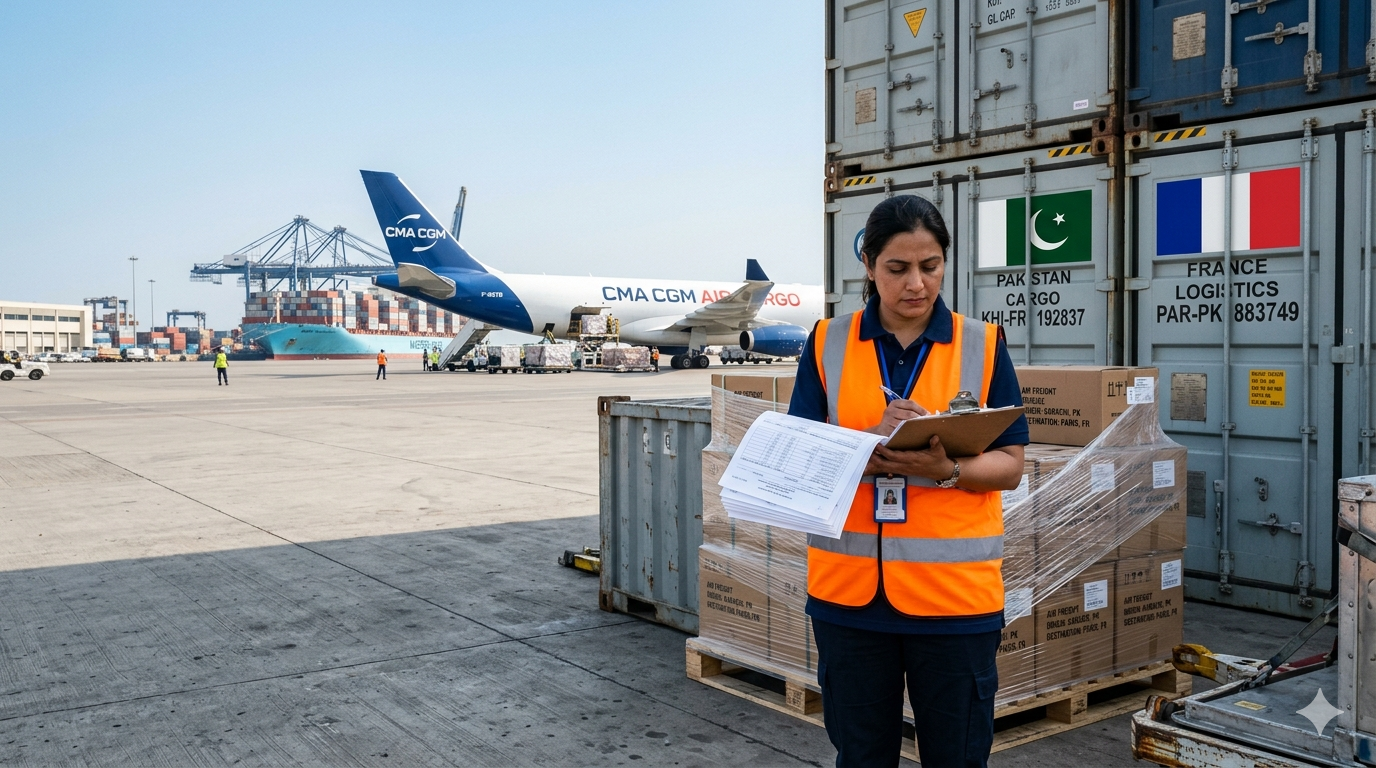
Pakistan to France Cargo Shipping | Fast & Affordable Delivery
Pakistan to France cargo shipping has grown significantly over the past decade. Both countries share a strong trade relationship, and businesses on both sides depend on reliable freight services every day. Whether you are shipping electronics, textiles, commercial goods, or personal belongings, finding the right logistics partner makes all the difference.
France is one of the largest economies in Europe and a major trade hub for the European Union. Therefore, shipping cargo from Pakistan to France opens doors to a vast market with millions of potential customers. Moreover, French import regulations are clearly defined, which makes the customs process manageable when you work with experienced freight forwarders.
However, international shipping comes with its own set of challenges. Transit times, documentation, packaging standards, and freight costs all play a critical role. In addition, choosing the wrong shipping method can lead to unnecessary delays and higher expenses.
This guide covers everything you need to know about Pakistan to France cargo shipping. From choosing the right freight mode to understanding customs requirements, we break down the process step by step. Furthermore, we share practical tips to help you save money and ensure your cargo reaches France safely and on time.
Whether you are a business owner, an exporter, or an individual sending personal goods, this article gives you the knowledge to make smart shipping decisions. So, let us get started.
Why Pakistan to France Cargo Shipping Is in High Demand
Pakistan is a major exporter of textiles, surgical instruments, leather goods, sports equipment, and agricultural products. France, on the other hand, imports a wide variety of goods from Asia, and Pakistan sits at a strategic position along major trade routes. Therefore, the demand for cargo shipping between these two countries continues to rise each year.
Moreover, the Pakistani diaspora in France is significant. Many Pakistanis living in France regularly send and receive personal parcels, documents, and household goods. As a result, both commercial freight and personal cargo services remain highly active on this route.
In addition, e-commerce growth has pushed more small businesses to explore international shipping lanes. Consequently, freight companies now offer more flexible options to meet the growing demand from both ends of this trade corridor.
Shipping Methods Available for Pakistan to France Cargo
When it comes to Pakistan to France cargo shipping, you generally have three main options: air freight, sea freight, and a combination of road and rail through the Middle East and Europe. Each method offers different advantages depending on the size, urgency, and nature of your shipment.
However, understanding the key differences between these methods helps you make the right choice. Furthermore, some freight companies offer multimodal solutions that combine two or more transport modes for better cost and time efficiency.
Air Freight: The Fastest Option
Air freight is the best choice when speed matters most. Shipments from Pakistan can reach France in approximately five to seven business days via air. Major departure airports in Pakistan include Karachi’s Jinnah International Airport, Lahore’s Allama Iqbal International Airport, and Islamabad International Airport.
Therefore, air cargo works perfectly for time-sensitive goods such as pharmaceuticals, electronics, fashion items, and perishables. Moreover, airlines offer reliable schedules and advanced tracking systems, so you always know where your shipment is.
However, air freight is more expensive than sea freight. As a result, it is best suited for smaller shipments where time is a priority over cost. In addition, airlines impose strict weight and size restrictions, so always confirm the cargo specifications before booking.
Sea Freight: Cost-Effective for Large Shipments
Sea freight is the most popular option for large commercial shipments on the Pakistan to France route. Container ships depart regularly from Karachi Port and Port Qasim and travel to major European ports including Le Havre and Marseille in France.
Transit time for sea freight typically ranges between 20 to 30 days, depending on the route and vessel schedule. Moreover, sea freight offers two main options: Full Container Load (FCL) and Less than Container Load (LCL). FCL is ideal for large shipments that fill an entire container, while LCL works well for smaller consignments that share space with other cargo.
In addition, sea freight allows you to ship almost any type of goods, including oversized items and hazardous materials that airlines may not accept. Therefore, it remains the preferred choice for exporters of bulk goods, raw materials, heavy machinery, and large textile orders.
Furthermore, sea freight rates are significantly lower than air freight per kilogram or cubic meter. As a result, businesses shipping large volumes find sea freight much more affordable and scalable.
Road and Rail Freight: An Emerging Alternative
Road and rail freight is an emerging option for Pakistan to Europe cargo routes. Goods travel overland through Iran, Turkey, and the Balkans before reaching France. However, this route is generally slower and involves more border crossings, which adds complexity.
Nevertheless, road and rail freight can be cost-effective for certain destinations in Eastern and Central Europe. Moreover, China-Pakistan Economic Corridor (CPEC) developments are gradually improving overland connectivity, which may make this option more attractive in the future.
In addition, some freight companies offer multimodal solutions where goods travel partly by sea and partly by road once they arrive at a European port. This combination helps reduce overall costs while maintaining reasonable transit times.
Required Documents for Cargo Shipping from Pakistan to France
Proper documentation is essential for smooth cargo shipping from Pakistan to France. Missing or incorrect paperwork can cause significant customs delays and additional costs. Therefore, always prepare your documents carefully before the shipment departs.
Here are the key documents you typically need:
- Commercial Invoice: Shows the value, description, and quantity of goods.
- Packing List: Details the contents of each package or container.
- Bill of Lading (for sea freight) or Airway Bill (for air freight): Acts as the shipment receipt and transport contract.
- Certificate of Origin: Confirms the country where the goods were manufactured.
- Export Declaration: Required by Pakistani customs authorities before the shipment leaves the country.
- Import Permit (if applicable): Some goods require special import permits to enter France.
- Phytosanitary or Health Certificate: Required for food, agricultural products, and plants.
Moreover, France follows European Union customs regulations. Therefore, your documents must meet EU standards for import compliance. In addition, working with a licensed freight forwarder simplifies the documentation process significantly.
Customs Clearance: What to Expect at French Borders
Customs clearance is a critical step in Pakistan to France cargo shipping. When your goods arrive at a French port or airport, customs authorities inspect the shipment and verify all documents. Therefore, accuracy is essential in every document you submit.
France, as part of the European Union, applies the EU Common Customs Tariff to all imports from non-EU countries like Pakistan. Duties and taxes depend on the type of goods, their value, and their country of origin. Moreover, certain goods may qualify for reduced tariffs under specific trade agreements or GSP (Generalised Scheme of Preferences) benefits available to Pakistan.
However, customs delays can occur if documents are incomplete or if goods require additional inspection. As a result, it is important to work with a freight forwarder who has experience handling Pakistan to France shipments. Furthermore, pre-clearance services are available for regular exporters, which can significantly speed up the customs process.
According to the European Union Customs Authority, importers must ensure all goods meet EU safety, labelling, and documentation standards before they enter French territory.
Packaging Guidelines for International Cargo
Good packaging protects your goods during the long journey from Pakistan to France. Whether you choose air freight or sea freight, your cargo will face vibrations, stacking pressure, temperature changes, and humidity. Therefore, proper packaging is not optional.
For sea freight, use sturdy wooden crates or double-walled cardboard boxes for general cargo. Moreover, wrap items individually with bubble wrap or foam padding to absorb shocks. In addition, fill empty spaces inside boxes with packing material to prevent movement.
For air freight, lightweight packaging is preferred to manage weight costs. However, durability should never be compromised. Furthermore, all packages must be clearly labelled with the sender and receiver information, including contact numbers and addresses.
Additionally, hazardous materials require special packaging and labelling as defined by international IATA and IMDG regulations. Therefore, always consult your freight company about packaging requirements for specific cargo types.
Transit Times and Delivery Estimates
Understanding transit times helps you plan your supply chain effectively. For air freight from Pakistan to France, the standard transit time is five to seven business days. However, this can vary depending on flight availability and customs clearance speed.
For sea freight, the transit time is approximately 20 to 30 days. Moreover, LCL shipments may take slightly longer than FCL due to the consolidation and deconsolidation process at ports. Therefore, plan your orders well in advance if you choose sea freight.
In addition, door-to-door delivery adds extra transit time compared to port-to-port services. As a result, factor in local delivery time in France when setting your deadlines. Furthermore, customs clearance can add one to five business days in some cases.
Freight Costs: What Affects the Price?
Freight costs for Pakistan to France cargo shipping depend on several key factors. Understanding these factors helps you budget accurately and avoid surprises.
The main cost factors include:
- Shipment Weight and Volume: Heavier and bulkier cargo costs more. Air freight charges are based on actual or volumetric weight, whichever is higher.
- Mode of Transport: Air freight costs significantly more per kilogram than sea freight.
- Type of Goods: Hazardous, fragile, or temperature-controlled cargo requires special handling, which increases costs.
- Seasonal Demand: Peak shipping seasons such as Ramadan, Eid, and the Christmas period can push freight rates higher.
- Insurance: Cargo insurance adds to the cost but protects your goods against loss or damage.
- Customs Duties and Taxes: These are additional costs paid at the French border.
Moreover, some freight companies offer all-inclusive pricing that covers pickup, documentation, freight, customs, and delivery. Therefore, comparing quotes on a like-for-like basis is important when choosing your shipping partner.
How to Choose the Right Cargo Company for France Shipments
Choosing the right cargo company is one of the most important decisions you will make for your international shipment. Not all freight forwarders have equal experience with the Pakistan to France route. Therefore, look for a company with a proven track record on this specific corridor.
Here are important criteria to evaluate:
- Experience and Reputation: Check how long the company has been operating and what customers say about them.
- Freight Options: A reliable company should offer air freight, sea freight, and multimodal solutions.
- Customs Expertise: They must understand both Pakistani export regulations and French/EU import rules.
- Real-Time Tracking: Modern freight companies provide online tracking so you can monitor your shipment at every stage.
- Customer Support: Responsive customer service is essential when issues arise during transit.
- Competitive Pricing: Compare quotes but do not sacrifice reliability for the lowest price.
Furthermore, working with a licensed freight forwarder who is registered with relevant Pakistani and international trade authorities gives you added legal protection. Moreover, a good freight partner handles all documentation and customs formalities on your behalf, saving you significant time and effort.
Cargo Insurance: Protecting Your Shipment
Cargo insurance is highly recommended for all international shipments, especially for high-value goods. Even with the best freight companies, unforeseen events such as port accidents, bad weather, or theft can cause damage or loss. Therefore, cargo insurance provides financial protection when things go wrong.
Most reputable freight companies offer cargo insurance as an add-on service. Moreover, insurance premiums are generally a small percentage of the declared cargo value, making it a cost-effective safety net. In addition, always read the policy terms carefully to understand what is covered and what exclusions apply.
According to the International Chamber of Commerce (ICC), cargo insurance is a standard best practice in international trade, and most trade finance agreements require adequate coverage before goods are shipped.
Tips to Reduce Cargo Shipping Costs to France
Shipping costs can add up quickly, especially for regular exporters. However, there are several smart strategies to reduce your cargo expenses without compromising service quality.
- Consolidate Shipments: Combine smaller shipments into one larger consignment to take advantage of LCL or FCL rates.
- Book in Advance: Early bookings often attract lower freight rates, especially during peak seasons.
- Compare Multiple Quotes: Always request quotes from at least three freight companies before making a decision.
- Optimise Packaging: Reduce volumetric weight by using compact, efficient packaging.
- Choose the Right Freight Mode: Match the shipping method to your urgency and budget.
- Negotiate Long-Term Contracts: Regular shippers can negotiate better rates with freight companies.
Moreover, working with a freight forwarder who has established relationships with carriers can give you access to preferential rates. Therefore, partnering with an experienced logistics company often saves more money than trying to book directly.
Tracking Your Cargo from Pakistan to France
Modern cargo tracking technology has made international shipping far more transparent. Today, most freight companies offer real-time tracking through online portals or mobile apps. Therefore, you can monitor your shipment’s location and status at every stage of the journey.
For air freight, airlines provide tracking codes that give you flight-level visibility. Moreover, sea freight shipments can be tracked through container tracking systems at major port operators. In addition, many freight forwarders provide milestone notifications via email or SMS, so you receive updates without actively logging in.
However, tracking accuracy depends on the quality of the freight company’s systems. Therefore, always confirm that your chosen cargo company offers reliable, real-time tracking before you commit to their service.
Explore More Cargo Services
If you need reliable international shipping solutions, JKC Cargo offers a wide range of freight services tailored to your needs. Learn more about our cargo shipping services from Pakistan to UK, or explore our air cargo services from Pakistan for fast and affordable delivery options. You can also check our sea freight solutions for cost-effective shipping of large commercial consignments. For complete logistics support, visit our full logistics and freight forwarding services page to see how we can help your business grow globally.
Conclusion
Pakistan to France cargo shipping is more accessible today than ever before. With a wide range of freight options, from fast air freight to cost-effective sea freight, businesses and individuals can find a solution that fits their timeline and budget. Moreover, as trade between Pakistan and France continues to grow, shipping services on this route are becoming more frequent, reliable, and competitively priced.
However, successful international shipping is not just about choosing a transport mode. It also requires thorough documentation, proper packaging, clear customs compliance, and the right logistics partner. Therefore, taking the time to understand each stage of the shipping process pays off enormously in the long run.
In addition, working with an experienced freight forwarder like JKC Cargo removes the stress from the entire process. From booking and documentation to customs clearance and final delivery, a trusted cargo partner handles everything so you can focus on your business. Furthermore, their expertise on the Pakistan to France route means fewer delays, fewer surprises, and better value for your money.
So whether you are an exporter, a small business owner, or an individual sending personal goods, now is a great time to explore Pakistan to France cargo shipping. With the right planning and the right partner, your cargo will arrive safely, on time, and within budget every single time.
Frequently Asked Questions (FAQs)
Q1. How long does it take to ship cargo from Pakistan to France?
Transit times depend on the shipping method you choose. Air freight from Pakistan to France typically takes five to seven business days. Sea freight, on the other hand, takes approximately 20 to 30 days depending on the route and vessel schedule. Moreover, customs clearance at the French border can add one to five additional business days in some cases. Therefore, always plan your shipment well in advance, especially during peak seasons.
Q2. What documents are required for shipping cargo from Pakistan to France?
The key documents required include a Commercial Invoice, Packing List, Bill of Lading or Airway Bill, Certificate of Origin, and Export Declaration. In addition, some goods may require an Import Permit, Phytosanitary Certificate, or Health Certificate depending on the nature of the cargo. France follows European Union customs regulations, so all documentation must meet EU import standards. Working with a licensed freight forwarder ensures your paperwork is accurate and complete before the shipment departs.
Q3. Is sea freight or air freight better for shipping from Pakistan to France?
The best option depends on your priorities. Air freight is faster and more suitable for small, time-sensitive shipments such as electronics, documents, or fashion goods. However, it is significantly more expensive per kilogram. Sea freight, on the other hand, is ideal for large commercial shipments, bulk goods, and heavy cargo. It is much more cost-effective but requires a longer lead time. Therefore, if speed is your priority, choose air freight. If cost and volume are your main concerns, sea freight is the smarter choice.
Want to know more about our Cargo Service? Check out our Blog for tips, updates, and everything you need to ship safely and quickly! Or Contact Us.