

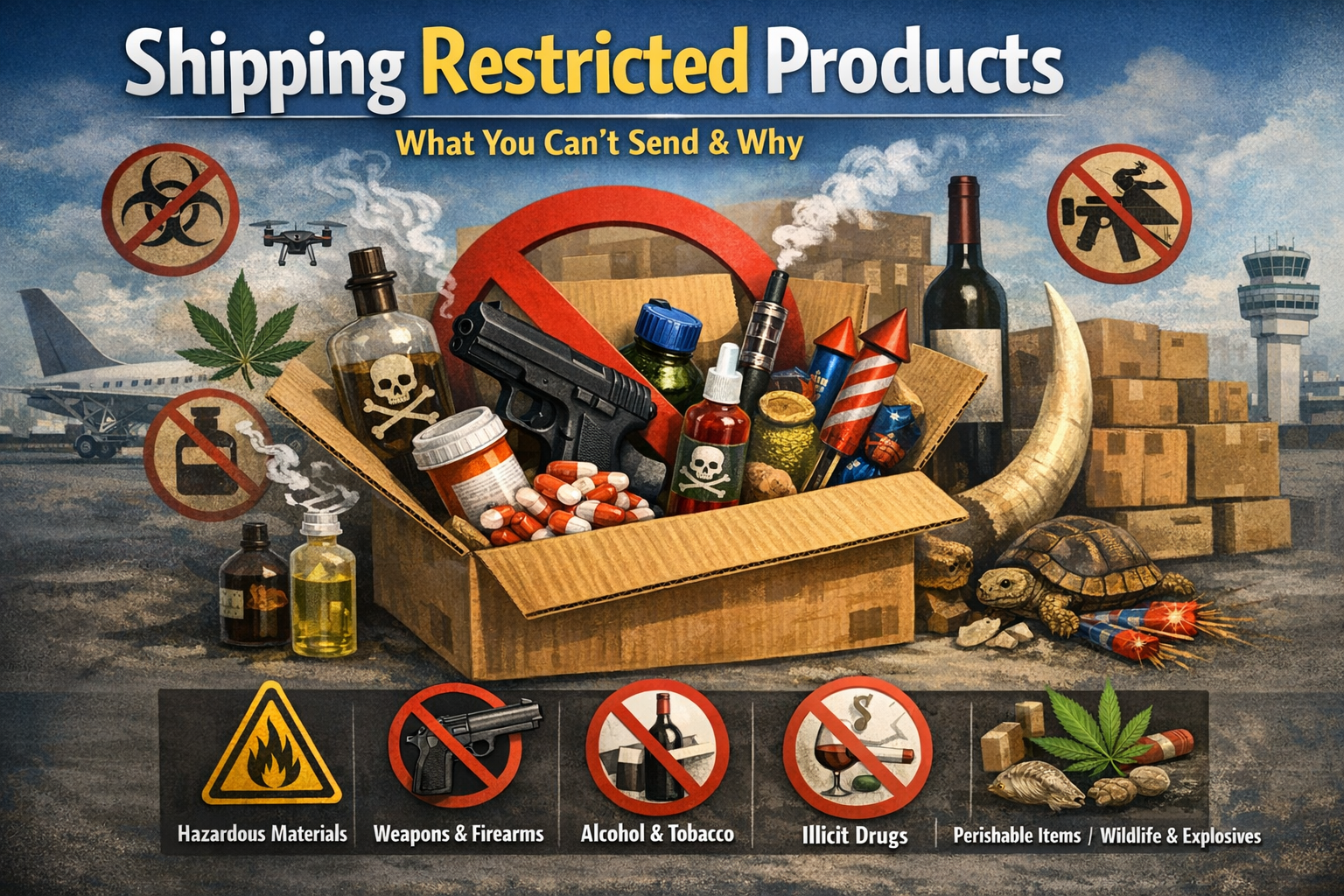
Shipping restricted products has become an essential part of modern life, whether for personal use, business, or international trade. However, not all items travel freely. Authorities and courier services restrict certain products to ensure safety, health, and legal compliance. From liquids and powders like spicy mirch, food items, and branded goods, knowing what youcannot ship is crucial to avoid fines, delays, or confiscation.
In this guide, we explain which items face shipping restrictions, why these rules exist, and how to ship safely. Whether you are sending personal packages, gifts, or business shipments, following these guidelines will ensure your parcels arrive on time, legally, and without problems.
Shipping Restricted Products: What You Can’t Send & Why
Shipping items for personal, business, or international purposes has become a daily routine. With global e-commerce, sending packages is easier than ever—but not all items travel freely. Authorities restrict or ban certain products due to safety, health, or legal reasons. Ignoring these rules can lead to delays, fines, confiscation, or legal issues.
This guide explains which products face shipping restrictions, why authorities enforce these rules, and how you can ship safely while ensuring your packages arrive on time and intact.
Why Authorities Restrict Some Products
Couriers, postal services, and governments restrict certain items to protect people, property, and the environment. They enforce these rules for several reasons:
Safety Concerns – Authorities prevent shipping of items that can leak, catch fire, explode, or cause injuries, including flammable liquids and chemicals.
Health Risks – Couriers restrict food, spices, powders, and perishable goods because they can spoil, carry bacteria, or attract pests.
Legal Regulations – Governments ban drugs, counterfeit items, and hazardous substances. Shipping these items can result in fines, confiscation, or legal action.
Brand Protection – Authorities prevent the shipment of unauthorized branded products to protect trademarks and intellectual property.
Following these rules ensures you deliver packages safely, legally, and without delays.
Common Restricted Products
1. Liquids
Couriers frequently restrict liquids, including:
Alcoholic beverages and spirits
Perfumes and colognes
Oils and other liquids
Flammable chemicals
Why authorities restrict liquids:
Liquid shipments can leak, spill, or damage other packages
Flammable liquids can ignite during transit
Improperly packaged liquids pose risks to handlers
Tips to ship liquids safely:
Pack liquids in leak-proof containers
Avoid sending large volumes in one package
Label all liquids clearly
Confirm courier policies before shipping
3. Spicy Mirch (Chili/Spices)
Extremely hot spices, like chili powders, may face shipping restrictions depending on the country.
Why authorities restrict spicy mirch:
Spilled spices can irritate skin, eyes, and respiratory systems
Authorities restrict certain spices to protect public health
Bulk shipments without proper packaging create risks
Tips to ship spicy mirch safely:
Pack in sealed, leak-proof containers
Avoid shipping large quantities without courier approval
Check import rules for the destination country
4. Food Items
Food shipments face strict regulations. Restricted items include:
Fresh fruits and vegetables
Meat, poultry, and seafood
Dairy products
Homemade or packaged food
Why authorities restrict food items:
Perishable food can spoil quickly
Improper packaging may cause contamination or leakage
Authorities regulate food imports to prevent health hazards
Tips to ship food safely:
Verify import rules at the destination
Use insulated or refrigerated packaging for perishables
Label contents clearly
Provide required documentation
5. Branded Items
Couriers and customs authorities restrict branded goods to prevent counterfeit or unauthorized sales, including:
Designer clothing, shoes, and accessories
Electronics with brand logos
Cosmetics and beauty products
Why authorities restrict branded items:
Customs may seize unauthorized shipments
Counterfeit goods are illegal
Missing documentation can result in fines
Tips to ship branded items safely:
Ensure authenticity and proper documentation
Check courier rules for branded shipments
Avoid sending items that may appear counterfeit
6. Other Restricted Items
Other commonly restricted products include:
Explosives and fireworks
Weapons, firearms, and ammunition
Hazardous chemicals
Certain batteries and electronics
Couriers often require special permissions or professional shipping services for these items.
Country-Specific Shipping Rules
Authorities enforce different rules across countries. Examples:
UAE: Restricts certain liquids, powders, and food items
USA: Requires permits for agricultural products, plants, and some spices
Europe: Prohibits counterfeit goods, hazardous chemicals, and specific food items
Researching the destination country’s rules ensures that your shipment arrives safely and without delays.
Common Mistakes to Avoid
Shipping restricted items becomes risky if you make mistakes. Avoid these:
Ignoring courier rules
Using weak or improper packaging
Mislabeling package contents
Assuming all food items are safe to ship
Sending branded goods without proper documentation
By avoiding these mistakes, you improve delivery success and reduce risks.
Benefits of Following Shipping Rules
Shipping restricted products safely offers many benefits:
Safety: Prevents accidents and hazards
On-Time Delivery: Avoids delays caused by customs inspections or confiscation
Cost Savings: Reduces fines, returns, or replacement costs
Legal Compliance: Ensures shipments follow all regulations
Awareness of restricted products helps you maintain safe, reliable, and stress-free shipping.
How to Ship Restricted Items Safely
If you must ship restricted items, follow these steps:
Check courier restrictions before sending
Use proper, secure packaging
Provide all required documentation
Label packages clearly with content descriptions or hazard warnings
Use specialized courier services for hazardous or restricted items
These steps help you deliver packages safely, legally, and efficiently.
Final Thoughts
Shipping restricted products requires awareness and careful planning. Avoid sending:
Liquids without proper packaging
Cgrite or other powders without precautions
Extremely spicy mirch or bulk spice shipments
Restricted food items without documentation
Unauthorized branded products
Following rules ensures safe, legal, and timely delivery. Proper packaging, labeling, and research make shipping reliable, professional, and stress-free.
Understanding what you can and cannot ship protects your packages, ensures safe delivery, and prevents unnecessary fines or delays. Use this guide to make your shipping experience secure, efficient, and compliant with regulations.
For more guidance, you can explore JKC Cargo’s official services or their door-to-door cargo service to understand how professional shipping works.
Additionally, you can reference industry standards and prohibited item lists for safety and compliance on sites like wikipedia
Ship smarter, safer, and stress-free with proper planning and adherence to rules.