

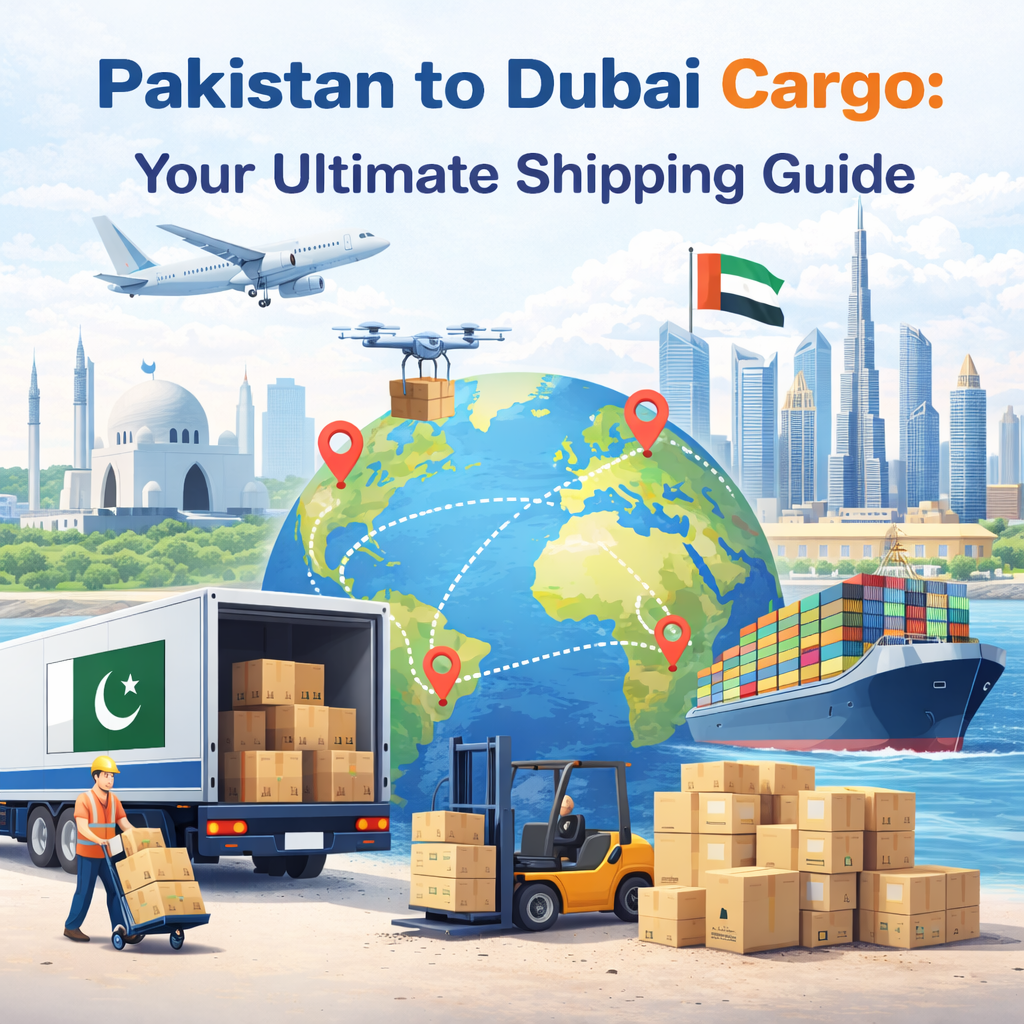
Pakistan to Dubai cargo: Your Ultimate Shipping Guide
Shipping goods internationally can seem daunting. However, when it comes to Pakistan to Dubai cargo: Your Ultimate Shipping Guide is here to demystify the process. Dubai, a pivotal global trade hub, frequently serves as a crucial destination for goods originating from Pakistan. This comprehensive guide aims to provide businesses and individuals with a clear understanding of the logistics involved, ensuring a smooth and efficient shipping experience.
Indeed, navigating international freight requires careful planning, adherence to regulations, and selecting the right partners. This article will delve into various aspects, from understanding different shipping modes to managing documentation and customs clearance. Ultimately, our goal is to equip you with the knowledge needed to successfully transport your cargo.
Understanding Pakistan to Dubai Cargo: An Overview
Before diving into the specifics, it is vital to grasp the broader context of Pakistan to Dubai cargo. This route is characterized by high trade volumes, driven by strong economic ties and geographical proximity. Therefore, numerous options and services cater to diverse shipping needs.
Why Dubai is a Key Destination
Dubai’s strategic location at the crossroads of East and West makes it an unparalleled logistics and trade hub. Its world-class infrastructure, including advanced ports and airports, facilitates seamless connectivity. Furthermore, Dubai’s business-friendly environment and re-export capabilities enhance its appeal for international trade. Consequently, many Pakistani businesses eye Dubai not just as a final destination but also as a gateway to broader Middle Eastern and African markets.
Types of Cargo Services
Various cargo services cater to different types of goods and budget requirements. Generally, these fall into categories such as:
- General Cargo: This includes most non-perishable, non-hazardous goods.
- Specialized Cargo: Items like dangerous goods, oversized shipments, or temperature-controlled goods require specific handling and regulations.
- Express Cargo: For urgent shipments, offering faster delivery times, albeit at a higher cost.
- Project Cargo: Large, heavy, or complex shipments often requiring customized logistics solutions.
Modes of Transportation for Pakistan to Dubai Cargo
Selecting the appropriate mode of transport is a critical decision. It significantly impacts cost, transit time, and the safety of your goods. Primarily, two main modes dominate the Pakistan to Dubai cargo route: sea freight and air freight. Land freight, while possible for regional transit, is less direct for this specific route.
Sea Freight: Cost-Effective and High Capacity
Sea freight remains the most popular choice for bulk and heavy shipments due to its cost-effectiveness. It is ideal when time is not the most pressing factor. Shipping via sea from Pakistan to Dubai typically involves major ports like Karachi Port and Port Qasim, with destinations primarily being Jebel Ali Port and Port Rashid in Dubai.
#### FCL vs. LCL
- Full Container Load (FCL): If your shipment is large enough to fill an entire container (20ft or 40ft), FCL is usually the most economical option. It offers dedicated space and often faster transit times compared to LCL.
- Less than Container Load (LCL): For smaller shipments that do not require a full container, LCL allows you to share container space with other shippers. While more affordable for smaller volumes, it may involve additional handling and slightly longer transit times due to consolidation.
#### Major Ports
From Pakistan, Karachi Port* and **Port Qasim** are the primary gateways. These bustling ports handle a vast array of cargo. In Dubai, *Jebel Ali Port is one of the world’s largest and busiest ports, equipped with state-of-the-art facilities. It efficiently manages a high volume of container traffic. Consequently, most sea cargo from Pakistan arrives here.
Air Freight: Speed and Efficiency
When speed is paramount, air freight is the undisputed choice. It is perfect for urgent deliveries, high-value goods, or perishable items. Although more expensive than sea freight, it drastically reduces transit times, often delivering within a few days.
#### Major Airports
Key airports in Pakistan facilitating air cargo include Jinnah International Airport (Karachi)*, **Allama Iqbal International Airport (Lahore)**, and **Islamabad International Airport**. These airports are well-connected to major international carriers. Upon arrival in the UAE, shipments typically land at **Dubai International Airport (DXB)** or *Al Maktoum International Airport (DWC), both renowned for their cargo handling capabilities and efficiency.
#### Express Cargo
Many international courier services offer express air cargo options. These services provide door-to-door delivery, advanced tracking, and expedited customs clearance, making them suitable for time-sensitive documents and small packages.
Land Freight: Cross-Border Connectivity
While direct land freight between Pakistan and Dubai is not common due to geographical barriers (necessitating transit through Iran/Afghanistan), it can be part of a multimodal solution. For instance, goods might travel by land within Pakistan to a port, then by sea to Dubai. However, for direct transit, sea and air remain the primary, most viable options.
Essential Documentation for Shipping from Pakistan to Dubai
Accurate and complete documentation is crucial for smooth customs clearance and avoiding delays. Therefore, preparing all necessary papers meticulously is a non-negotiable step in Pakistan to Dubai cargo operations.
Required Documents for Exporters
Exporters in Pakistan typically need to prepare several key documents. These include:
- Commercial Invoice: This document details the goods being shipped, their value, quantity, and the terms of sale. It is essential for customs valuation and duty assessment.
- Packing List: This list provides a detailed breakdown of the contents of each package, including weight, dimensions, and type of packaging. It assists customs in verifying the shipment’s contents.
- Bill of Lading (for sea freight) / Air Waybill (for air freight): These are contracts between the shipper and the carrier, serving as a receipt for goods and a document of title. They contain details about the shipment, origin, destination, and consignee.
- Certificate of Origin: Issued by a chamber of commerce or relevant authority, this document certifies the country where the goods originated. It can be important for preferential tariffs.
- Customs Declaration Form: Both Pakistani and UAE customs require specific declaration forms, providing details about the exporter, importer, goods, and their value.
- Insurance Certificate: If the cargo is insured, this certificate provides proof of coverage. It is highly recommended to protect against loss or damage.
- Other Specific Permits/Certificates: Depending on the nature of the goods (e.g., food products, pharmaceuticals, chemicals), additional permits like phytosanitary certificates, health certificates, or dangerous goods declarations may be required.
Importance of Accurate Documentation
Any discrepancies or missing documents can lead to significant delays, penalties, or even the seizure of goods. Hence, it is imperative to ensure all information is accurate, consistent across all documents, and submitted in a timely manner. A reliable freight forwarder can assist significantly in preparing and verifying these documents.
Customs Clearance Procedures: Pakistan and UAE
Customs clearance is a critical phase in the Pakistan to Dubai cargo journey. Both the exporting country (Pakistan) and the importing country (UAE) have distinct procedures that must be followed. Understanding these processes helps avoid unforeseen complications.
Export Customs in Pakistan
Before goods can leave Pakistan, they must undergo export customs clearance. This involves:
- Filing of Goods Declaration (GD): The exporter or their agent submits a GD to Pakistan Customs, detailing the goods, their value, and the destination.
- Assessment and Examination: Customs officials review the GD and may physically examine the cargo to ensure compliance with export regulations and declared information.
- Payment of Duties/Taxes (if applicable): While many exports are duty-free, certain items may incur specific taxes or levies.
- Issuance of Export Release Order: Once cleared, customs issues an order allowing the goods to be loaded for departure.
Import Customs in Dubai
Upon arrival in Dubai, goods must pass through UAE import customs. This process is equally stringent and involves:
- Filing of Import Declaration: The importer or their clearing agent submits an import declaration to Dubai Customs. This declaration is typically done electronically through the Mirsal 2 system.
- Document Verification: Customs verifies all submitted documents against the physical shipment.
- Duty and Tax Assessment: Customs assesses applicable import duties and taxes based on the Harmonized System (HS) code of the goods and their declared value. The UAE generally has a 5% import duty on most goods, though exemptions and higher rates apply to certain categories.
- Payment of Duties/Taxes: The importer or agent must pay the assessed duties and taxes.
- Inspection (if required): Some shipments may undergo physical inspection by customs or other regulatory bodies (e.g., for health and safety).
- Release of Goods: Once all formalities are completed and duties paid, customs releases the cargo for delivery.
#### Prohibited and Restricted Items
It is crucial to be aware of items that are prohibited or restricted from entering the UAE. Prohibited items include narcotics, firearms, certain religious publications, and gambling tools. Restricted items, such as medicines, food products, and certain chemicals, require special permits from relevant UAE authorities before import. Failure to comply can result in severe penalties.
Choosing the Right Freight Forwarder for Pakistan to Dubai Cargo
Partnering with a reliable freight forwarder is perhaps the most critical decision in managing your Pakistan to Dubai cargo. A good freight forwarder acts as your logistics partner, handling the complexities of international shipping on your behalf.
What to Look For
When selecting a freight forwarder, consider these key attributes:
- Experience and Reputation: Choose a company with a proven track record in the Pakistan-Dubai corridor. Look for positive reviews and testimonials.
- Range of Services: A comprehensive forwarder offers various services, including door-to-door shipping, warehousing, customs brokerage, and cargo insurance. This breadth of service simplifies your logistics chain.
- Network and Partnerships: A freight forwarder with strong connections to carriers, agents, and customs brokers in both Pakistan and Dubai can offer better rates and more efficient service.
- Technology and Tracking: Modern forwarders provide online tracking systems, allowing you to monitor your shipment’s progress in real-time. This transparency is invaluable.
- Customer Support: Responsive and knowledgeable customer service is essential for addressing any issues or queries that may arise during transit.
- Compliance Expertise: Ensure they are well-versed in both Pakistani export regulations and UAE import regulations, including customs procedures and restricted item lists.
Requesting Quotes and Comparing Services
Always obtain quotes from multiple freight forwarders. Compare not only the price but also the services included, transit times, and insurance options. A seemingly cheaper quote might exclude crucial services, leading to hidden costs later. Therefore, ensure a clear understanding of what each quote covers.
Cost Factors and Pricing for Pakistan to Dubai Cargo
Understanding the cost structure is vital for budgeting and managing expectations for your Pakistan to Dubai cargo. Shipping costs are not just about the freight rate; they comprise several components.
Key Components of Shipping Costs
- Freight Charges (Base Rate): This is the primary cost for transporting your goods from origin to destination by sea or air.
- Fuel Surcharges (BAF/FAF for sea, FSC for air): These fluctuating charges cover the cost of fuel and are added by carriers.
- Terminal Handling Charges (THC): Fees charged by ports or airports for handling containers or cargo at both origin and destination terminals.
- Customs Clearance Fees: Charges levied by customs brokers for preparing and submitting documentation and facilitating clearance.
- Insurance Premiums: The cost of cargo insurance, which protects your goods against loss or damage during transit. This is highly recommended.
- Documentation Fees: Charges for preparing and processing various shipping documents.
- Security Surcharges: Fees related to enhanced security measures for cargo.
- Delivery Charges (Last Mile): Costs associated with transporting the cargo from the arrival port/airport to its final destination in Dubai.
- Storage/Demurrage/Detention (if applicable): Fees incurred if cargo is not cleared or picked up within the free time allowed at ports/warehouses.
Tips for Cost Optimization
- Plan Ahead: Booking in advance can often secure better rates, especially for sea freight.
- Optimize Packaging: Efficient packaging reduces volumetric weight (for air freight) and maximizes container space (for sea freight), potentially lowering costs.
- Consolidate Shipments: For smaller volumes, using LCL or consolidating multiple small shipments into one larger one can be more economical.
- Compare Quotes: As mentioned, always compare offers from various reputable forwarders.
- Understand Incoterms: Clearly define Incoterms (International Commercial Terms) with your buyer/seller to understand who is responsible for which costs and at what point in the journey.
Tracking and Security of Your Shipments
Maintaining visibility and ensuring the safety of your goods are paramount throughout the Pakistan to Dubai cargo journey. Modern logistics solutions offer robust tracking and security measures.
Real-Time Tracking Solutions
Most reputable freight forwarders provide online tracking portals. These platforms allow you to monitor your shipment’s status, location, and estimated arrival time. Tracking information typically updates at various milestones, such as departure from port, arrival at destination, and customs clearance. This transparency offers peace of mind and enables proactive planning.
Cargo Insurance: Why it’s Crucial
Despite all precautions, unforeseen events can occur. Therefore, securing comprehensive cargo insurance is highly advisable. While carriers offer limited liability, it rarely covers the full value of your goods. Cargo insurance protects your investment against risks like theft, damage, or loss due to accidents or natural disasters. Discuss insurance options with your freight forwarder to choose appropriate coverage.
Best Practices for Secure Packaging
Proper packaging is fundamental to cargo security. Consider these practices:
- Durable Materials: Use strong, high-quality cartons, crates, or pallets suitable for international transit.
- Internal Protection: Employ adequate dunnage, bubble wrap, or foam to cushion items and prevent movement within packages.
- Appropriate Labeling: Clearly label all packages with destination addresses, contact information, handling instructions (e.g.,
Conclusion
Shipping Pakistan to Dubai cargo is a complex yet manageable process with careful planning and the right resources. This ultimate shipping guide has outlined the critical steps, from choosing the correct mode of transport and understanding documentation requirements to navigating customs and selecting a reliable freight forwarder. By paying close attention to detail, ensuring accurate paperwork, and leveraging expert assistance, businesses and individuals can achieve efficient, cost-effective, and secure delivery of their goods to Dubai. Ultimately, a well-informed approach will lead to successful international trade ventures.
Frequently Asked Questions (FAQ)
Q1: What is the cheapest way to send cargo from Pakistan to Dubai?
A1: The cheapest way to send cargo from Pakistan to Dubai is typically via sea freight, especially when utilizing Less than Container Load (LCL) services for smaller shipments. While slower, it offers significant cost savings compared to air freight, making it ideal for non-urgent or bulk goods.
Q2: How long does it take to ship cargo from Pakistan to Dubai?
A2: The transit time for Pakistan to Dubai cargo varies significantly by method. Air freight usually takes 2-5 days, including customs clearance. Sea freight, on the other hand, can take anywhere from 7-14 days for port-to-port transit, with additional time needed for customs clearance and final delivery.
Q3: What items are prohibited or restricted when shipping to Dubai?
A3: Dubai Customs strictly prohibits items like narcotics, firearms, certain religious materials, and gambling tools. Restricted items, such as medicines, food products, and specific chemicals, require special permits or approvals from relevant UAE authorities before they can be imported. Always check the latest Dubai Customs regulations or consult your freight forwarder.
want to read more articles click here.
all credit goes to UDM.