

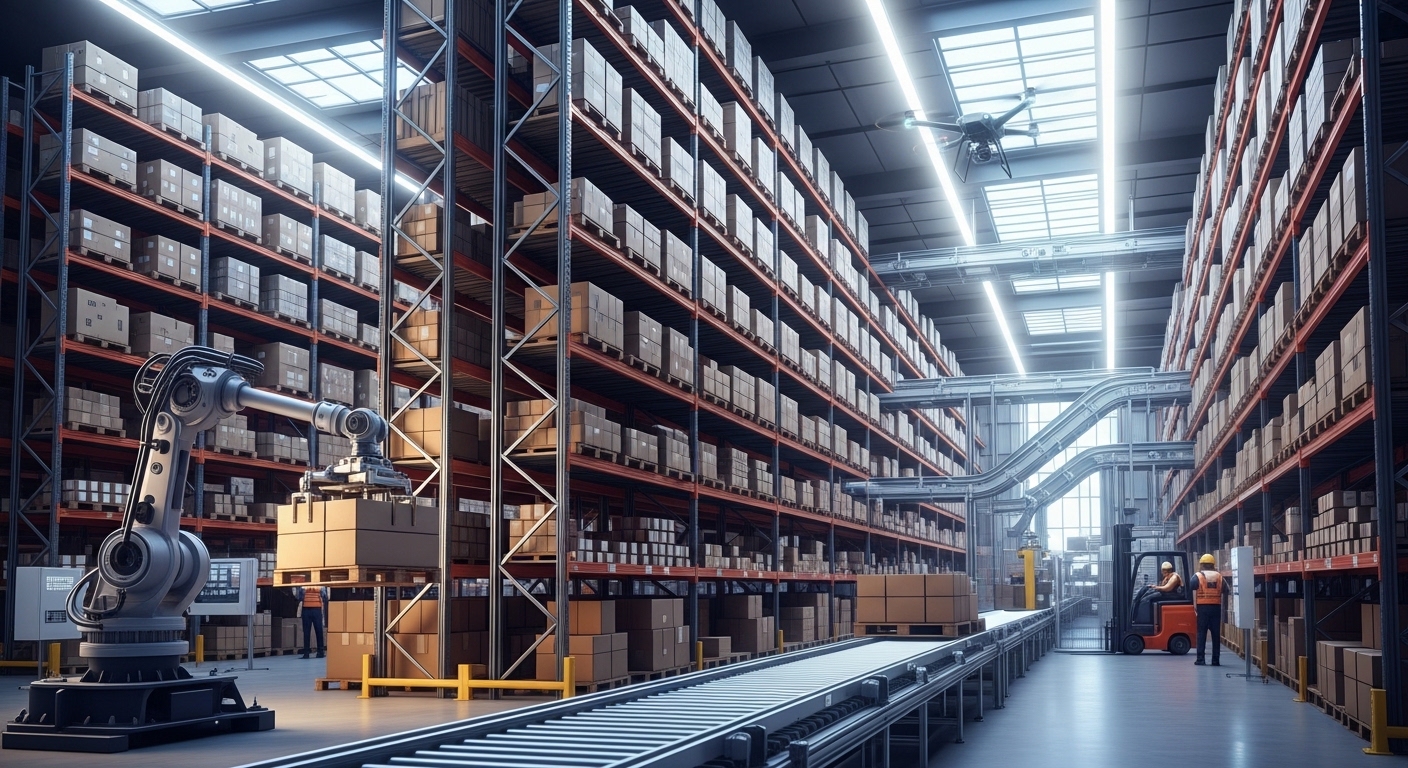
Warehousing and storage solutions: Optimize Your Supply Chain
In today’s fast-paced global economy, efficient logistics are paramount for business success. Effective warehousing and storage solutions form the backbone of any robust supply chain. They are not merely places to keep goods; instead, they serve as strategic hubs that facilitate the smooth flow of products from manufacturers to consumers. Consequently, optimizing these operations can significantly impact a company’s efficiency, cost-effectiveness, and ultimately, customer satisfaction. This comprehensive guide will explore the various facets of modern warehousing and storage solutions, highlighting their importance and the best practices for leveraging them.
Understanding the Core of Warehousing and Storage Solutions
At its heart, warehousing involves the systematic process of storing goods. However, modern warehousing and storage solutions extend far beyond simple holding. They encompass a wide array of activities designed to manage inventory, streamline distribution, and add value to products. A well-managed warehouse acts as a dynamic operational center, ensuring products are received, stored, picked, packed, and shipped efficiently. Furthermore, it plays a critical role in inventory control, order fulfillment, and even value-added services.
Beyond Simple Storage
Contemporary warehousing frequently integrates various value-added services. These services transform raw storage into a strategic asset. For instance, many facilities offer kitting, where individual items are assembled into ready-to-ship kits. Cross-docking, another key service, minimizes storage time by directly transferring goods from inbound to outbound logistics. Light assembly, labeling, packaging, and even reverse logistics (handling returns) are also common. Therefore, choosing the right solution means looking beyond just space and considering the full spectrum of services available.
Diverse Types of Warehousing and Storage Solutions
Different business models and product types necessitate various warehousing and storage solutions. Understanding these distinctions is crucial for selecting the optimal fit for your operations.
Public Warehouses
Public warehouses offer flexible, pay-as-you-go storage. They are ideal for businesses with seasonal demand or those that cannot justify the capital investment of a private facility. Consequently, they provide scalability and reduce fixed costs.
Private Warehouses
Owned or leased by a single company, private warehouses offer maximum control over operations and inventory. However, they demand significant capital investment and entail higher operational responsibilities. They are best suited for businesses with consistent, high-volume storage needs.
Contract Warehouses
Contract warehousing involves long-term agreements with Third-Party Logistics (3PL) providers. This model combines the benefits of dedicated service with the expertise and resources of a 3PL. It offers a blend of flexibility and tailored solutions, often including specialized equipment and staff.
Automated Warehouses
These high-tech facilities utilize automation, such as robots, automated guided vehicles (AGVs), and automated storage and retrieval systems (AS/RS). Automated warehouses significantly increase speed and accuracy while reducing labor costs. They are perfect for high-throughput environments.
Bonded Warehouses
Bonded warehouses store imported goods before duties and taxes are paid. This allows businesses to defer payment until the goods are sold or shipped, providing financial flexibility. They are particularly useful for international trade and re-export operations.
Climate-Controlled Storage
Essential for sensitive goods like pharmaceuticals, food, or certain chemicals, climate-controlled storage maintains specific temperature and humidity levels. This ensures product integrity and compliance with industry regulations.
Key Benefits of Modern Warehousing and Storage Solutions
Implementing effective warehousing and storage solutions yields numerous advantages that positively impact a company’s bottom line and operational efficiency.
Enhanced Inventory Management
Modern warehousing provides real-time visibility into inventory levels. This leads to reduced stockouts, minimized obsolescence, and optimized stock rotation. Consequently, businesses can make more informed purchasing decisions and maintain optimal inventory levels, directly impacting profitability.
Improved Operational Efficiency
Well-designed warehouse layouts and streamlined processes facilitate faster order fulfillment and reduced handling errors. Efficient picking, packing, and shipping operations mean quicker turnaround times. Therefore, overall operational efficiency is significantly boosted, leading to greater customer satisfaction.
Cost Reduction
Effective warehousing helps reduce costs through optimized space utilization, consolidated shipments, and minimized product damage or loss. By centralizing distribution and leveraging economies of scale, businesses can significantly lower their logistics expenditures. Moreover, efficient inventory management also reduces carrying costs.
Scalability and Flexibility
Many warehousing and storage solutions, particularly those offered by 3PLs, provide the flexibility to adjust storage space and services as demand fluctuates. This scalability is particularly beneficial for growing businesses or those experiencing seasonal peaks, allowing them to adapt without major capital outlay.
Risk Mitigation
Robust warehousing solutions incorporate enhanced security measures, disaster preparedness plans, and adherence to industry-specific regulations. This mitigates risks associated with theft, damage, and non-compliance. Furthermore, proper environmental controls protect sensitive goods.
Choosing the Right Warehousing and Storage Solutions for Your Business
Selecting the appropriate warehousing and storage solutions is a critical decision that influences the entire supply chain. Careful consideration of several factors is essential.
Assess Your Needs
Begin by thoroughly assessing your specific requirements. Consider the type, volume, and throughput of your inventory. Do you have special requirements, such as cold storage, hazardous material handling, or specific security needs? Understanding these details is paramount.
Location Strategy
Proximity to suppliers, customers, and major transportation hubs (e.g., ports, airports, highways) can significantly impact transit times and costs. A strategically located warehouse reduces shipping expenses and improves delivery speed, which is a major competitive advantage.
Technology Integration
Evaluate the technological capabilities of potential partners or your own infrastructure. Compatibility with existing systems like Enterprise Resource Planning (ERP) or Warehouse Management Systems (WMS) is crucial. Consider future technology needs, such as automation or IoT integration.
Cost Structure
Understand the pricing models offered by different providers. These can include fixed costs, variable costs based on activity, or a hybrid approach. A clear understanding of the cost structure helps in budgeting and cost control. Furthermore, consider all hidden fees.
Service Offerings
Look for value-added services that align with your business goals. Services like kitting, cross-docking, reverse logistics, or specific packaging can add significant value. Therefore, choose a partner that can support your complete operational needs.
Security and Compliance
Ensure that the chosen solution provides robust security measures to protect your goods from theft and damage. Additionally, verify compliance with all relevant industry regulations and certifications, especially for specialized products like food or pharmaceuticals.
The Role of Technology in Warehousing and Storage Solutions
Technology is rapidly transforming the landscape of warehousing and storage solutions, making operations more efficient, accurate, and data-driven.
Warehouse Management Systems (WMS)
A WMS is central to modern warehousing. It manages inventory, tracks orders, optimizes labor, and controls space utilization. Furthermore, it provides real-time data and analytics, enabling better decision-making and operational improvements. A robust WMS is indispensable for complex operations.
Automation and Robotics
Automation, including AGVs, AS/RS, and robotic picking systems, significantly boosts speed, accuracy, and safety within the warehouse. These technologies reduce reliance on manual labor for repetitive tasks, allowing human workers to focus on more complex activities. Consequently, throughput increases dramatically.
Internet of Things (IoT)
IoT devices, such as sensors and RFID tags, provide real-time tracking of goods, environmental monitoring (temperature, humidity), and equipment performance. This constant flow of data allows for proactive management and predictive maintenance. Therefore, better decision-making is possible, reducing waste and improving quality.
Artificial Intelligence (AI) and Machine Learning (ML)
AI and ML are revolutionizing warehousing through predictive analytics for demand forecasting, route optimization, and even robotic decision-making. These technologies can identify patterns, anticipate needs, and optimize processes autonomously. Thus, efficiency is maximized, and costs are minimized.
Future Trends in Warehousing and Storage
The landscape of warehousing and storage solutions is continually evolving, driven by technological advancements and changing consumer expectations. Businesses must remain adaptable to stay competitive.
Sustainability and Green Warehousing
There is a growing emphasis on sustainable practices. This includes energy-efficient lighting, solar power, waste reduction programs, and eco-friendly packaging. Green warehousing not only reduces environmental impact but also appeals to environmentally conscious consumers, enhancing brand image.
On-Demand Warehousing
On-demand warehousing offers flexible, short-term storage options, often leveraging unused space in existing facilities. This model is ideal for e-commerce businesses and those with highly fluctuating demand, providing agility without long-term commitments. It represents a significant shift in traditional storage models.
Dark Warehouses
Dark warehouses are fully automated facilities with minimal or no human intervention. These highly efficient operations maximize space utilization and speed, operating 24/7. They represent the pinnacle of automation, requiring advanced robotics and AI.
Micro-Fulfillment Centers
Micro-fulfillment centers are smaller, strategically located warehouses, often in urban areas. Their purpose is to facilitate faster last-mile delivery, especially for online orders. They combine automation with proximity to customers, thereby significantly reducing delivery times and costs in dense population centers.
Conclusion
Effective warehousing and storage solutions are more than just operational necessities; they are strategic assets that drive efficiency, reduce costs, and enhance customer satisfaction across the entire supply chain. From understanding diverse warehouse types to embracing cutting-edge technology, businesses must carefully consider their options. The continuous evolution of this sector, marked by trends like sustainability and automation, underscores the need for adaptability and forward-thinking strategies. By optimizing these critical functions, companies can build a resilient, responsive, and highly competitive supply chain for the future.
Frequently Asked Questions (FAQ)
Q: What is the primary difference between storage and warehousing?
A: Storage typically refers to simply holding goods for a period. In contrast, warehousing involves a broader range of services, including inventory management, order fulfillment, cross-docking, kitting, and other value-added activities. Therefore, warehousing is an active, strategic component of the supply chain, while storage is more passive.
Q: How can warehousing and storage solutions reduce operational costs?
A: They can significantly reduce costs through optimized space utilization, efficient inventory management (minimizing obsolescence and carrying costs), consolidated shipping, and reduced labor needs via automation. Moreover, improved handling and security minimize damage and loss, further contributing to cost savings.
Q: What is a 3PL in the context of warehousing?
A: A 3PL, or Third-Party Logistics provider, offers outsourced logistics services, which often include comprehensive warehousing and storage solutions, transportation, and other supply chain functions. Businesses partner with 3PLs to leverage their expertise, infrastructure, and technology without needing significant capital investment or internal resources.
want to read more articles click here.
all credit goes to UDM.