

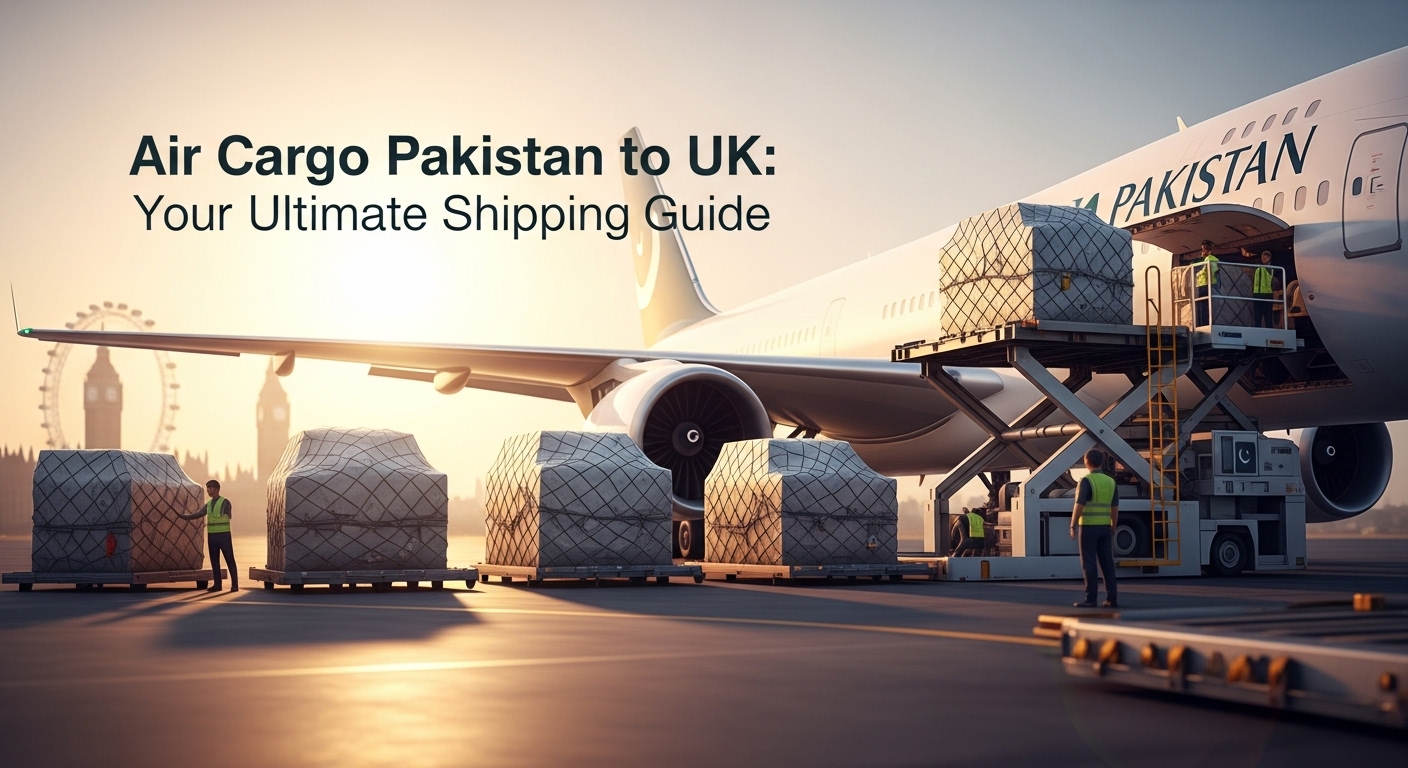
Air cargo Pakistan to UK: Your Ultimate Shipping Guide
Introduction: The Growing Demand for Air Cargo Pakistan to UK
The economic ties between Pakistan and the United Kingdom have strengthened considerably over the past few decades. Consequently, the demand for efficient and reliable logistics solutions, particularly for air cargo Pakistan to UK, has surged. Businesses and individuals alike increasingly rely on air freight for its speed and security, ensuring that goods ranging from textiles and electronics to personal effects reach their destination swiftly. This comprehensive guide will navigate you through the intricacies of shipping via air cargo from Pakistan to the UK, offering insights into processes, regulations, and best practices.
Indeed, air cargo plays a pivotal role in facilitating international trade. It supports various industries by reducing transit times significantly compared to sea freight. Therefore, understanding the nuances of this shipping method is crucial for anyone involved in cross-border commerce or personal shipments. Moreover, with evolving global trade dynamics, staying informed about the latest requirements and procedures for air cargo Pakistan to UK is more important than ever.
Understanding the Air Cargo Process from Pakistan to UK
Shipping goods internationally can seem daunting, but breaking down the process into manageable steps simplifies the journey. The air cargo process from Pakistan to the UK involves several key stages, each requiring meticulous attention to detail.
Initial Steps: Documentation and Preparation
The foundation of a successful air cargo shipment lies in thorough preparation and accurate documentation. Firstly, you will need a commercial invoice*, which details the goods, their value, and the terms of sale. Secondly, a **packing list** is essential, itemizing the contents of each package. Furthermore, the *airway bill (AWB) serves as the contract of carriage between the shipper and the carrier, containing crucial information about the shipment. This document is non-negotiable and acts as a receipt for the goods.
In addition, customs declarations are mandatory for both export from Pakistan and import into the UK. These forms require precise information about the commodity, its origin, and its value. Proper packaging is another critical aspect; goods must be securely packed to withstand the rigors of air travel and handling. Consequently, inadequate packaging can lead to damage and delays, underscoring the importance of this initial phase.
Choosing the Right Carrier and Service
Selecting the appropriate carrier and service is paramount for your air cargo Pakistan to UK needs. You typically have two main options: express freight and standard freight. Express services, offered by companies like DHL, FedEx, and UPS, are ideal for urgent, smaller shipments, providing faster transit times and door-to-door delivery. On the other hand, standard air freight is more cost-effective for larger or less time-sensitive consignments, often involving consolidation with other shipments.
Furthermore, you can opt for direct or consolidated shipments. Direct shipments mean your cargo travels directly from the origin airport to the destination airport, offering speed but often at a higher cost. Conversely, consolidated shipments combine multiple smaller consignments into one larger shipment, reducing individual costs but potentially increasing transit time due to sorting and handling at various hubs. Therefore, weighing factors such as speed, cost, and reliability against your specific requirements is crucial when making this decision.
Key Transit Points and Routes
For air cargo Pakistan to UK, major international airports in Pakistan serve as primary departure points. These include Jinnah International Airport (KHI) in Karachi, Allama Iqbal International Airport (LHE) in Lahore, and Islamabad International Airport (ISB). These airports are well-equipped to handle significant volumes of air cargo. Upon arrival in the UK, the primary entry points are typically London Heathrow Airport (LHR), Manchester Airport (MAN), and Birmingham Airport (BHX), all of which possess extensive cargo handling facilities and customs clearance capabilities.
Typical flight paths often involve direct routes or connections through major international hubs in the Middle East or Europe. For instance, many flights might route through Dubai or Istanbul before proceeding to the UK. Understanding these transit points can help you track your shipment and anticipate potential layovers. Ultimately, the chosen carrier and service will determine the exact route and transit time for your goods.
Regulations and Customs for Air Cargo Pakistan to UK
Navigating international customs and regulations is arguably the most complex part of shipping air cargo Pakistan to UK. Both countries have specific rules that must be adhered to, and non-compliance can lead to significant delays, fines, or even seizure of goods.
Export Regulations from Pakistan
When exporting from Pakistan, shippers must comply with the Pakistan Customs regulations. This involves accurate declaration of goods, payment of any applicable export duties or taxes (though most goods are duty-free for export), and adherence to specific prohibitions and restrictions. For example, certain cultural artifacts, wildlife products, or dual-use items may require special licenses or permits before export. Therefore, it is advisable to check with the relevant Pakistani authorities or your freight forwarder regarding specific commodity restrictions.
Import Regulations in the UK
Importing goods into the UK requires strict adherence to His Majesty’s Revenue and Customs (HMRC) regulations. Post-Brexit, the import process has seen several changes. Importers typically need an Economic Operator Registration and Identification (EORI) number starting with ‘GB’. Furthermore, import VAT and customs duties are usually payable on most goods entering the UK from non-EU countries, including Pakistan. The specific duty rates depend on the commodity code (Harmonized System code) and the origin of the goods.
Certain goods are prohibited or restricted from entering the UK. These include, but are not limited to, certain types of firearms, illegal drugs, indecent or obscene materials, and some agricultural products. Consequently, failure to declare restricted items or attempting to import prohibited goods can result in severe penalties. It is imperative to consult the official UK government website or a customs broker for the most up-to-date information on import restrictions and duties.
Compliance and Documentation Checklist
To ensure a smooth customs clearance process for air cargo Pakistan to UK, a meticulous approach to documentation is essential. Ensure all fields on your commercial invoice, packing list, and airway bill are accurately completed and match the physical contents of your shipment. Any discrepancies can trigger customs inspections and delays. Moreover, having copies of all relevant licenses, permits, and certificates (e.g., phytosanitary certificates for plants, certificates of origin) readily available is crucial.
Furthermore, consider the Incoterms (International Commercial Terms) used in your transaction, as they define the responsibilities of the buyer and seller for the delivery of goods, including costs and risks. Using the correct Incoterms prevents misunderstandings and clarifies who is responsible for which part of the shipping process, including customs clearance. Ultimately, a comprehensive documentation checklist and careful review before shipment can significantly reduce the likelihood of customs-related issues.
Cost Factors and Pricing for Air Cargo Pakistan to UK
The cost of air cargo Pakistan to UK can vary significantly based on several factors. Understanding these components is vital for budgeting and avoiding unexpected expenses.
Components of Air Freight Cost
Several elements contribute to the overall cost of air cargo. Firstly, the freight charge* is the primary component, calculated based on either the actual weight or the volumetric weight of your shipment, whichever is greater. Volumetric weight accounts for the space your cargo occupies on the aircraft. Secondly, **fuel surcharges** and **security fees** are standard additions, fluctuating with fuel prices and security measures. Thirdly, *terminal handling charges (THC) are levied by airlines or airport authorities for handling cargo at the origin and destination terminals.
Moreover, customs clearance fees* are charged by freight forwarders or customs brokers for managing the import/export declarations. **Cargo insurance** is an additional but highly recommended cost, protecting your goods against loss or damage during transit. Lastly, *delivery charges cover the final leg of the journey from the destination airport to the recipient’s door. Consequently, obtaining a detailed breakdown of these costs from your freight forwarder is always recommended.
How to Get a Quote
To receive an accurate quote for air cargo Pakistan to UK, you will need to provide specific information to your chosen freight forwarder. This includes the exact dimensions (length, width, height) and weight of your packages, the type of commodity being shipped, the origin and destination addresses, and the desired service level (e.g., express or standard). Additionally, specifying the Incoterms you are using will help clarify responsibilities and costs. Comparing quotes from multiple reputable providers is a good strategy to ensure you are getting a competitive rate and suitable service.
Tips for Cost Optimization
Several strategies can help optimize the cost of your air cargo Pakistan to UK* shipments. Firstly, *consolidation is often the most effective method for smaller shipments, as combining them with other cargo reduces per-unit costs. Secondly, proper and efficient packaging can minimize volumetric weight, thereby lowering freight charges. For instance, removing unnecessary packaging material or using compact boxes can make a difference. Thirdly, consider shipping during off-peak seasons if time permits, as demand and prices might be lower. Furthermore, negotiating rates with your freight forwarder, especially for regular shipments, can also yield savings. Ultimately, planning and efficiency are key to cost-effective air freight.
Best Practices for Smooth Air Cargo Shipments
Ensuring a smooth and hassle-free experience with air cargo Pakistan to UK requires adherence to several best practices. These tips focus on preparation, protection, and communication.
Packaging and Labeling
Secure and appropriate packaging is fundamental to protecting your goods during transit. Use sturdy boxes, adequate cushioning materials (e.g., bubble wrap, foam peanuts), and strong tape. For fragile items, double-boxing or custom crating might be necessary. Furthermore, ensure all packages are clearly and correctly labeled. Labels should include the recipient’s full address, contact number, and any special handling instructions (e.g., “Fragile,” “This Way Up”). Old labels from previous shipments must be removed to prevent confusion. Consequently, proper labeling facilitates efficient handling and reduces the risk of misdirection.
Insurance Considerations
While air cargo is generally considered safe, unforeseen events can occur. Therefore, obtaining cargo insurance is highly recommended for all shipments, especially those of high value. Most carriers offer basic liability coverage, but this is often limited and may not cover the full value of your goods. Private cargo insurance provides comprehensive protection against loss, damage, or theft during transit. Always review the terms and conditions of your insurance policy to understand what is covered and what is excluded. Ultimately, the peace of mind that comes with adequate insurance coverage is invaluable.
Tracking and Communication
Modern air cargo services offer sophisticated tracking systems, allowing you to monitor your shipment’s progress in real-time. Make sure to utilize these tools to stay informed about its location and estimated arrival time. Furthermore, maintaining open and clear communication with your chosen freight forwarder is crucial. Promptly respond to any requests for information or documentation, and do not hesitate to ask questions if you have concerns. A proactive approach to communication can help resolve potential issues quickly and efficiently. Consequently, effective tracking and communication contribute significantly to a transparent and stress-free shipping experience.
Choosing a Reliable Freight Forwarder
Selecting a reputable and experienced freight forwarder is perhaps the most critical decision you will make for your air cargo Pakistan to UK shipment. A good freight forwarder possesses extensive knowledge of international logistics, customs regulations, and carrier networks. Look for companies with a proven track record, positive customer reviews, and transparent pricing. Inquire about their experience with specific types of cargo, their insurance options, and their customer support availability. Ultimately, partnering with a reliable expert can make all the difference in ensuring your goods reach their destination safely and on schedule.
Challenges and Solutions in Air Cargo Pakistan to UK
Despite its efficiency, shipping air cargo Pakistan to UK can present certain challenges. However, with proper planning and an understanding of potential hurdles, these can often be mitigated.
Common Issues
One of the most frequent challenges is customs delays*. These can arise from incomplete or inaccurate documentation, discrepancies in declarations, or random inspections. Another common issue is **unforeseen charges**, which may include unexpected duties, taxes, or additional handling fees not initially quoted. Furthermore, *capacity issues on popular routes or during peak seasons can lead to booking difficulties or higher prices. Weather disruptions, technical issues with aircraft, or labor strikes can also cause transit delays. Consequently, being aware of these potential problems allows for better preparation.
Mitigating Risks
To mitigate these risks, proactive measures are essential. Firstly, engage in thorough due diligence when preparing all documentation; double-check every detail to prevent customs issues. Secondly, work with a freight forwarder who provides transparent pricing and clearly outlines all potential charges upfront. Requesting a comprehensive quote that includes all fees is crucial. Thirdly, plan your shipments well in advance, especially during peak periods, to secure space and avoid last-minute rush charges. Furthermore, maintain flexibility in your shipping schedule if possible, allowing for minor delays. Ultimately, partnering with an experienced and reliable freight forwarder who can anticipate and address these challenges effectively is your best defense against potential disruptions.
Conclusion
Shipping air cargo Pakistan to UK is a highly efficient method for international trade and personal consignments, offering speed and reliability. However, it requires a thorough understanding of documentation, customs regulations, and logistical processes. By meticulously preparing your paperwork, choosing the right service and carrier, and understanding the various cost components, you can ensure a smoother shipping experience. Furthermore, adhering to best practices in packaging, considering cargo insurance, and maintaining clear communication with a reliable freight forwarder are crucial steps. While challenges like customs delays or unforeseen charges can arise, proactive planning and expert partnership can effectively mitigate these risks, ensuring your goods reach the UK safely and on time.
Frequently Asked Questions (FAQ)
What are the typical transit times for Air cargo Pakistan to UK?
Transit times for air cargo Pakistan to UK typically range from 2 to 7 business days, depending on the service selected (express vs. standard freight) and the specific route. Express services can deliver within 2-3 days, while standard freight might take 5-7 days, especially if consolidation is involved. Factors like customs clearance times and flight schedules can also influence the overall transit duration.
What documents are essential for shipping Air cargo Pakistan to UK?
Key documents required for shipping air cargo Pakistan to UK include a commercial invoice, a packing list, and an airway bill (AWB). Additionally, you will need customs declarations for both export from Pakistan and import into the UK. Depending on the commodity, specific licenses, permits, or certificates (e.g., certificate of origin, phytosanitary certificate) may also be necessary.
How are air cargo costs calculated for shipments from Pakistan to the UK?
Air cargo costs for shipments from Pakistan to the UK are calculated based on several factors. The primary charge is determined by either the actual weight or the volumetric weight of your shipment, whichever is greater. Additional costs include fuel surcharges, security fees, terminal handling charges (THC) at both origin and destination, customs clearance fees, and optional cargo insurance. Delivery charges for the final leg to the recipient’s address are also factored in.
want to read more articles click here
all credit goes to UDM