

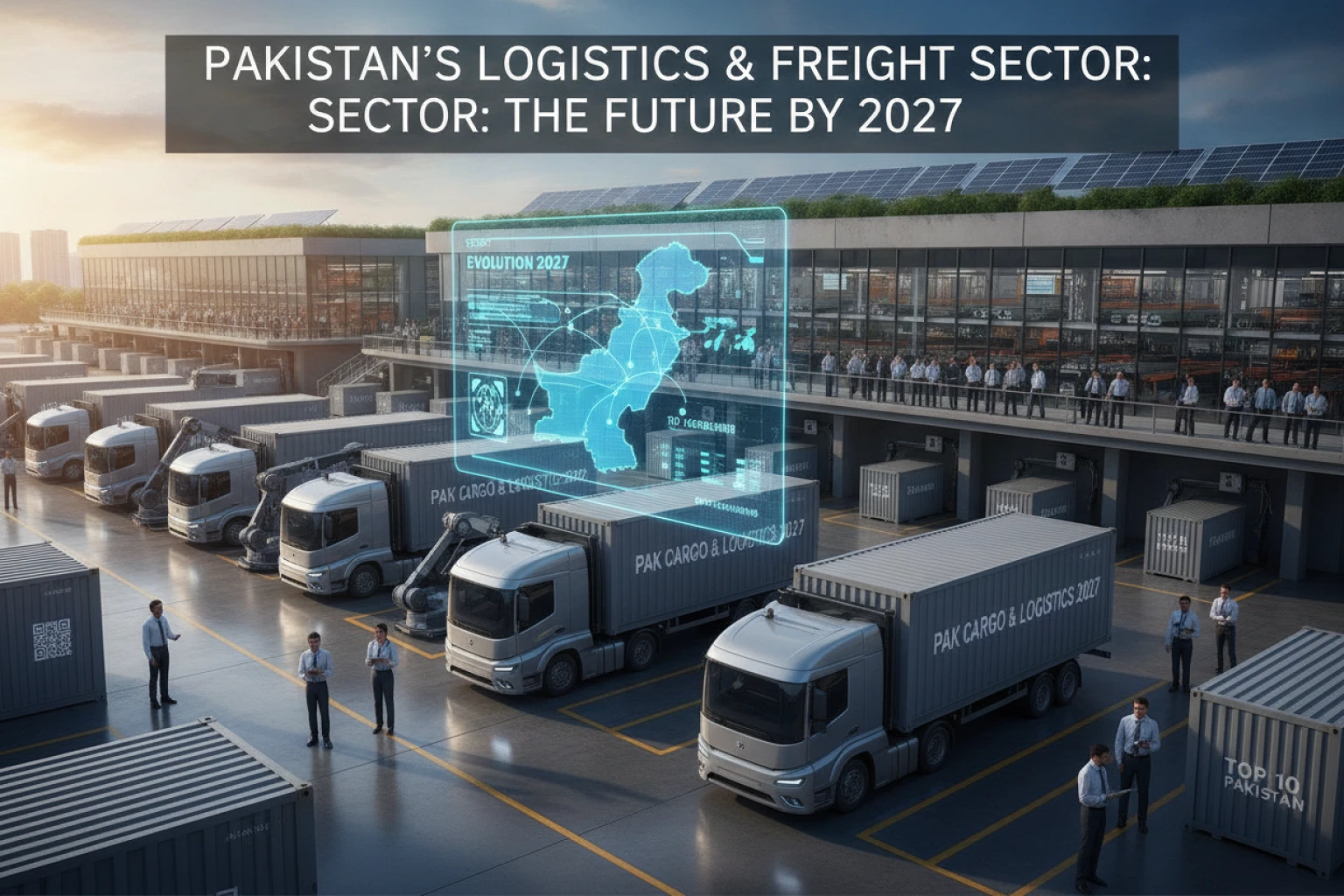
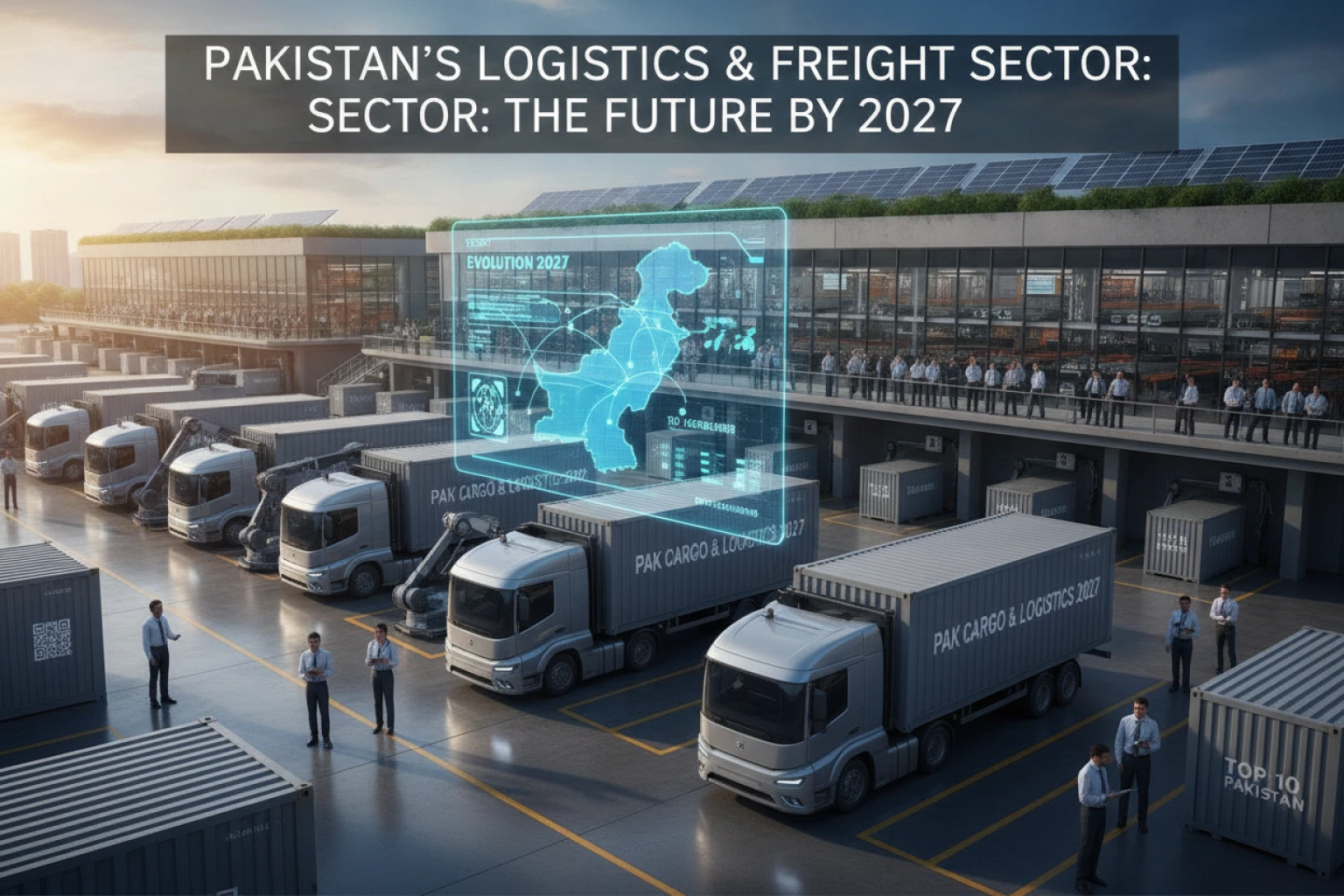
How Pakistan’s Logistics and Freight Sector Is Evolving by 2027
Moving freight across Pakistan has historically meant wrestling with aging Bedford trucks, paper challans, and predictable bottlenecks along the N-5 highway. List of Cargo Companies that reality is shifting rapidly. With China-Pakistan Economic Corridor (CPEC) Phase II shifting focus toward industrial manufacturing zones and Gwadar Port handling sustained bulk transshipments, the country’s domestic freight volume is testing infrastructure limits like never before.
If you are sourcing a carrier, your playbook from five years ago will fail you. Traditional transit hubs in Karachi, Lahore, and Faisalabad are trading clipboards for automated sorting hubs and AI-assisted customs clearance through platforms like Weboc and the Pakistan Single Window. Fleets on the motorways are no longer unmonitored; real-time IoT sensors now measure everything from axle loads to reefer temperatures in transit.
Choosing the right partner means balancing cold operational realities against promises. As you evaluate any list of cargo companies, weigh their technical capabilities against these trade-offs:
Asset ownership vs. brokered fleets
Independent owner-operators keep direct spot rates cheap, but they often lack the telemetry needed for time-sensitive cargo.
Transit velocity vs. loss prevention
A 24-hour turnaround between Karachi and the upcountry means nothing if goods arrive heat-damaged or pilfered.
Specialized capabilities
High-volume break-bulk trucking demands completely different terminal handling than temperature-controlled pharmaceutical cold chains or export-grade air freight.
Our analysis cuts through marketing claims. We benchmark Pakistan’s leading operators across the spectrum: from city-to-city express parcels and heavy industrial freight to intermodal rail and international maritime logistics. The goal is simple: helping you match your specific cargo profile with an operator that can reliably move it across borders and highways alike.
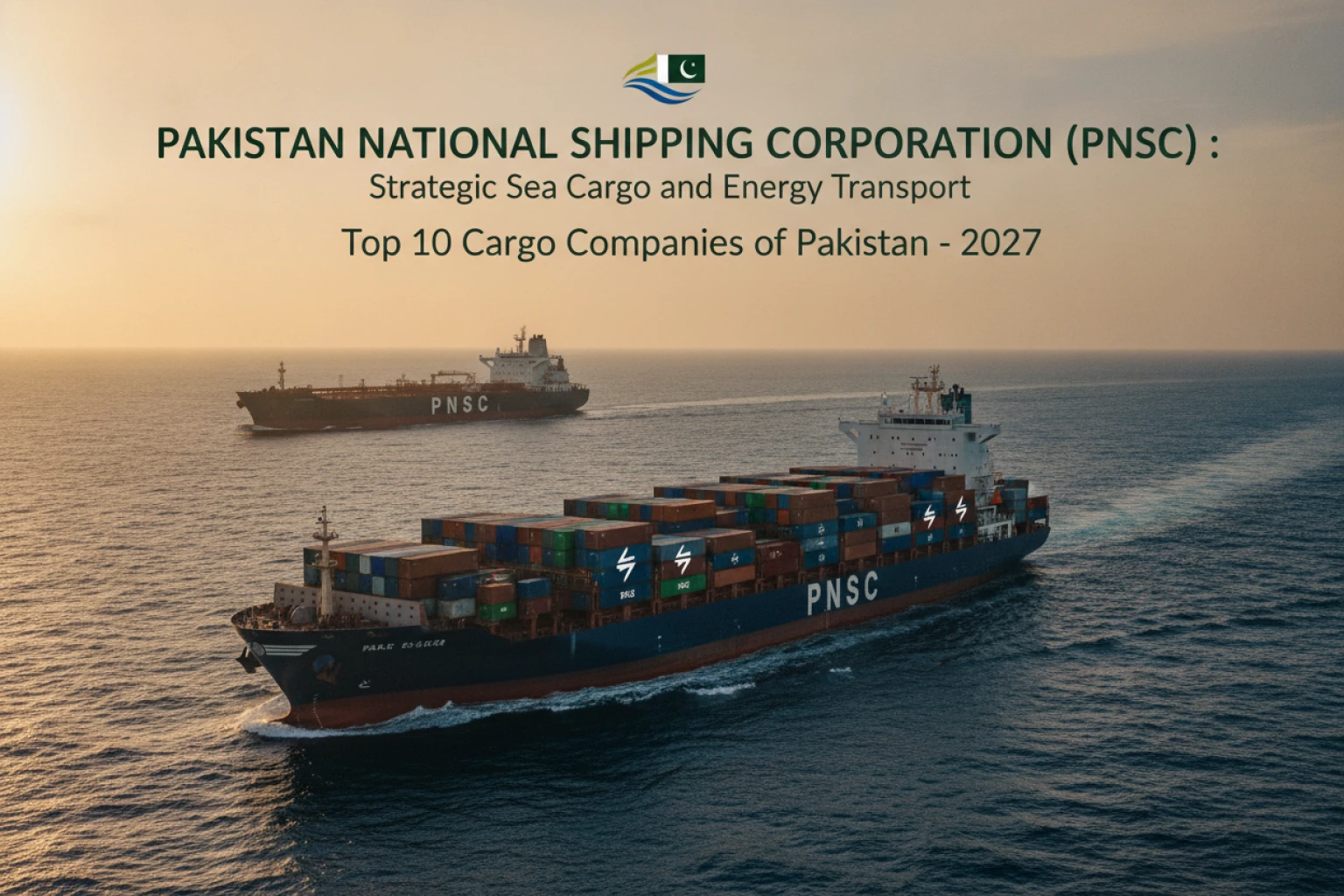
Pakistan National Shipping Corporation Strategic Sea Cargo and Energy Transport
If your supply chain relies on moving hundreds of thousands of metric tons of wet or dry bulk into Pakistan, PNSC sits in a category of its own. It is not built for a mid-tier merchant shipping two containers of retail goods. Instead, the national flag carrier dominates the country’s strategic energy corridor, handling dirty tanker operations, petroleum imports, and heavy industrial raw materials flowing through Karachi Port and Port Muhammad Bin Qasim.
When evaluating any serious list of cargo companies for bulk ocean freight, PNSC stands out because of sovereign scale. Its fleet—anchored by Aframax tankers and Supramax/Ultramax bulkers—serves as the backbone for national fuel security and infrastructure projects. Looking toward 2027, the corporation is forced to modernize. To stay compliant with tightening International Maritime Organization (IMO) carbon-intensity indicators (CII), PNSC has begun phasing in retrofits for energy-saving propulsion and scouting dual-fuel vessel acquisitions. For high-volume importers, this transition means fewer regulatory holdups at international green-lane berths.
PNSC is engineered primarily for specific accounts:
State-run energy giants (like PSO)
Securing uninterrupted crude and fuel oil flows.
Large infrastructure developers
Importing bulk coal, steel billets, and project cargo.
Fertilizer and grain conglomerates
Clearing massive seasonal agricultural imports.
The trade-off comes down to operational agility. Dealing with a state-owned enterprise means navigating strict procurement rules, rigid scheduling, and layers of administrative clearance. Charterers used to the point-and-click flexibility of private NVOCCs often find PNSC’s documentation cycles slow. However, when global charter markets spike or geopolitical friction threatens regional shipping lanes, private operators cancel calls; PNSC does not. You accept the bureaucratic friction in exchange for sovereign reliability and deadweight tonnage that private local freight forwarders simply cannot match.
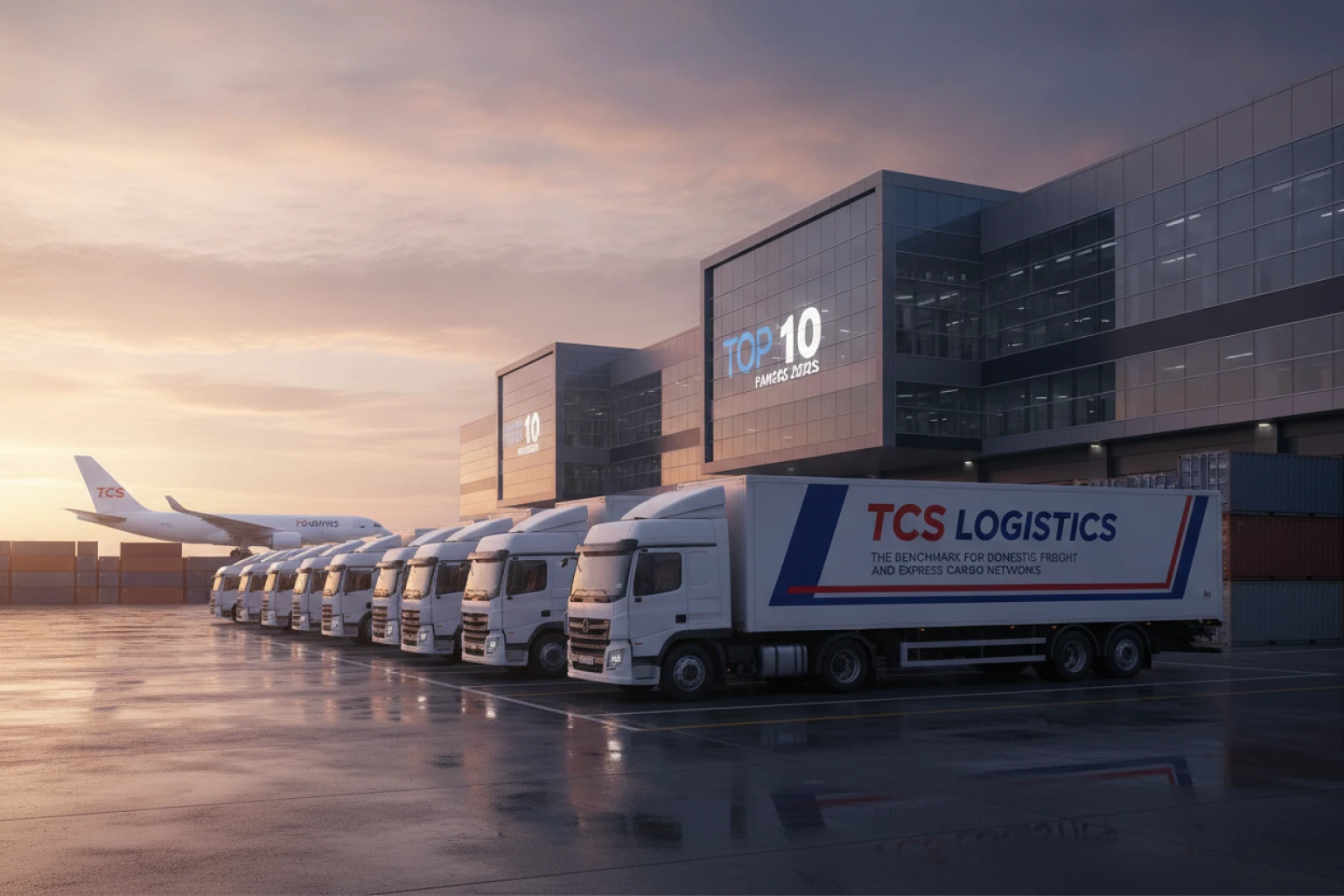
TCS Logistics The Benchmark for Domestic Freight and Express Cargo Networks
If you scan any credible list of cargo companies operating in Pakistan, TCS sits firmly at the top of the board. They earned that spot not by undercutting competitors on price, but by building an unmatched physical footprint.
While smaller freight operators rely on third-party fleet brokers, TCS controls its own destiny with dedicated line-haul trucking, automated sortation hubs in Karachi, Lahore, and Islamabad, and a temperature-controlled cold chain network that pharmaceutical distributors lean on heavily during punishing summer heatwaves.
For commercial shippers moving palletized inventory, TCS separates itself through specialized operational tiers:
TCS Hazir & Express Freight
Rapid turnaround for urgent commercial consignments with tight pickup windows.
Overland Distribution
Scheduled Less-than-Truckload (LTL) and Full-Truckload (FTL) line-hauls feeding FMCG stock into tier-2 and tier-3 retail markets.
Cross-Border Charters
Air freight solutions out of regional hubs that bypass conventional passenger cargo bottlenecks during peak trade cycles.
Where TCS really wins over enterprise supply chain managers is back-end visibility. Modern corporate logistics cannot run on manual phone calls. TCS offers direct API and ERP integration, giving dispatch teams real-time milestone tracking, automated Proof of Delivery (POD) generation, and consolidated billing reconciliation across hundreds of consignments simultaneously.
There is an obvious trade-off, however: cost. TCS consistently commands premium tariffs. If you are shipping non-perishable construction materials, their pricing structure rarely makes sense. But on secondary rural arteries—where poorly managed transport companies suffer rampant cargo damage or transit delays—TCS preserves a negligible loss ratio.
For high-value retail goods and time-sensitive cargo, paying that margin acts like an insurance policy. You pay for the certainty that your shipment survives the link between Karachi port and an interior Sindh distribution point intact.
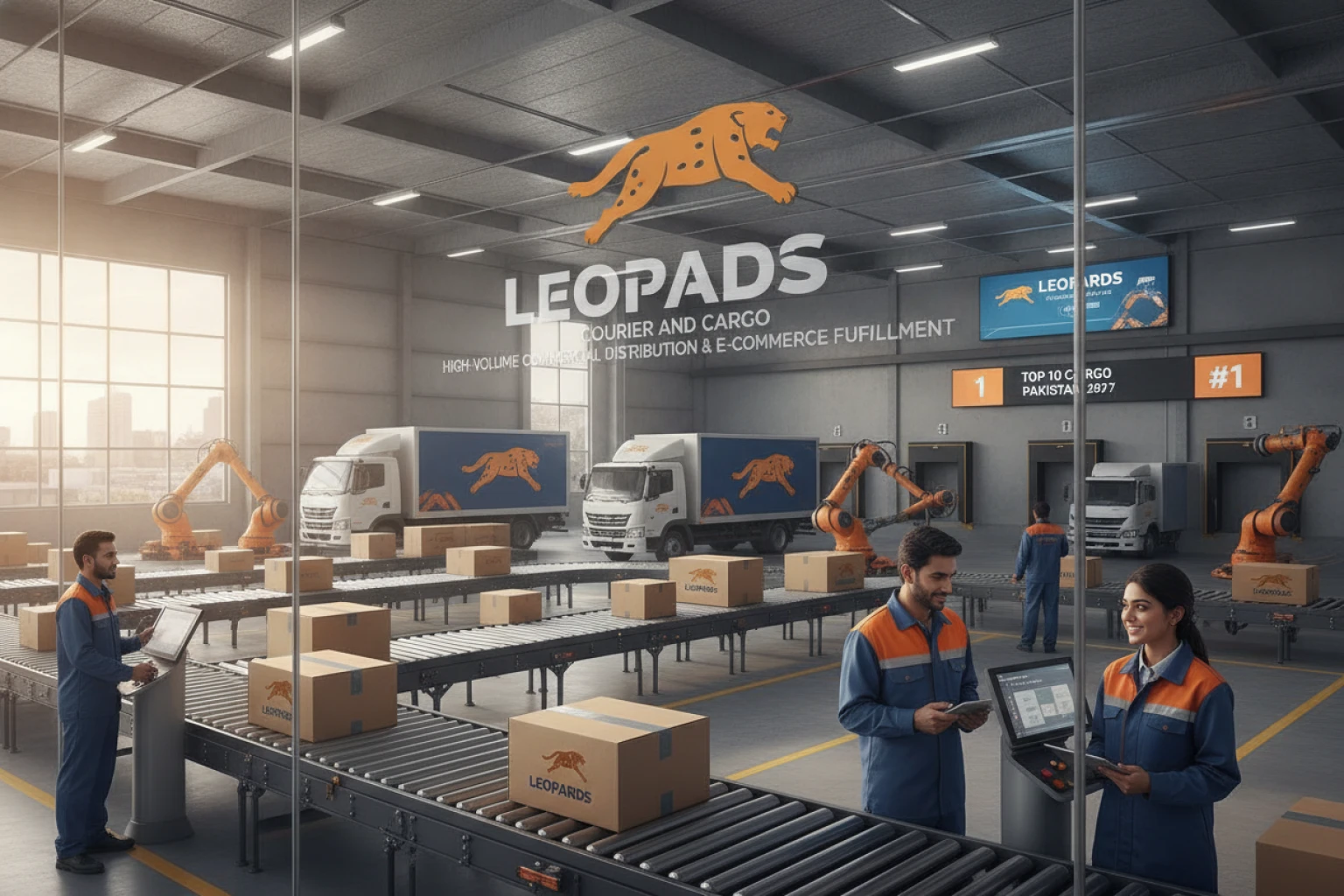
Leopards Courier and Cargo: High-Volume Commercial Distribution and E-Commerce Fulfillment
Most shippers know Leopards for home parcel deliveries, but their dedicated freight wing handles a very different beast: moving heavy B2B tonnage across Pakistan’s rugged arterial corridors. For businesses scanning the list of cargo companies for predictable bulk transport, Leopards operates less like a standard dispatch courier and more like an industrial line-haul carrier.
They excel at moving non-perishable agricultural inputs, raw textiles, packaged dry bulk, and palletized inventory between wholesale markets. Instead of tossing 60kg wooden crates into transit vans, Leopards routes commercial freight through dedicated flatbed fleets and heavy-axle container trucks, keeping bulk freight separated from fragile retail satchels.
Their 2027 infrastructure push centers on three mega-hubs nearing full capacity in Karachi, Lahore, and Islamabad. These aren’t just bigger warehouses; they integrate mechanized roll-on cargo belts and cross-dock bays designed to turn line-haul trailers around in under four hours.
Here is how that infrastructure translates on the balance sheet:
Lower split-load costs
Domestic fabricators avoid paying full truckload (FTL) rates by sharing space in semi-automated consolidation lanes.
Direct hub-to-hub feeding
Bypassing regional feeder depots cuts secondary handling, dramatically reducing crushed-carton damages for FMCG distributors.
Predictable line-haul transit
Daily scheduled runs between the northern industrial zones and southern ports reduce stranded-yard downtime.
Against tier-one express carriers like DHL or TCS, Leopards undercuts spot rates significantly on consignments over 100 kilograms. You trade away white-glove corporate tracking dashboards and minute-by-minute transit alerts, but for mid-market manufacturers shipping five tons of auto parts across Punjab, saving 20% on freight line items easily offsets a slightly wider delivery window. If your shipment isn’t mission-critical overnight freight, running it through Leopards’ heavy cargo division is usually the pragmatic financial play.
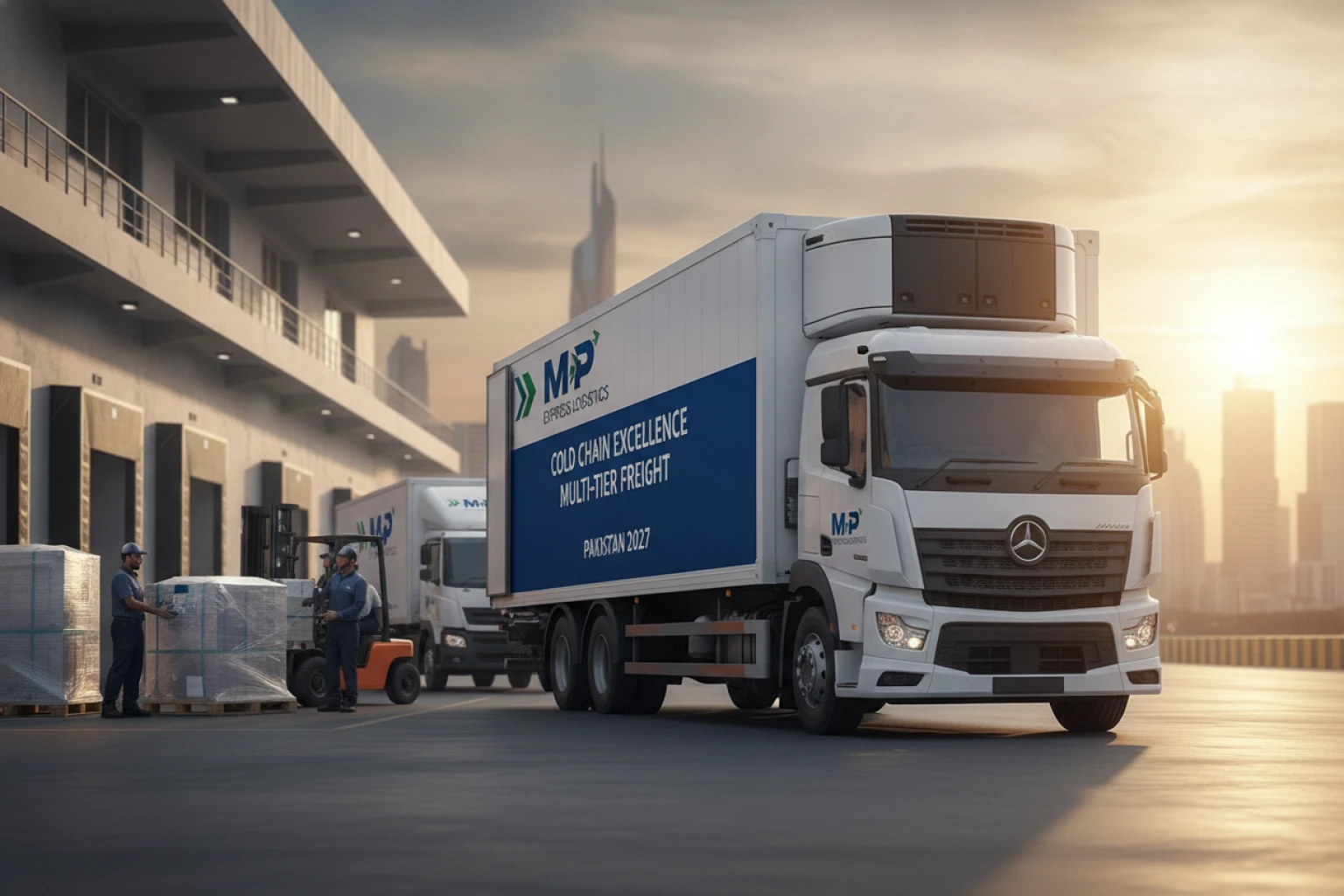
M&P (Muller & Phipps) Express Logistics: Cold Chain Excellence and Multi-Tier Freight
If you look at the broader list of cargo companies operating across Pakistan, most handle standard dry freight reasonably well. Where the market thins out fast is active cold chain management. M&P built its reputation on handling pharmaceuticals, vaccines, and biomedical shipments that spoil the second an uncalibrated reefer drops temperature on the Karachi-to-Lahore run.
Their real edge lies in end-to-end custody. Instead of outsourcing the middle mile to third-party open-bed trucks, M&P relies on a dedicated fleet of temperature-controlled vehicles paired with validated thermal packaging. For high-value cargo like specialized biologics or high-end electronics, their secure transit protocols include geofenced routing and dual-driver shifts that stop unauthorized off-route halts entirely.
Where shippers often run into trouble is treating cold chain like regular parcel cargo. If your goods sit on an ambient loading dock for even twenty minutes during a Multan summer, the shipment is compromised before the truck leaves the bay. M&P avoids this through strict dock-to-truck refrigerated seals, though this rigor means their dispatch windows are far less forgiving than general freight operators.
Looking ahead to 2027, their network footprint centers around modernizing transit hubs along the primary north-south arteries. The deployment of automated warehouse management systems (WMS) at cross-dock facilities near the M-2 and M-5 motorways addresses a massive historical bottleneck: cargo dwell times. Automated sorting and palletized staging keep freight moving continuously between Sindh and northern Punjab.
For enterprise FMCG brands, this infrastructure translates into dependable, scheduled regional runs rather than unpredictable “fill-and-go” departures.
Key operational strengths for commercial shippers:
Calibrated thermal telemetry
Real-time data logging for sub-zero and 2°C to 8°C cargo.
Motorway-aligned hubs
Rapid cross-docking along the CPEC-linked M-5 belt to bypass inner-city bottlenecks.
Palletized line-haul
Minimized touchpoints to protect fragile packaging from manual transit damage.
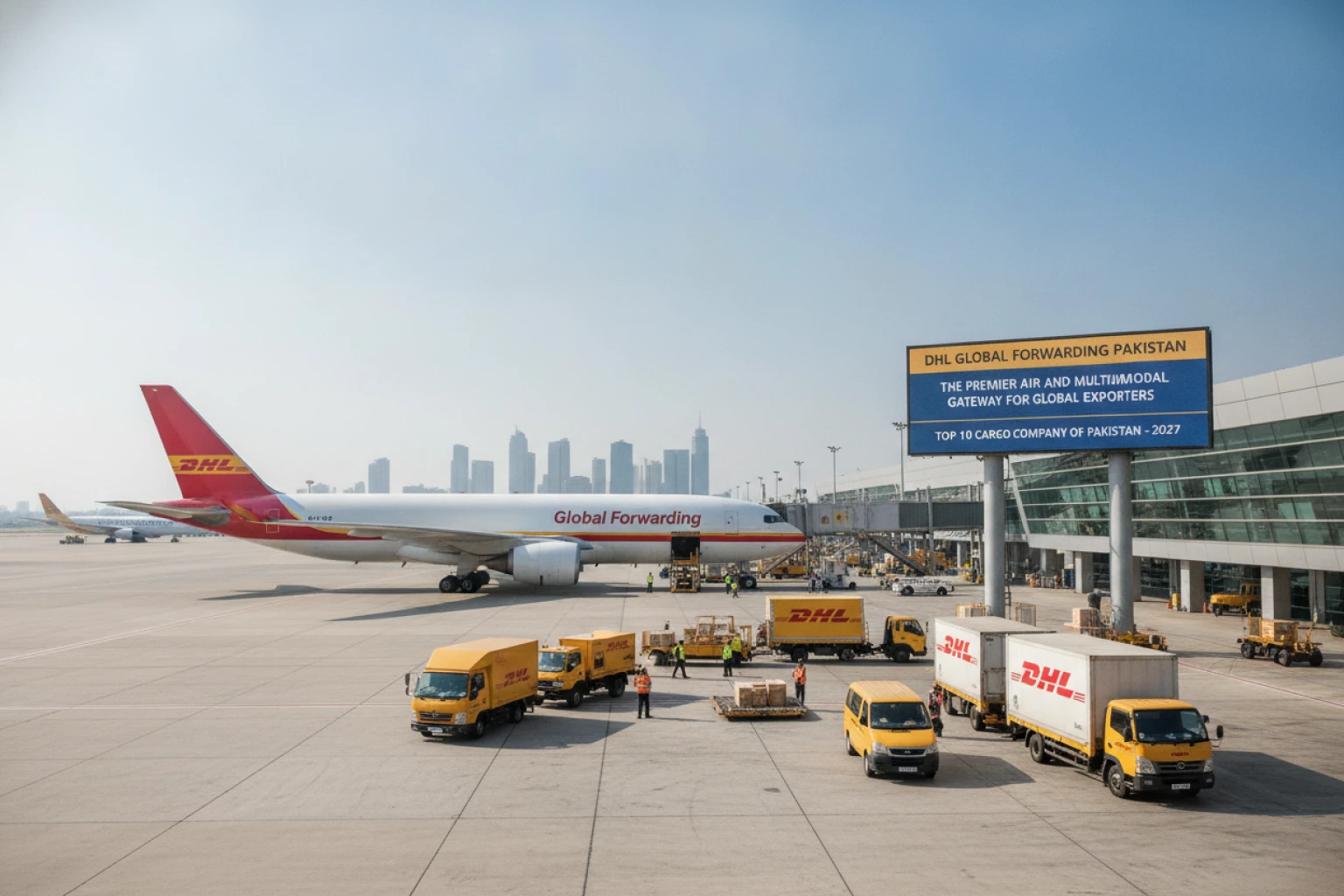
DHL Global Forwarding Pakistan: The Premier Air and Multimodal Gateway for Global Exporters
When you scan any serious list of cargo companies operating out of Pakistan, DHL Global Forwarding consistently occupies a tier of its own. It is rarely the cheapest option on paper, but for high-stakes outbound manufacturing, sheer network reach often trumps upfront freight rates.
Pakistani industrial hubs rely heavily on air-sea multimodal setups to stay competitive. In Sialkot, surgical instrument fabricators cannot risk grounded shipments before European medical audits. In Faisalabad and Karachi, fast-fashion textile mills face crippling chargebacks if a seasonal garment line misses European distribution windows. DHL steps into these gaps by combining bonded inland trucking with guaranteed uplift out of hubs like Jinnah International and Allama Iqbal International.
Their regulatory footing inside Pakistan is another massive differentiator:
Authorized Economic Operator (AEO) status
Translates to pre-arrival clearance and fewer red-lane physical customs interventions at border posts.
WeBOC integration
Smooth handling through Pakistan’s Web Based One Customs platform avoids costly detention charges.
Green freight auditing
Access to Sustainable Aviation Fuel (SAF) allocations and certified carbon footprint reporting—now a mandatory box-ticking exercise for EU buyers bound by strict ESG procurement rules.
The elephant in the room is price. If you are shipping non-perishable raw cotton or bulk minerals where transit times can slip by ten days without penalty, paying DHL’s rate sheet makes little financial sense. You are paying for mission-critical reliability, temperature-controlled cold chains, and real-time visibility.
For high-margin leather goods, sterile medical tools, or contractual fashion drops with steep liquidated damages, cutting corners on freight usually backfires. In those scenarios, absorbing the premium is simply an insurance policy against clearance headaches and lost client accounts abroad.
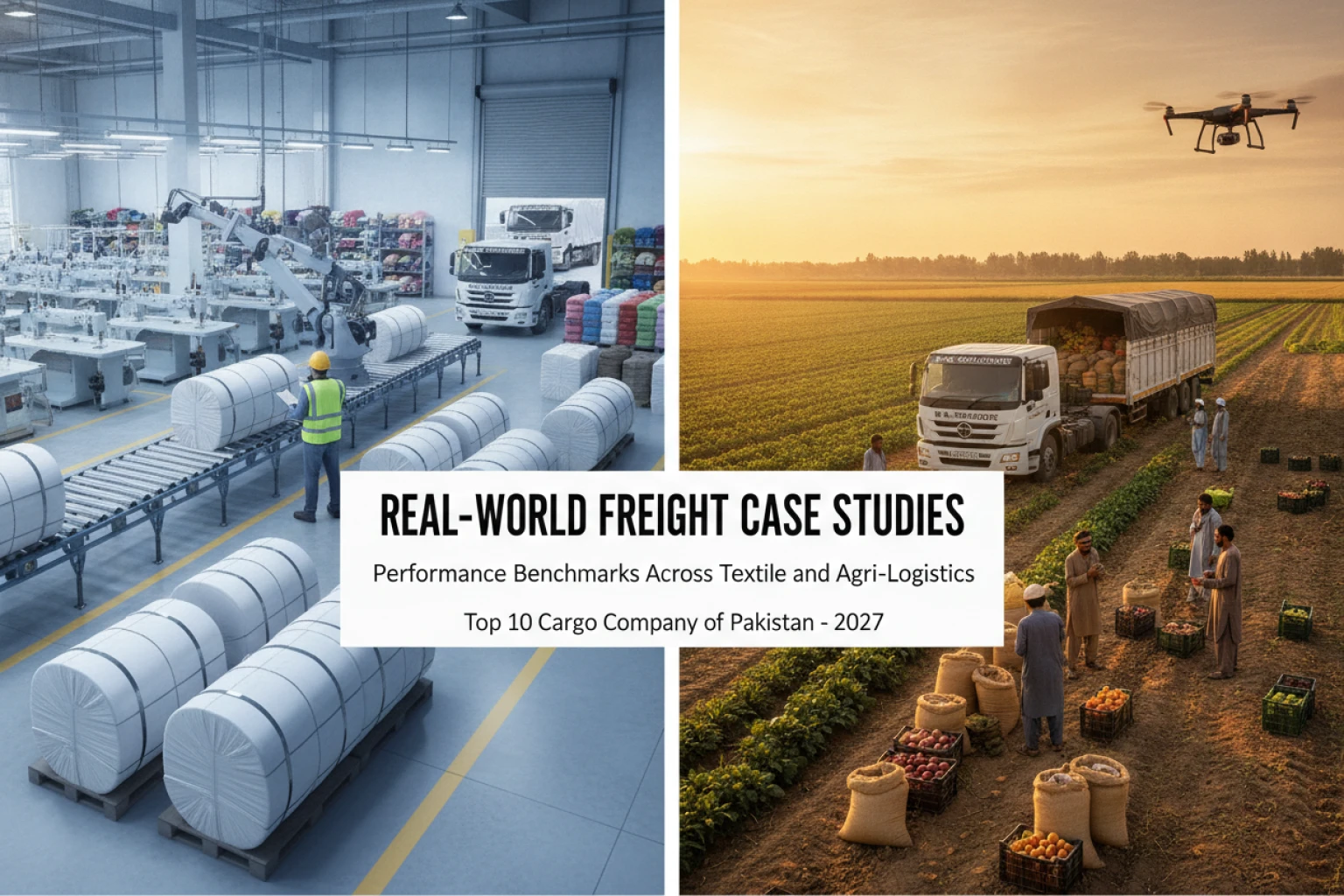
Real-World Freight Case Studies: Performance Benchmarks Across Textile and Agri-Logistics
Evaluating any list of cargo companies comes down to how carriers handle actual cargo under tight margins and unforgiving deadlines. Marketing brochures promise reliability, but the ground reality between Punjab’s industrial belt and the southern ports tells the true story.
Case 1: Slashing Textile Transit via Sea-Air Routing
A mid-sized bedwear exporter in Faisalabad faced severe retail penalties in Germany due to Red Sea maritime detours adding 18 days to standard ocean voyages. Pure air freight from Lahore was cost-prohibitive.
By switching to an integrated sea-air model, the freight forwarder moved bonded containers by road down the M-4 to Port Qasim, loaded them on short-sea feeder vessels to Dubai, and transferred the goods to belly-hold cargo space bound for Frankfurt.
- The trade-off: A 38% increase in freight costs compared to direct ocean freight.
- The payoff: Transit dropped from 42 days to 14 days, saving the seasonal retail account.
Case 2: Zeroing Out Spoilage on Multan Mango Runs
Exporting Chaunsa mangoes to Dubai requires continuous cold-chain integrity from farm to tarmac. A Multan grower cooperative previously lost up to 12% of shipments to temperature spikes during transit to Jinnah International Airport.
The fix involved contracted telematics: deploying reefers with independent power units and dual-sensor data loggers. The trucks bypassed local consolidation hubs, clearing export customs inland under pre-cooled seals. Temperature variances stayed within a strict 1.5°C margin, reducing spoilage to under 1% across the harvest window.
Operational Benchmarks Across Top Tiers
When vetting providers, paper quotes rarely reflect total landed cost. Watch these specific performance metrics:
Ocean vs. Air Cost Spreads
Tier-one players average 4 to 6 times higher per-kilo rates on pure air versus ocean, but mid-tier handlers often inflate sea-air handling surcharges by an extra 15%.
Transit Variance
Reliable operators maintain under a 5% arrival variance on the Karachi-to-Lahore corridor; unvetted subcontractors frequently swing beyond 20% due to mechanical downtime.
Break-Bulk Capability
Dedicated heavy-lift gear remains scarce. Top providers run company-owned low-bed trailers rather than relying on spot rentals that cause multi-day staging delays.
Claim Resolution
Institutional carriers settle verified cargo loss claims within 30 to 45 days. Broker-dependent outfits often stretch disputes past six months.
The completion of critical bypasses and terminal automation between 2024 and 2027 eliminated persistent chokepoints along the N-5 and port access gates. For shippers, this translated into predictable 36-hour transit times from central Punjab to vessel cutoff, making tight transshipment windows genuinely workable.
Common Freight Mistakes Businesses Make When Selecting a Pakistani Cargo Carrier
Choosing a logistics partner from a generic list of cargo companies usually goes wrong at the pricing stage. Shippers fixate on the lowest quote per kilogram, forgetting that the real margin killer lies in the fine print.
A cut-rate freight invoice rarely accounts for detention charges at Karachi port terminals, surprise forklift fees, or cargo insurance exclusions. If your goods sit stuck on the tarmac because of customs clearance paperwork errors, that initial “budget” rate evaporates after two days of port demurrage.
Beyond pricing traps, operational oversights frequently stall supply chains across Pakistan:
Treating carrier liability as blanket insurance
Standard bills of lading in Pakistan typically pay out based on nominal vehicle weight rather than actual invoice value. If you move textiles or consumer electronics through high-theft stretches like the Indus Highway (N-55), a standard policy leaves you exposed. You must verify whether wet-damage coverage applies during monsoon season or if the carrier assumes zero liability for container sweat.
Ignoring NHA axle-load limits
Pakistan’s National Highway Authority strictly polices axle-load regimes along the M-2 and N-5 corridors. Inexperienced truckers often overload single-axle trailers to cut their own costs, only to get impounded at weight stations. That delay falls directly on you, forcing emergency offloading onto secondary trucks at extortionate spot rates.
Tolerating tracking blackouts
Many local transporters advertise “24/7 tracking,” but their visibility dies the moment a container leaves Port Qasim or KPT. Between the seaport crane and upcountry dry ports like Lahore (Mughalpura) or Faisalabad, you enter a communication dead zone. If their GPS does not integrate into an accessible portal, you cannot coordinate warehouse labor or production lines accurately.
Vetting the broader list of cargo companies requires looking past surface-level quotes. Audit the carrier’s physical fleet, verify their transit liability rider, and test their tracking API before moving a single pallet.

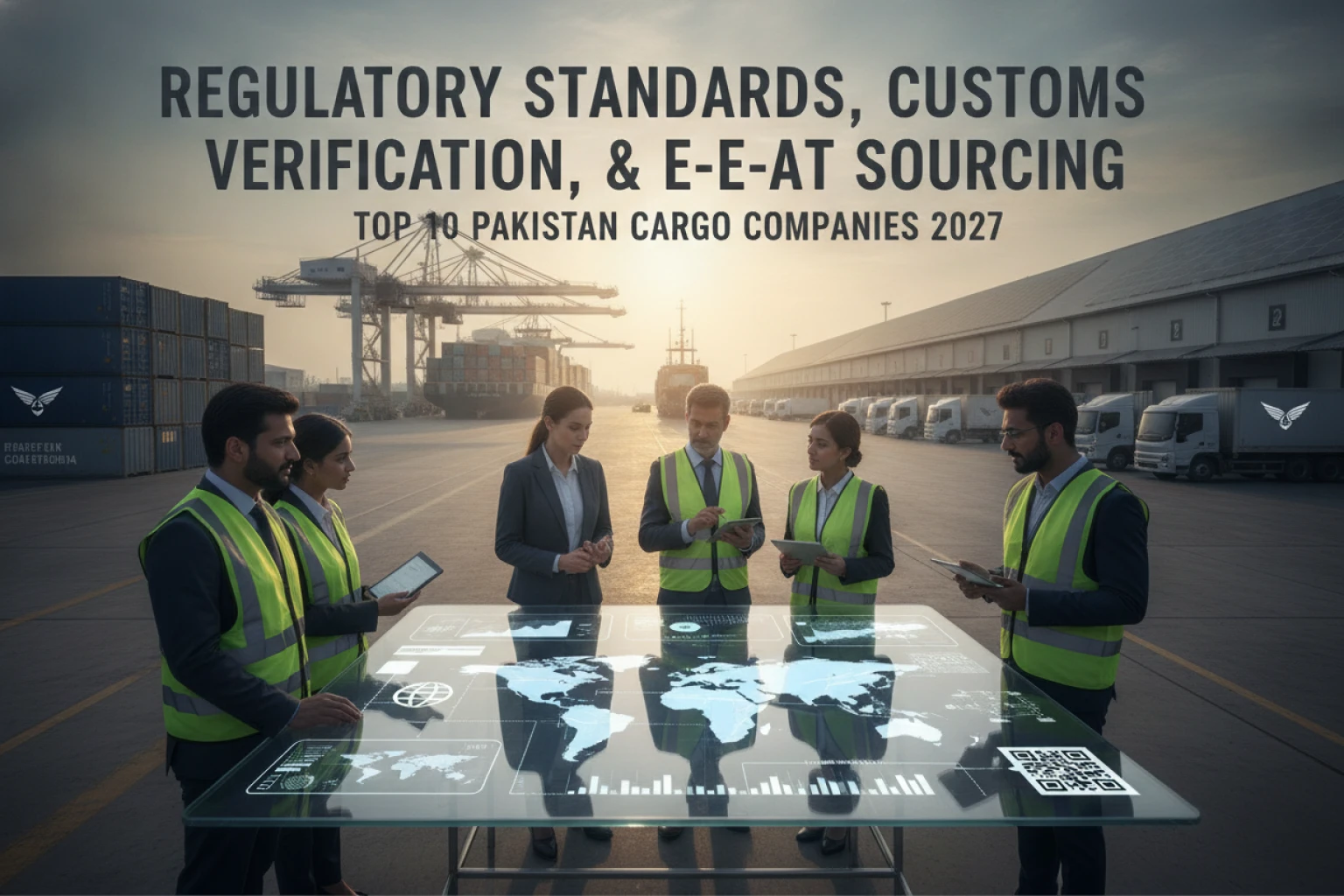
Regulatory Standards, Customs Verification, and E-E-A-T Sourcing for Cargo Operations
When vetting any list of cargo companies operating in Pakistan, looking at fleet sizes or warehouse square footage only tells half the story. The real test happens at customs terminals like Port Qasim or Karachi Port, where a single compliance gap can freeze your supply chain and trigger ruinous demurrage fees.
Start by validating active memberships. Legitimate operators must hold credentials with the Pakistan International Freight Forwarders Association (PIFFA) and carry global backing through the International Federation of Freight Forwarders Associations (FIATA).
You also need to audit how they handle digital clearing. Today, every cross-border move flows through the Federal Board of Revenue’s (FBR) Pakistan Single Window (PSW) system. Reliable operators do not rely on third-party typists to upload Goods Declarations (GD). They manage their own encrypted PSW profiles, ensuring HS code classifications, financial instruments, and Department of Plant Protection or PSQCA approvals align before the vessel even docks.
For heavy haulage or specialized shipping, check ministry-level backing. Ocean freight handlers should hold operational licenses registered with the Ministry of Maritime Affairs, while long-haul truckers require fleet clearances and axle-load compliance overseen by the Ministry of Communications.
Before releasing a deposit or handing over commercial cargo, run through this baseline document audit:
Transport Titles
A verified Master Bill of Lading (B/L) or Air Waybill (AWB) issued under the carrier’s own name, not an unbonded shell agency.
Commercial Invoices & Packing Lists
Exactly matched against PSW declaration lines down to the gross and net weight.
Inland Transit Insurance
A genuine Marine Cargo Policy with an active inland transit clause, rather than generic carrier liability, which rarely pays out full value on local highways.
How to Choose the Right Freight Partner from This list of cargo companies
A carrier that excels at moving containerized textiles out of Faisalabad might completely fail you when hauling temperature-sensitive vaccines into Gilgit. Narrowing down our list of cargo companies comes down to matching your operational profile against an operator’s real-world fleet capabilities.
Start by auditing your cargo classification before requesting rate cards. If you handle hazardous chemicals (HAZMAT) or break-bulk industrial machinery, standard dry-van linehaulers cannot legally or safely help you. Cold-chain operations need documented proof of telematics-backed reefers with automated temperature logging, not just verbal assurances.
When you sit down with a carrier’s enterprise rep, skip the generic sales pitch. Ask tough, operational questions:
What is your audited, on-time delivery rate during peak fog season in Punjab?
What is your historical claims settlement ratio for cargo damage over the last twelve months?
If a linehaul breaks down on the N-5 highway, what is your contractual response window to swap the prime mover?
Pay close attention to capacity planning. Pakistan’s freight market swings wildly during the citrus harvest in winter and the peak mango season in mid-summer. Relying entirely on spot rates during these export surges will crush your margins. Negotiate a hybrid contract: lock in 70% of your core volume on a predictable quarterly tariff, leaving only your buffer capacity exposed to spot-market volatility.
Before signing an annual master service agreement, run a low-stakes trial. Book five to ten regional shipments across secondary lanes—not just your easy main-artery routes. Use this pilot to test their dispatch desk under pressure, audit tracking updates against driver realities, and see how fast their operations team flags transit delays before you trust them with your enterprise supply chain.

FAQS
What cold chain services does M&P Express Logistics offer in Pakistan?
M&P covers end-to-end temperature-sensitive cargo through dedicated reefer trucks, temperature-monitored hub storage, and insulated city-courier boxes. While many operators on the standard list of cargo companies in Pakistan treat cold chain as a side hustle, M&P splits their service into distinct thermal bands: deep frozen, chilled, and ambient controlled.
They also handle cold-dock cross-docking in transit hubs like Karachi, Lahore, and Multan. This setup prevents cargo from sweating on open asphalt during transfers—a common mistake that ruins sensitive inventory before it leaves the city.
Which types of products can M&P transport in temperature-controlled trucks?
Their fleet handles goods that cannot tolerate Pakistan’s harsh summer heat:
| Category | Typical Goods | Fleet Temp Target |
|---|---|---|
| Pharma & Biotech | Vaccines, insulin, lab reagents | 2°C to 8°C |
| Fresh Perishables | Meat, dairy, export-grade mangoes | 0°C to 4°C |
| Deep Frozen | Seafood, processed foods, ice cream | -18°C to -25°C |
| Controlled Ambient | Specialty confectionery, cosmetics | 15°C to 25°C |
Pro-tip: If you are shipping bulk seasonal produce like citrus on rural link roads, book standard reefers with heavy-duty leaf springs. Standard city reefers can rattle fragile fruit cartons to mush over unpaved routes.
How does M&P maintain consistent temperatures during multi-tier freight delivery?
Long-haul highway runs are rarely the problem; last-mile transfers are where shipments spoil. M&P manages multi-tier legs using three primary controls:
IoT telematics and data loggers
Reefer units carry active telematics that alert regional control towers if the cabin climbs by even 1.5°C.
Dual-zone reefer bulkheads
Movable thermal partitions inside larger trailers let them run frozen and chilled stock simultaneously without cross-contamination.
Pre-conditioned eutectic packaging
For secondary distribution runs on smaller city vans, goods move into phase-change material (PCM) totes rather than relying on dry ice, which can freeze and ruin liquid pharma.
Conclusion
Picking the right partner from any list of cargo companies comes down to matching your freight profile against real operational capabilities, not just flashy transit promises. By 2027, the gap between traditional forwarders and tech-first logistics providers in Pakistan will widen dramatically. Booking with the cheapest carrier on paper often burns your margins later through unannounced detention fees at Port Qasim or lost inventory along the CPEC transit routes.
A common pitfall is treating all freight identically. If you are moving sensitive pharmaceuticals up north through the Hazara Motorway in mid-July, an unmonitored reefer trailer from an informal fleet operator is a recipe for total cargo write-off. Conversely, paying a premium to a multinational integrator for low-value, bulk industrial raw materials running between Karachi and Lahore rarely makes financial sense.
Before signing an annual service-level agreement (SLA), stress-test the company’s ground reality:
Verify direct asset ownership
versus sub-contracted brokerage networks.
Inspect demurrage policies
specifically for port terminal congestion.
Demand proof of live sensor tracking
not just end-of-day driver check-ins.
| Freight Profile | Best Carrier Model | What to Avoid |
|---|---|---|
| High-value electronics / pharma | Asset-backed corporate lines | Uninsured spot-market brokers |
| B2B industrial bulk | Rail-linked regional operators | Premium air/express couriers |
| Cross-border / transit trade | Customs-bonded fleet specialists | Local-only urban dispatchers |
Do not commit your entire supply chain to a single provider right away. Split your test volume across two lanes for ninety days. Watch how dispatchers handle delayed clearances at dry ports and whether their billing team honors the quoted rate. That real-world friction will tell you far more than any brochure ever could.
- Get a free quote today on WhatsApp: 0300-9535077 or visit our contact page.